A species
Octopus stinkhorn
Clathrus archeri
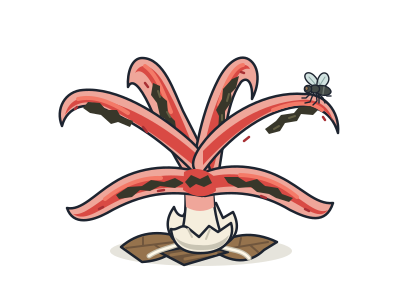
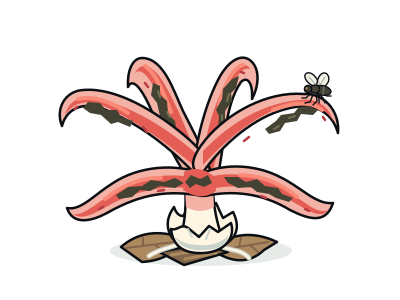
An egg-like start, red tentacles and a smell that draws flies.
You and the octopus stinkhorn meet in the Fungi and animals branch, shown at about 1.3 billion years ago (on 10 September, in a calendar from life's shared ancestor to today).
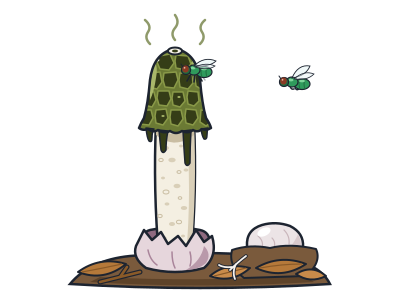
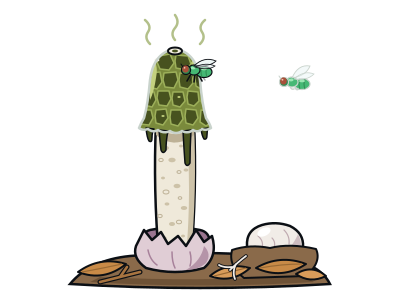
The octopus stinkhorn seems to hatch from an egg, unfolding red tentacles and giving off a smell like rotting meat. Despite its animal-like appearance, it is a fungus and a relative of the common stinkhorn. Its whitish ‘egg’ is not an animal egg: it is the young, spore-producing part of the fungus, waiting to open.
The red arms carry sticky material containing spores, the tiny particles fungi use to reproduce. Flies are attracted by the smell and help carry these spores elsewhere. The arms are not gripping limbs, and the fungus does not hunt the visiting flies. Instead, it gets its food by breaking down dead material.
It is native to Australia and New Zealand, but people have introduced it to Britain and other places. Its startling shape can look out of place among ordinary garden plants. Yet fallen leaves, decaying wood and mulch provide the dead material it needs.
Cage-shaped relatives
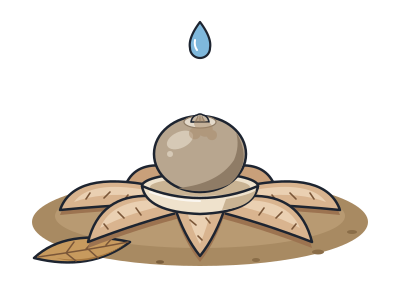
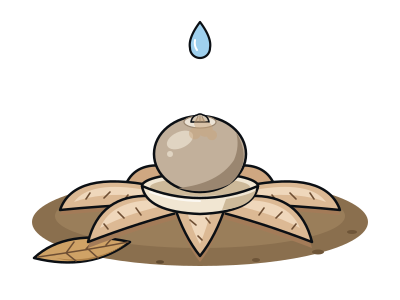
It shares a genus with cage fungi, whose bodies form a cage-like mesh rather than separate arms.
Spongy arms
The arms are hollow and spongy, with finely pitted surfaces and pointed ends.
A recorded arrival
Britain’s first recorded find was at Penzance in Cornwall in 1946.