A species
Dry rot fungus
Serpula lacrymans
The weeping fungus that turns house timber into crumbly brown cubes
You and the dry rot fungus meet in the Fungi and animals branch, shown at about 1.3 billion years ago (on 10 September, in a calendar from life's shared ancestor to today).
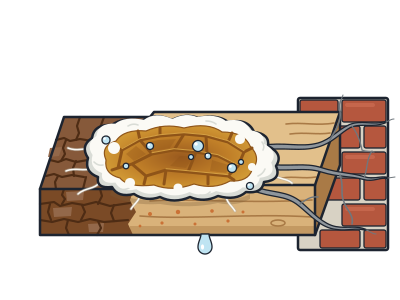
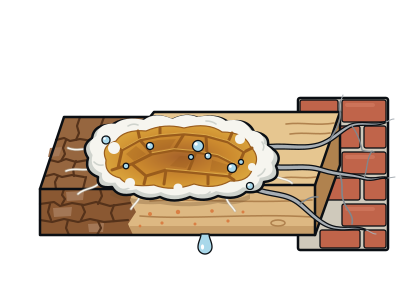
This fungus creeps through damp old houses, hidden under floorboards and behind plaster. As it feeds, it turns timber dark brown and shrunken, and the wood cracks into rough little cubes that crumble to powder. It even seems to cry: clear drops of water bead on its fluffy white threads. That is where its scientific name comes from. It means 'making tears'.
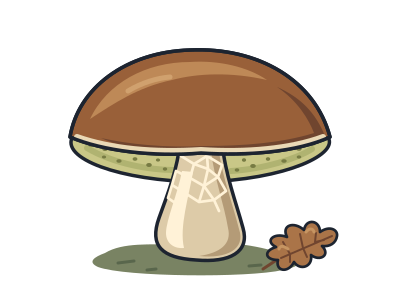
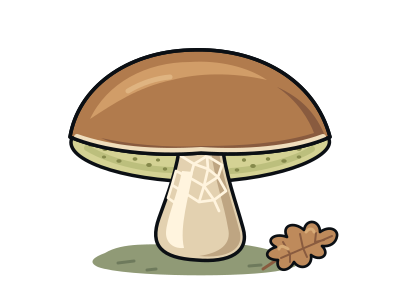
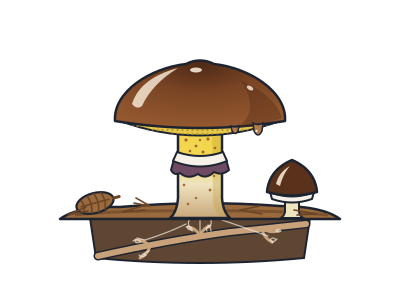
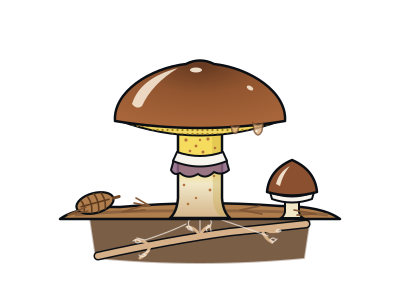
Surprisingly, it belongs to the same wider group as porcini and slippery jacks, the mushrooms with a sponge-like layer of tiny tubes under the cap that people pick in forests. But it looks nothing like them. It has no stalk and no proper cap. Instead it grows as a flat, wrinkled crust, mustard-yellow to rusty-brown, with a thick, woolly white rim. Porcini and slippery jacks live as partners with tree roots in the soil. This one specialises in rotting wood.
Despite the name 'dry rot', it needs wet wood to get started. Long ago, 'dry' was a word for rot in timber that had been dried before use. The fungus spreads using grey, rope-like strands that can grow across brick, stone and mortar to reach fresh timber. It is mainly a problem in the UK and northern Europe, but it has spread in buildings around the world. In the wild it is rare and is known from only a few places, such as forests in the Himalayas.
Sinking the navy's budget
In the early 1800s it attacked wooden warships. HMS Queen Charlotte, launched in 1810, was so badly infected that by 1816 repairs had cost more than building the ship.
A costly guest
By one estimate, building owners in the UK spend at least £150 million a year fixing dry rot damage.
Orange dust and a changing smell
When lots of its spores gather, they look like fine orange dust. Young growths smell pleasantly of mushrooms, but older ones smell unpleasantly strong.