A species
Porcini
Boletus edulis
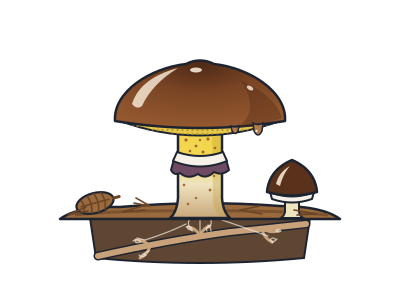
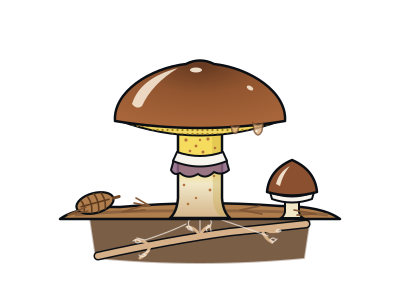
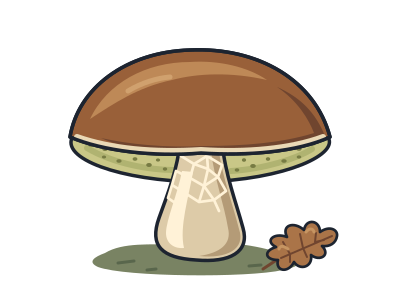
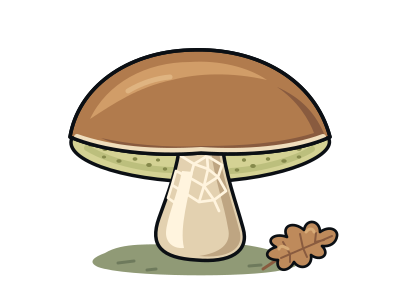
A fat-stemmed mushroom with a sponge beneath its cap.
You and the porcini meet in the Fungi and animals branch, shown at about 1.3 billion years ago (on 10 September, in a calendar from life's shared ancestor to today).
Porcini are fat-stemmed mushrooms prized by cooks, especially in Italian cooking. Turn a cap over and you find something like a fine sponge, not the thin gills of many familiar mushrooms. Tiny tubes open through holes called pores. This makes porcini a bolete, but its wider branch of the mushroom tree still includes gilled relatives.
The brown cap begins rounded and becomes flatter with age, often keeping a pale edge. A raised, whitish mesh marks the pale stem, especially near the top. Underneath, the pore surface changes from white or cream to yellow, then olive-yellow.
This fungus grows beside living trees and partners with their roots. It helps the tree obtain minerals from the soil. In return, the tree supplies energy-rich substances it has made. Its partners include beech, birch, oak, pine and spruce.
The name porcini also covers several related species, so a food label need not mean this species alone. And a spongy underside is no safety test: some boletes are poisonous. Never use this page or an illustration to decide whether a wild mushroom is safe to eat.
Little pigs
The Italian name porcini means ‘little pigs’.
Temporary plugs
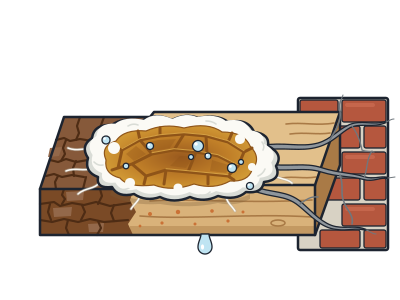
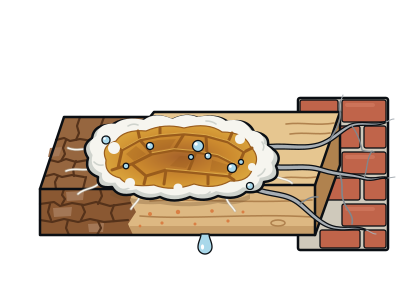
White fungal threads plug the pores of young porcini. These coverings disappear as the mushroom matures, allowing its spores to escape.
No blue change
Its white flesh does not turn blue when damaged, unlike the flesh of some other boletes.