A species
Corn smut
Ustilago maydis
The corn fungus that some farmers fight and Mexican cooks treasure
You and the corn smut meet in the Fungi and animals branch, shown at about 1.3 billion years ago (on 10 September, in a calendar from life's shared ancestor to today).
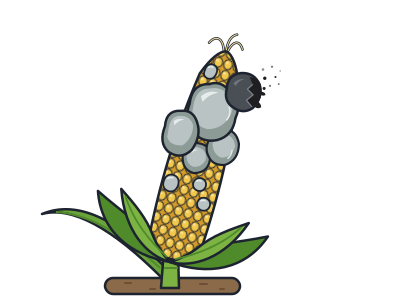
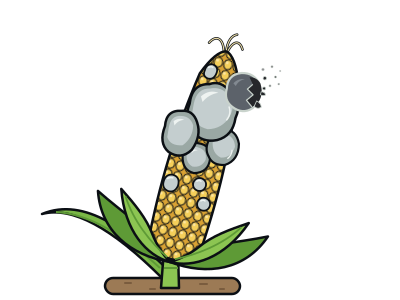
Corn smut is a fungus that swells corn kernels into lumpy grey blobs. To many farmers it is a pest that spoils their crop. In Mexico, people pick the young blobs, cook them and eat them as a treat called huitlacoche, which goes back to Aztec cooking. Cooked huitlacoche tastes savoury, slightly sweet and a bit like mushrooms, and people often compare it to truffles.
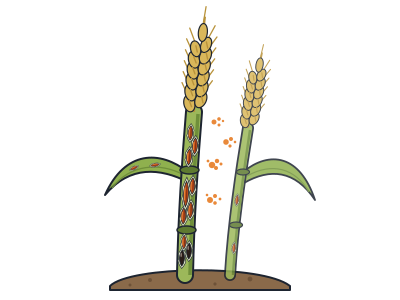
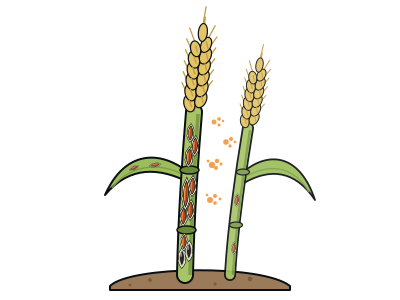
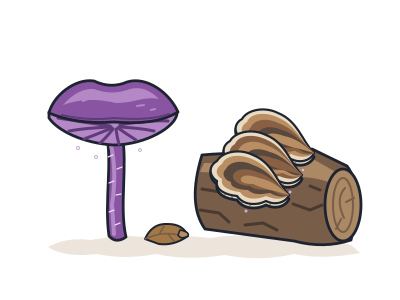
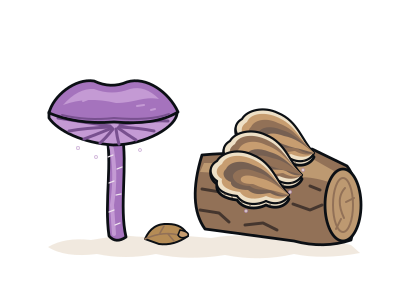
The mushroom taste is a clue to its family. Corn smut is not a mushroom, but it belongs to the same big group of fungi as mushrooms and rust fungi, such as the rust that attacks wheat. Some plant fungi kill the plant tissue they attack and feed on the dead parts. Corn smut does not: it needs living corn to feed on and to make its spores, so it does not usually kill the plant outright.
The fungus usually gets in through the silks, the soft threads at the tip of a corn ear. The swollen lumps, called galls, start out smooth and silvery-white to green. On the ears they can grow about as wide as a grapefruit. As they age, the skin turns papery and the inside becomes black powder made of millions of spores. Then the gall bursts, and wind and splashing water carry the spores away.
Fungicide sprays do not stop it. Instead, farmers pick off galls before they burst and plant types of corn that resist it.
Named for a burnt look
The name Ustilago comes from a Latin word meaning 'to burn'. Burst galls full of black spores make the corn look scorched.
A double life
Outside a plant, the fungus lives as tiny single cells, like yeast, that bud off new cells. When two matching cells meet, they join up and grow as threads that can infect corn.
A help to medical research
Scientists can grow corn smut and change its genes easily in the lab. Studying it even helped explain what BRCA2 does, a human gene linked to breast cancer.