A group of living things
Field mushrooms and puffballs
Agaricaceae
Supermarket mushrooms, parasols and giant puffballs all belong to one family
This branch is shown at about 80 million years ago; its age is a rough estimate.
You and field mushrooms and puffballs meet in the Fungi and animals branch, shown at about 1.3 billion years ago (on 10 September, in a calendar from life's shared ancestor to today).
Your supermarket mushrooms have some surprising relatives. The same family includes tall parasol mushrooms, shaggy ink caps and giant puffballs, which are round white balls that never open a cap at all. There are about 1,340 kinds, and they are found all over the world.
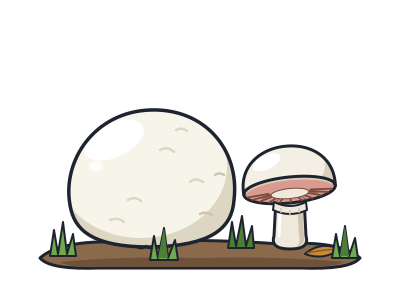
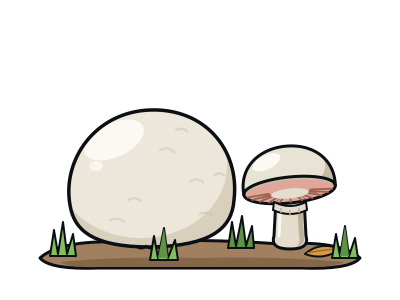
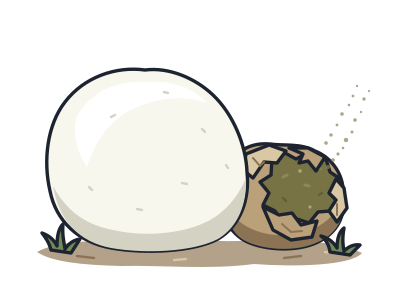
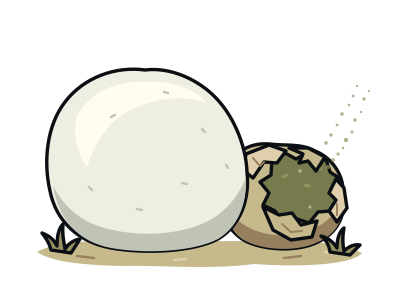
Puffballs used to be kept in families of their own. Then DNA studies showed something unexpected: puffballs evolved from gilled mushrooms, not the other way round. Gilled mushrooms actively shoot out their spores. Puffballs lost that ability, and no puffball line seems to have regained it. A giant puffball can make trillions of spores, which escape through tears in its skin and blow away on the wind.
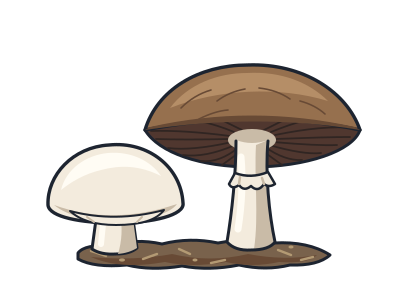
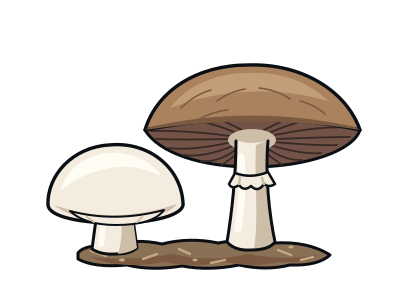
Button, chestnut and portobello mushrooms are all one species. White buttons and brown chestnuts are different colour types picked young, and portobellos are brown ones left to grow big. It is grown in more than 70 countries and is one of the most widely eaten mushrooms in the world. A giant puffball is usually 10 to 80 centimetres across, from about grapefruit size to bigger than a football.
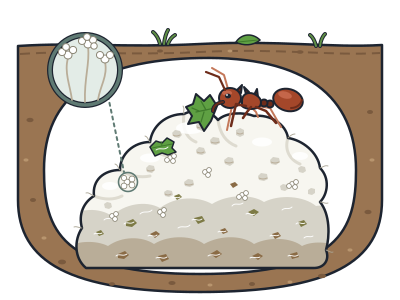
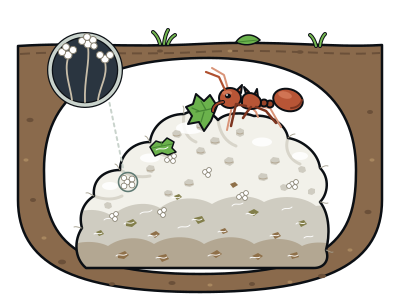
Most members of the family feed on dead plant material in grasslands and woodlands, which helps to break it down and recycle it. A few are even farmed by fungus-growing ants.
Two instead of four
The button mushroom's spore-making cells usually carry two spores each instead of the usual four. That is how it got its scientific name, which means 'two spores'.
A lucky white mutant
The all-white button mushroom sold today was first found by chance in 1925, growing among brown mushrooms on a farm in Pennsylvania, USA. Growers soon came to prefer it.
As long as a grown-up
A giant puffball recorded in 1877 was reported to be about 1.6 metres long and about 1.4 metres wide, but only about 24 centimetres tall.
Inside field mushrooms and puffballs
- Giant puffballA white ball as big as a football that can release trillions of spores in a puff.
- Button mushroomThe everyday supermarket mushroom; portobellos are the same species grown bigger.
- Shaggy ink capA tall white shaggy cap that melts into black ink within hours; the ink was once used for writing.
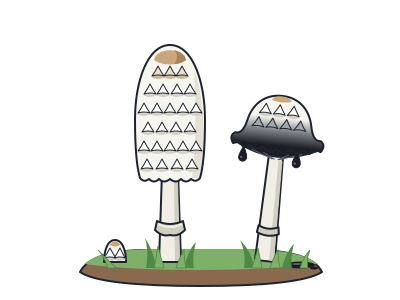
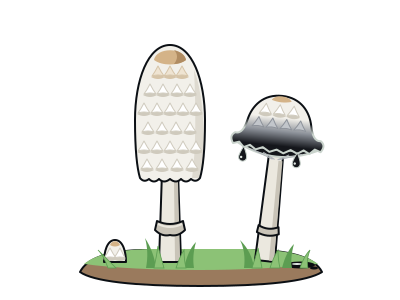
- Parasol mushroomA snakeskin-patterned stem holds up a cap as wide as a dinner plate, like an opened umbrella.
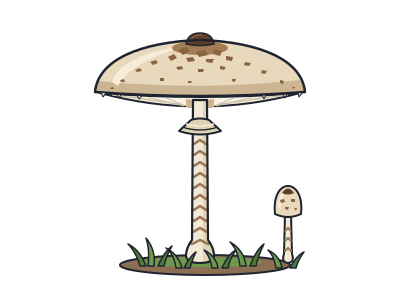
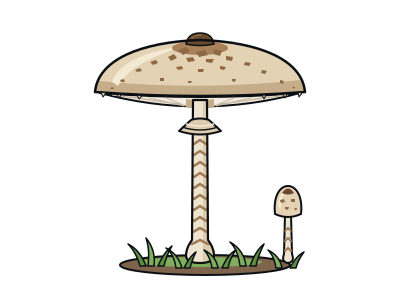
- Leafcutter ant fungusThe crop that leafcutter ants farm underground; it grows on chewed leaves and feeds the whole colony.
Next to it on the tree
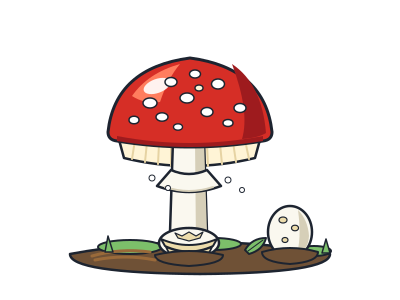
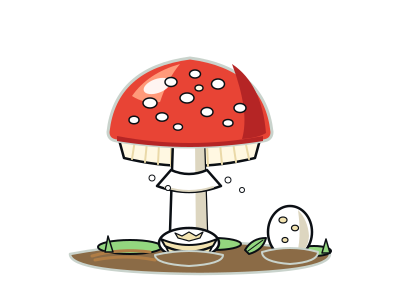
- Fly agaricThe red-and-white fairytale toadstool; poisonous, and partnered underground with birch and pine roots.
- Death capA plain greenish mushroom that is the world's most deadly; never pick it to eat.
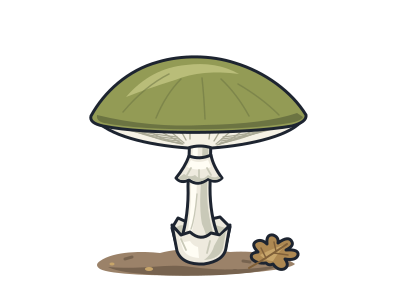
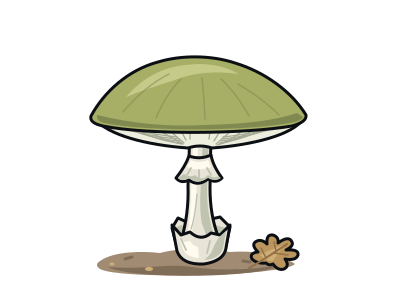
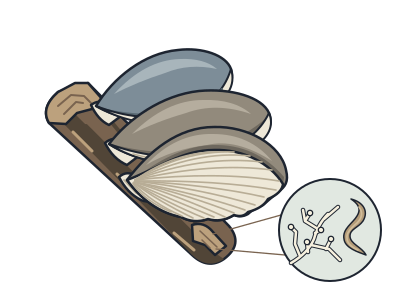
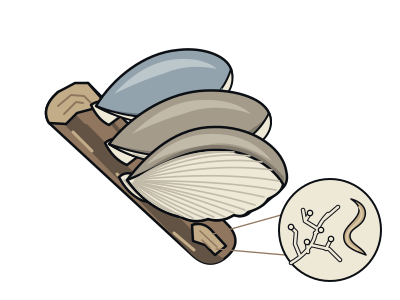
- Oyster mushroomFan-shaped shelves on dead wood that also trap and eat tiny worms.
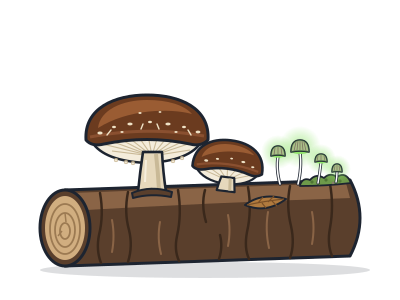
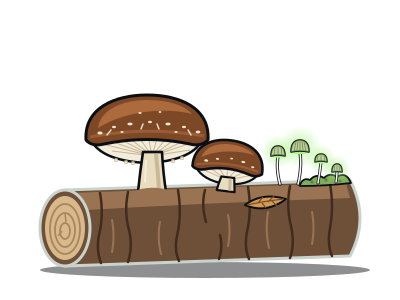
- Fairy rings, enoki and honey fungiTough little mushrooms that dry out and revive, plus log-growers, glow-in-the-dark kinds and giant honey fungi.
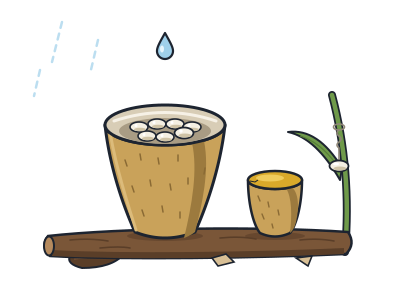
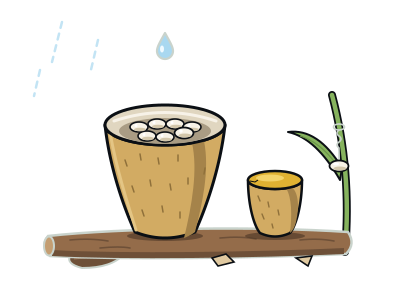
- Common bird's nest fungusA tiny cup holding spore 'eggs' that raindrops splash out, sometimes a metre away.
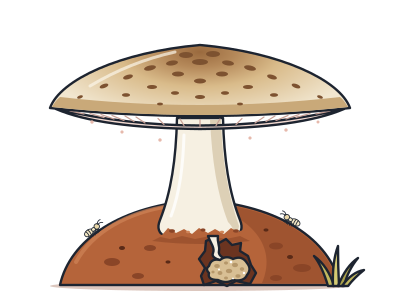
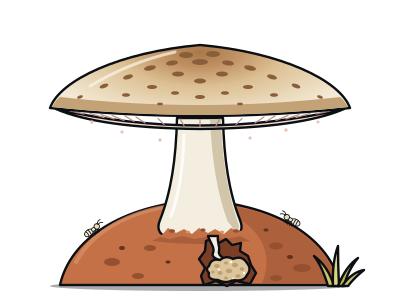
- Giant termite mushroomSprouts from termite mounds in Africa with a cap up to a metre across, the largest edible mushroom.
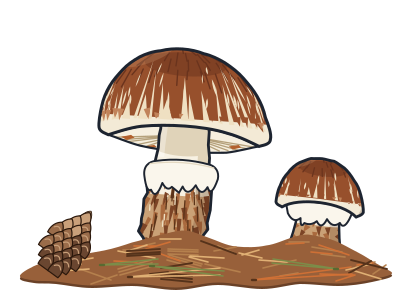
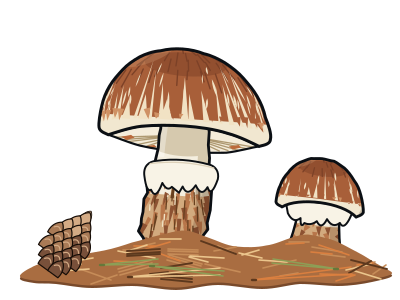
- MatsutakeA spicy-smelling pine-forest mushroom so prized in Japan that a single one can cost as much as a meal out.
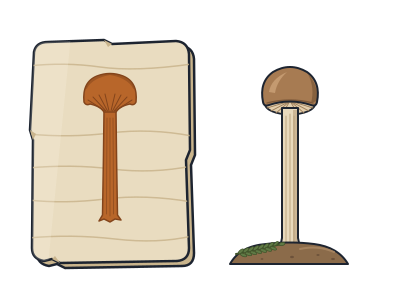
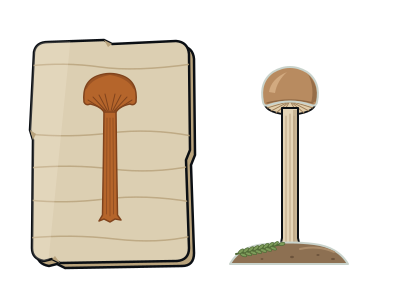
- GondwanagaricitesThe oldest gilled mushroom fossil, flattened in Brazilian limestone about 115 million years ago.