A species
Giant puffball
Calvatia gigantea
A football-sized relative of familiar mushrooms
You and the giant puffball meet in the Fungi and animals branch, shown at about 1.3 billion years ago (on 10 September, in a calendar from life's shared ancestor to today).
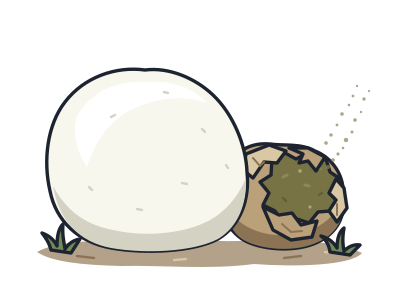
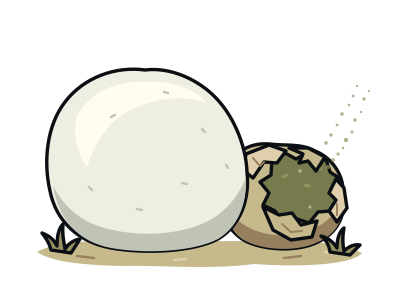
A white ball as big as a football, the giant puffball can eventually release clouds of spore dust. It looks very different from a button mushroom or a fly agaric, yet belongs to the same broad mushroom branch. Its rounded shape hides that family connection: there is no familiar cap with gills underneath.
The ball is not the whole fungus. It is the part that makes spores, called a fruiting body. Below ground, the fungus also has a network of fine white threads. A mature ball can contain trillions of spores, though that does not mean they all escape in a single puff.
As the ball ages, its outer wall breaks apart irregularly. Unlike some smaller puffballs, it does not open through one neat hole at the top. Disturbing a mature puffball can send a cloud into the air. What looks like smoke is actually dust made of spores, not something burning.
Tiny passengers
Each spore is only about four to six thousandths of a millimetre across.
Fairy rings
Giant puffballs sometimes grow in circles known as fairy rings.
Seasonal appearances
In Britain, the balls are usually seen from July to November.
Next to it on the tree
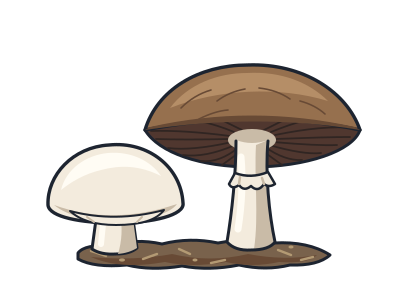
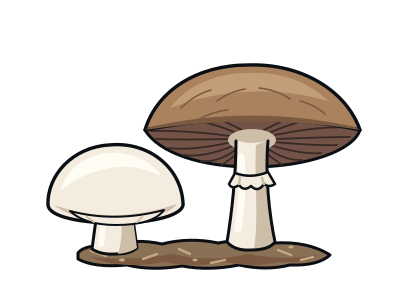
- Button mushroomThe everyday supermarket mushroom; portobellos are the same species grown bigger.
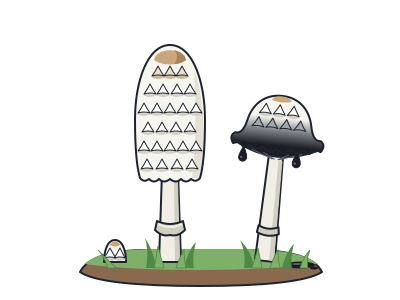
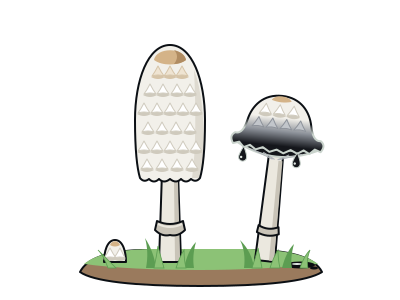
- Shaggy ink capA tall white shaggy cap that melts into black ink within hours; the ink was once used for writing.
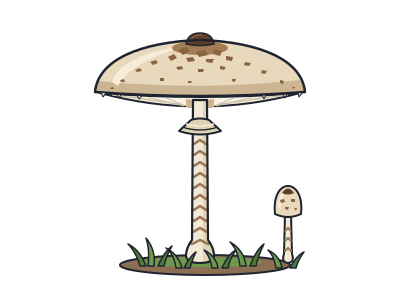
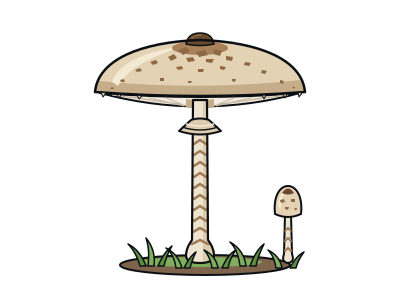
- Parasol mushroomA snakeskin-patterned stem holds up a cap as wide as a dinner plate, like an opened umbrella.
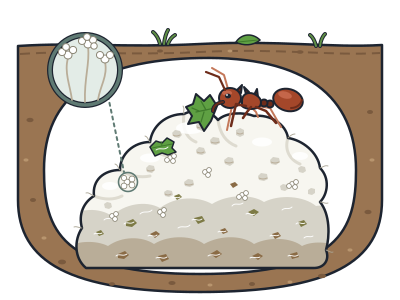
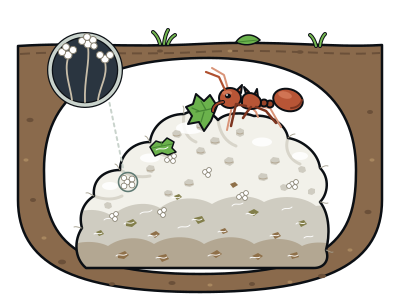
- Leafcutter ant fungusThe crop that leafcutter ants farm underground; it grows on chewed leaves and feeds the whole colony.