A species
Parasol mushroom
Macrolepiota procera
A tall mushroom with a snakeskin stem and a cap like an opened umbrella
You and the parasol mushroom meet in the Fungi and animals branch, shown at about 1.3 billion years ago (on 10 September, in a calendar from life's shared ancestor to today).
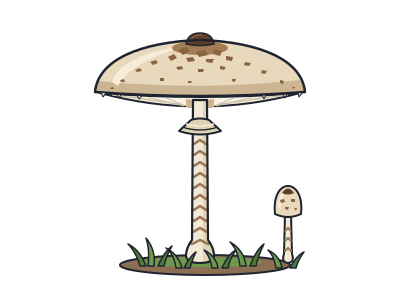
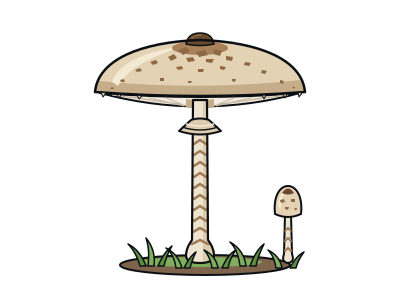
A tall, thin stem with a snakeskin pattern of brown bands holds up a cap that can grow as wide as a dinner plate. When it is fully open, the parasol mushroom looks just like an opened umbrella. Its pale cap is covered in shaggy brown scales, with a smooth, dark bump in the middle. Underneath, crowded white to pale cream gills fan out like the spokes of a wheel.
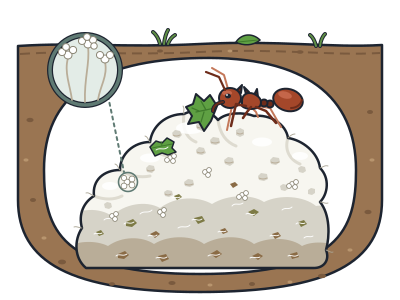
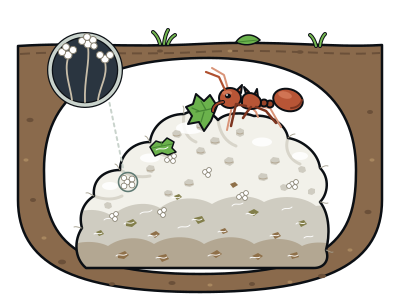
Its family holds some surprises. The parasol is in the same family as the button mushrooms sold in shops, the shaggy ink cap and even the giant puffball, which is a round ball with no cap or gills at all. DNA studies suggest that some of its closest relatives include the fungus that leafcutter ants farm in their nests.
The mushroom you see is only the 'fruit' that releases spores. The main body is a hidden web of fine threads in the soil. It is a decomposer, which means it breaks down dead plant material and returns nutrients to the soil.
Look for it in late summer and autumn in grassland, on road verges and at the edges of woods. Some deadly mushrooms look similar, so never pick one to eat unless an expert is completely sure what it is.
A sliding collar
As the cap opens, its edge tears away and leaves a thick ring on the stem. The ring can slide up and down, a bit like a loose frilly collar.
Starts as a drumstick
A young parasol has a closed, egg-shaped cap, so it looks a bit like a drumstick before it opens out flat.
A metal collector
Parasol caps soak up metals such as cadmium and mercury from the soil, even in clean areas. The caps hold at least twice as much cadmium as the stems.
Next to it on the tree
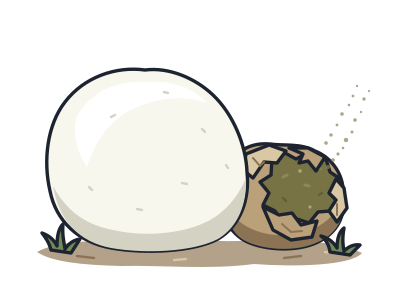
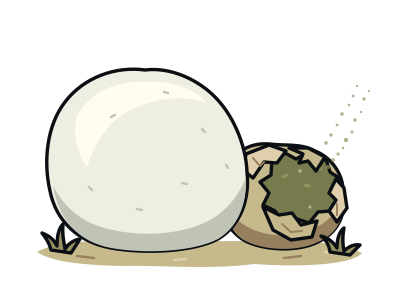
- Giant puffballA white ball as big as a football that can release trillions of spores in a puff.
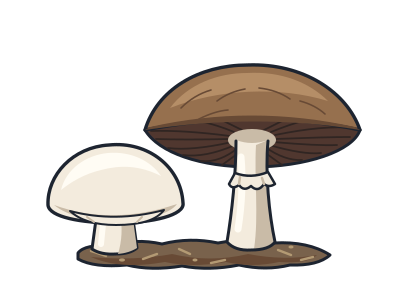
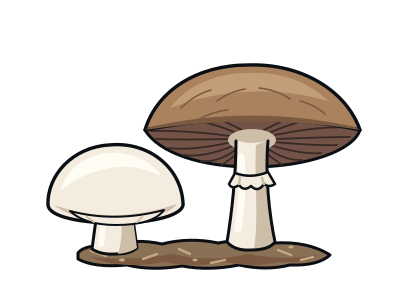
- Button mushroomThe everyday supermarket mushroom; portobellos are the same species grown bigger.
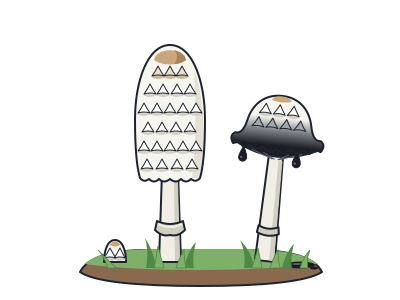
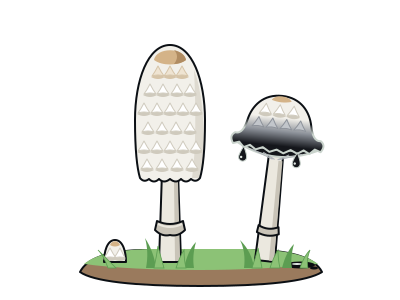
- Shaggy ink capA tall white shaggy cap that melts into black ink within hours; the ink was once used for writing.
- Leafcutter ant fungusThe crop that leafcutter ants farm underground; it grows on chewed leaves and feeds the whole colony.