A species
Button mushroom
Agaricus bisporus
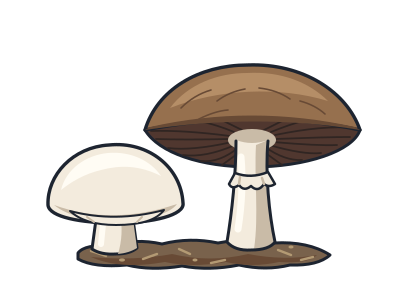
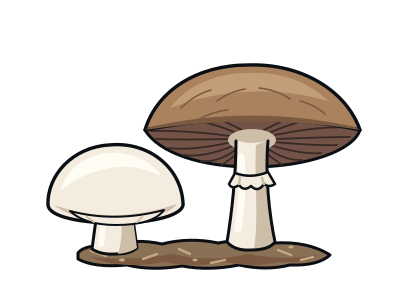
A supermarket button and a big portobello are the same species.
You and the button mushroom meet in the Fungi and animals branch, shown at about 1.3 billion years ago (on 10 September, in a calendar from life's shared ancestor to today).
The everyday supermarket button mushroom has a bigger version you may already know: the portobello. White buttons, brown cremini and portobellos are all the same species. Portobellos are brown mushrooms allowed to grow beyond the small, closed button stage. A white button does not simply turn brown as it grows: white and brown forms exist separately.
The giant puffball is a surprising relative. It looks like a ball rather than a mushroom with a cap and stem. Both belong to a wider group that includes mushrooms with gills and others without them. Similar shapes alone are not a reliable guide to mushroom relationships.
The mushroom you see is only part of the fungus. Much of it consists of branching threads inside compost or other material it feeds on. These threads break material down outside the fungus and absorb the nutrients released. Beneath the cap, thin plates called gills produce spores: tiny particles that can grow into new fungi.
Changing colours underneath
The gills start pinkish and become dark brown to almost black as the mushroom matures.
A leftover ring
A pale covering protects the young gills. As the cap opens, it leaves a ring around the stem, though this can become hard to see.
Usually two, not four
Most of its microscopic spore-producing cells make two spores, rather than the four usual in many related mushrooms. Some varieties are exceptions.
Next to it on the tree
- Giant puffballA white ball as big as a football that can release trillions of spores in a puff.
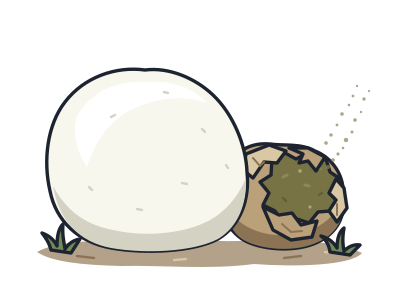
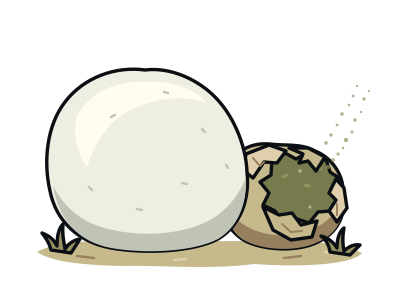
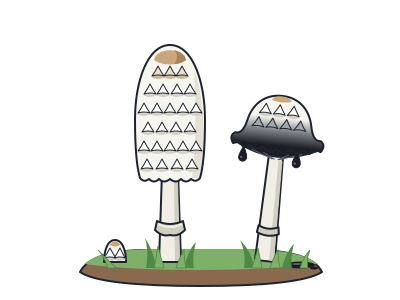
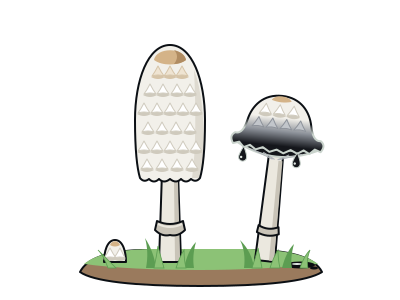
- Shaggy ink capA tall white shaggy cap that melts into black ink within hours; the ink was once used for writing.
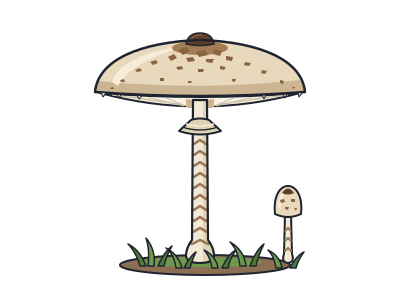
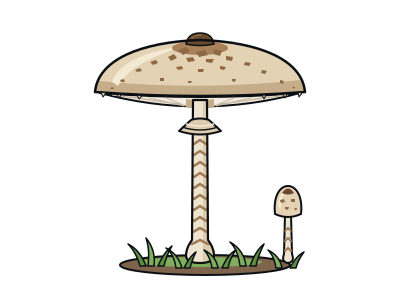
- Parasol mushroomA snakeskin-patterned stem holds up a cap as wide as a dinner plate, like an opened umbrella.
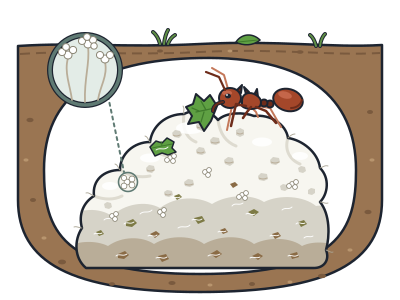
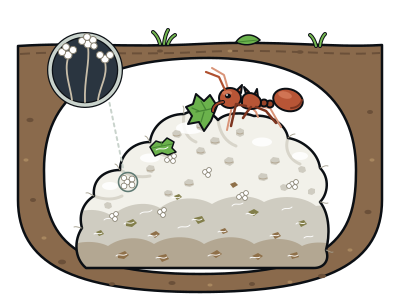
- Leafcutter ant fungusThe crop that leafcutter ants farm underground; it grows on chewed leaves and feeds the whole colony.