A species
Leafcutter ant fungus
Leucoagaricus gongylophorus
The crop that leafcutter ants farm underground
You and the leafcutter ant fungus meet in the Fungi and animals branch, shown at about 1.3 billion years ago (on 10 September, in a calendar from life's shared ancestor to today).
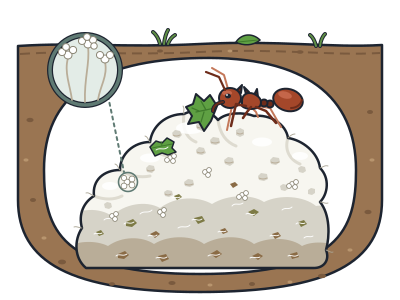
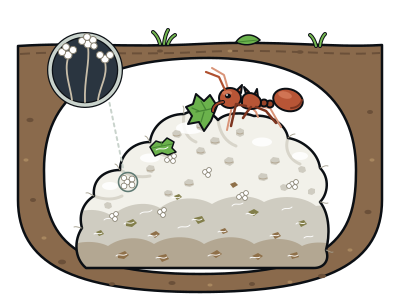
Deep underground in warm parts of the Americas, leafcutter ants run farms, and this fungus is their crop. The ants do not eat the leaves they cut. They carry them home, chew them up and mix them with their spit and droppings. Then they grow this fungus on that mulch. The fungus is the colony's main food.
Surprisingly, it is a true mushroom fungus, in the same family as the button mushroom you can buy at the shops. Yet it hardly ever makes mushrooms. Instead it grows as a spongy, white to grey garden of very fine threads woven through bits of leaf. It is found only with the ants and is not known to live wild on its own.
The fungus breaks down tough plant material that the ants cannot digest. At the tips of its threads it grows tiny swollen bulbs packed with fats, sugars and other nutrients. These bulbs are the ants' main food. In return, the ants care for their crop. They weed out rubbish and sick patches and lick off unwanted spores. Many workers also carry helpful bacteria that make natural germ-killers, which help protect the crop from a harmful mould.
Ants began farming fungus tens of millions of years ago, long before people grew any crops at all.
A packed lunch for a new nest
When a young queen leaves to start a new colony, she carries a small piece of the fungus in her mouth. She looks after the new garden alone for about a month, until her first workers grow up.
A fussy crop
If the fungus reacts badly to a certain kind of leaf, the ants stop collecting that leaf.
A very rare mushroom
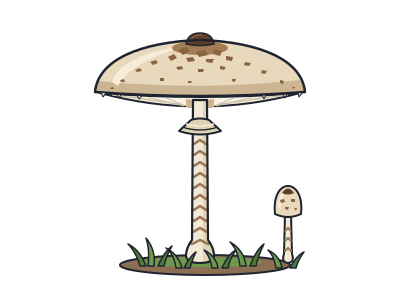
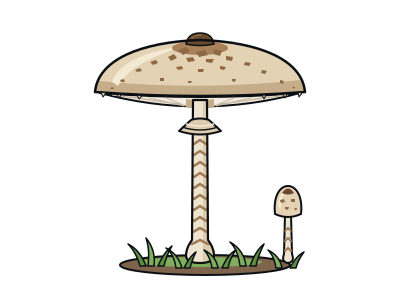
On the rare occasions it has been seen as a mushroom, usually after ants have left a nest or in laboratory colonies, the cap reached about 16 cm across. The stem grew up to about 24 cm tall, longer than a new pencil.
Next to it on the tree
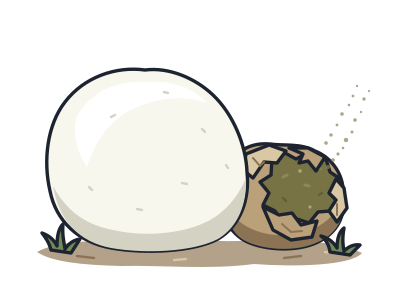
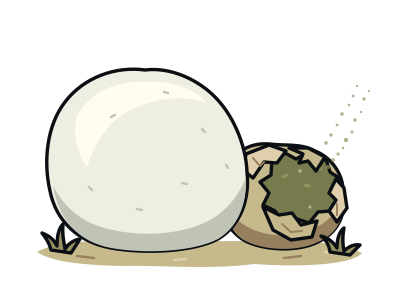
- Giant puffballA white ball as big as a football that can release trillions of spores in a puff.
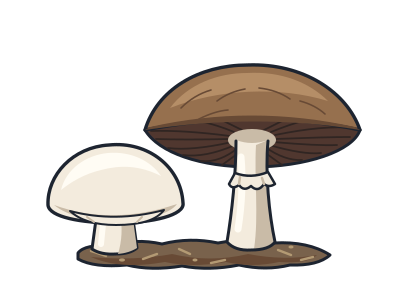
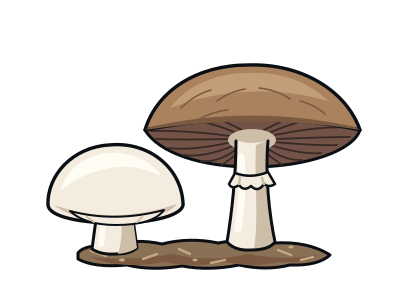
- Button mushroomThe everyday supermarket mushroom; portobellos are the same species grown bigger.
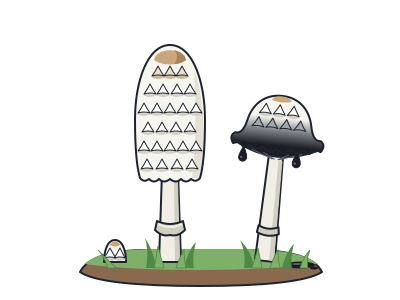
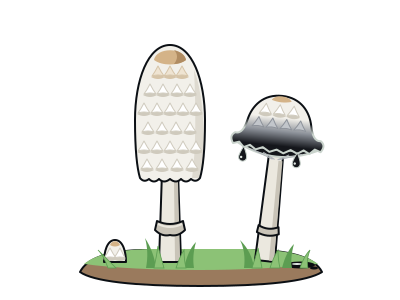
- Shaggy ink capA tall white shaggy cap that melts into black ink within hours; the ink was once used for writing.
- Parasol mushroomA snakeskin-patterned stem holds up a cap as wide as a dinner plate, like an opened umbrella.