A species
Death cap
Amanita phalloides
Plain-looking, greenish and deadly: never pick it to eat.
You and the death cap meet in the Fungi and animals branch, shown at about 1.3 billion years ago (on 10 September, in a calendar from life's shared ancestor to today).
A plain greenish mushroom can be the world’s deadliest. The death cap earns that description because it causes most fatal mushroom poisonings worldwide, not because its poison is proven to be the strongest. Never pick it to eat. Its relatives include fly agaric, the much more eye-catching red mushroom with white spots.
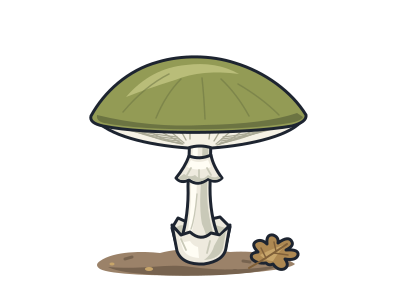
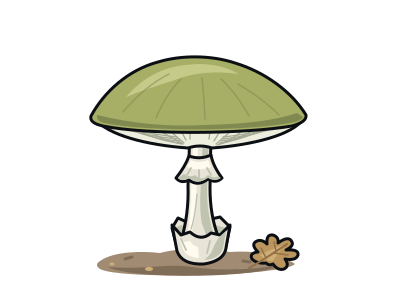
Its cap is usually yellowish-green to olive-brown, above white gills and a white stem. A mature mushroom usually has a white, skirt-like ring hanging below the cap. But that ring can disappear. Appearance is not a reliable guide to safety, and cooking, soaking or drying does not make a death cap safe to eat.
Despite its danger to people, this fungus has a helpful partnership with trees. It connects with their roots, supplying water and nutrients from the soil. In return, the trees supply sugars. In Canberra, its mushrooms commonly appear near oak trees in autumn.
An egg-like beginning
Very young death caps sit inside a white covering. When it splits, it leaves a bag-like cup around the stem’s base.
White spores
Its spores—the tiny particles fungi use to reproduce—are white.
A weather-changing surface
The cap is slightly sticky when wet, but dry and shiny in dry weather.
Next to it on the tree
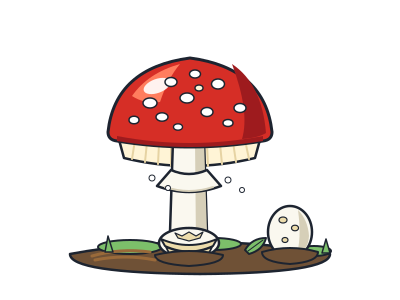
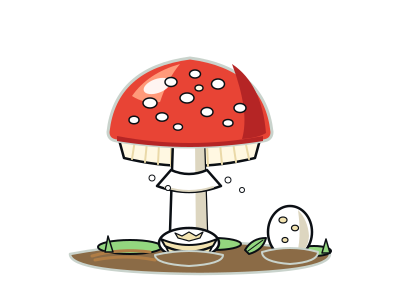
- Fly agaricThe red-and-white fairytale toadstool; poisonous, and partnered underground with birch and pine roots.
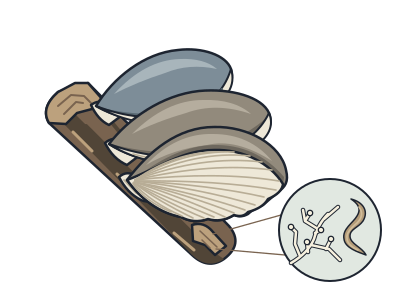
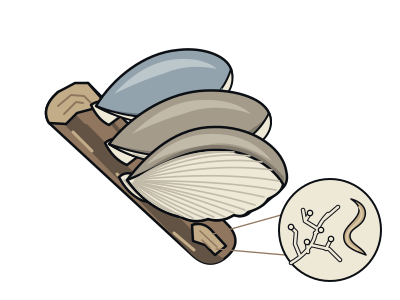
- Oyster mushroomFan-shaped shelves on dead wood that also trap and eat tiny worms.
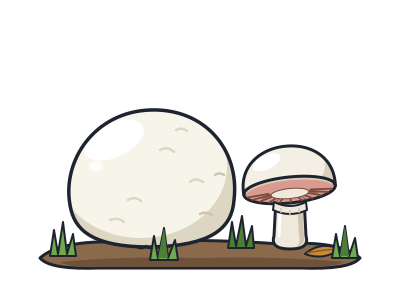
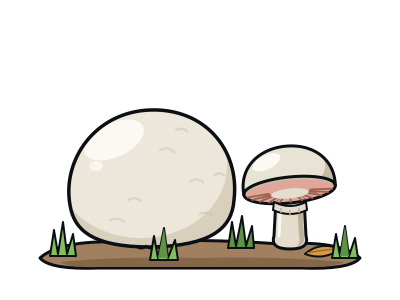
- Field mushrooms and puffballsOne family holds supermarket mushrooms, parasols, shaggy ink caps and round puffballs that never open a cap.
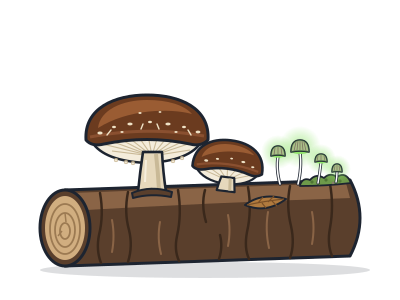
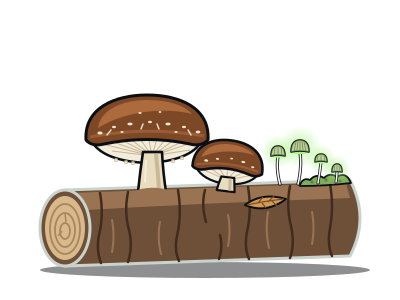
- Fairy rings, enoki and honey fungiTough little mushrooms that dry out and revive, plus log-growers, glow-in-the-dark kinds and giant honey fungi.
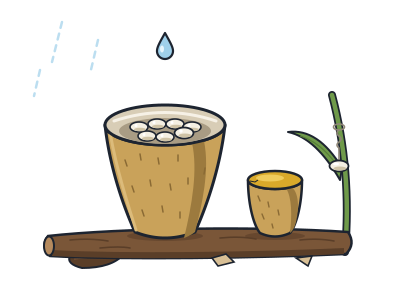
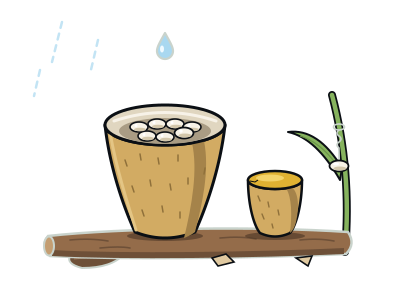
- Common bird's nest fungusA tiny cup holding spore 'eggs' that raindrops splash out, sometimes a metre away.
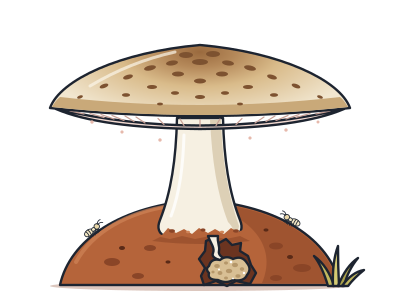
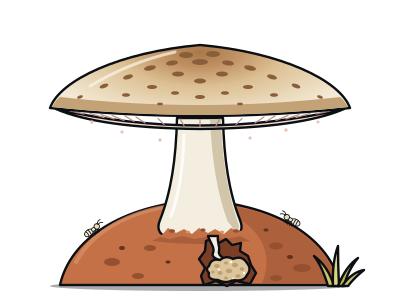
- Giant termite mushroomSprouts from termite mounds in Africa with a cap up to a metre across, the largest edible mushroom.
- MatsutakeA spicy-smelling pine-forest mushroom so prized in Japan that a single one can cost as much as a meal out.
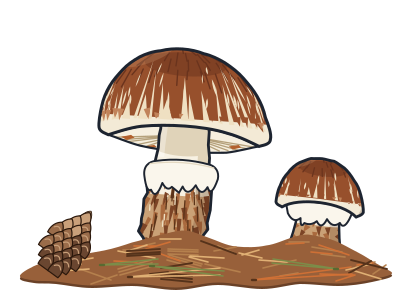
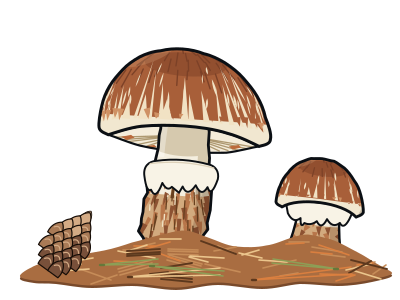
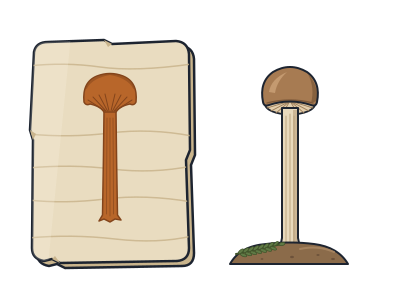
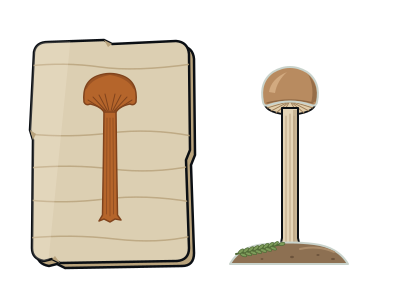
- GondwanagaricitesThe oldest gilled mushroom fossil, flattened in Brazilian limestone about 115 million years ago.