An extinct species
Gondwanagaricites †
Gondwanagaricites magnificus
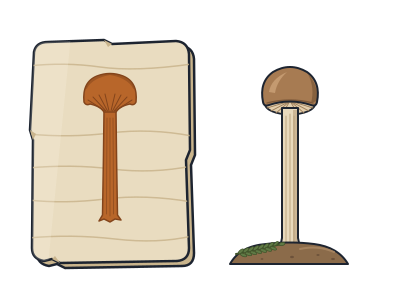
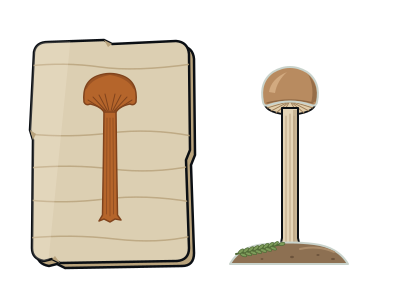
The oldest gilled mushroom fossil ever found, pressed flat in Brazilian limestone.
Lived about 115–113 million years ago.
You and the gondwanagaricites meet in the Fungi and animals branch, shown at about 1.3 billion years ago (on 10 September, in a calendar from life's shared ancestor to today).
This is the oldest gilled mushroom fossil ever found. It lived about 115 to 113 million years ago, in the age of the dinosaurs, and ended up flattened in limestone in what is now northeast Brazil. It sits in the same big group as today's fly agaric, death cap and oyster mushroom. That makes it an ancient relative of the mushrooms you might buy at the shops.
Only one fossil is known. It shows a small, slim mushroom about 4 cm tall, a little shorter than a matchbox. The round, dome-shaped cap was only about 1 cm across, with its edge curled inwards. Under the cap were gills, the thin plates that release spores. These gills are the main reason scientists place it with the gilled mushrooms. The long stalk had fine lines running along it and no ring.
Most mushrooms pop up and vanish within a few days, so their fossils are extremely rare. Researchers think this one fell into a river and was carried into a very salty lagoon. It sank and was buried under fine mud. Over time, its tissues were replaced by pyrite, or 'fool's gold', which later turned into an orange-brown iron mineral. So the fossil's colour comes from the mineral. Nobody knows what colour the living mushroom was.
Not trapped in amber
Before this find, the oldest known fossil mushrooms were trapped in amber from Myanmar, about 99 million years old. This fossil pushed the mushroom record back by about 14 to 21 million years. When it was described in 2017, it was the only fossil mushroom known to be preserved as a mineral copy in rock rather than in amber.
A southern first
Its name means 'Gondwanan mushroom fossil'. It is the first fossil mushroom found from Gondwana, an old southern supercontinent that was slowly breaking apart as South America and Africa separated.
Spotted in a collection
Palaeontologist Sam Heads, from the Illinois Natural History Survey, spotted the mushroom while cataloguing fossils that had already been collected. He said its chances of being preserved must have been tiny.
Next to it on the tree
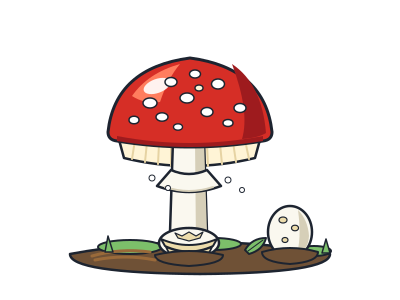
- Fly agaricThe red-and-white fairytale toadstool; poisonous, and partnered underground with birch and pine roots.
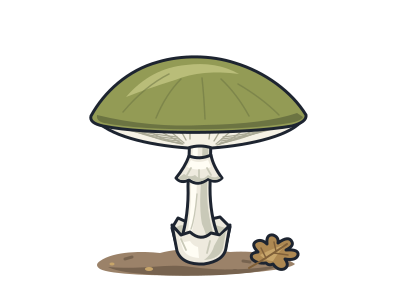
- Death capA plain greenish mushroom that is the world's most deadly; never pick it to eat.
- Oyster mushroomFan-shaped shelves on dead wood that also trap and eat tiny worms.
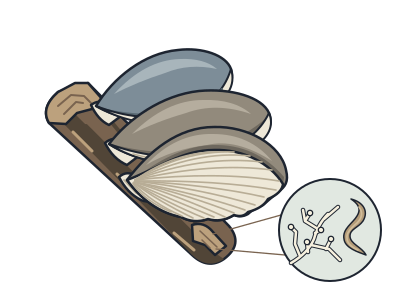
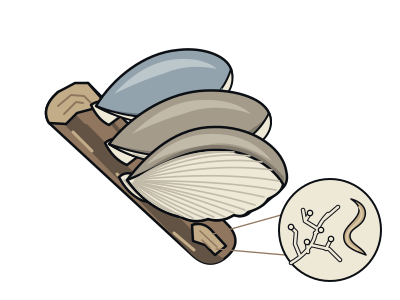
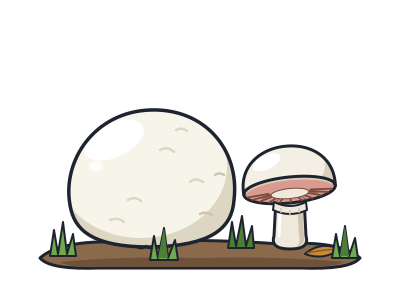
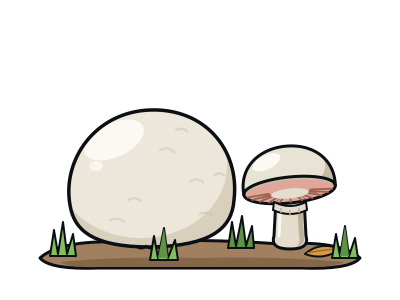
- Field mushrooms and puffballsOne family holds supermarket mushrooms, parasols, shaggy ink caps and round puffballs that never open a cap.
- Fairy rings, enoki and honey fungiTough little mushrooms that dry out and revive, plus log-growers, glow-in-the-dark kinds and giant honey fungi.
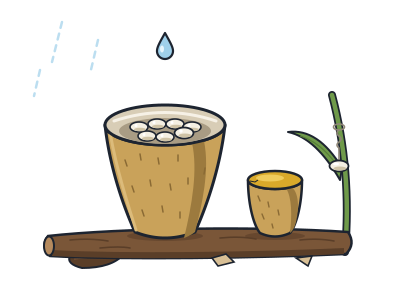
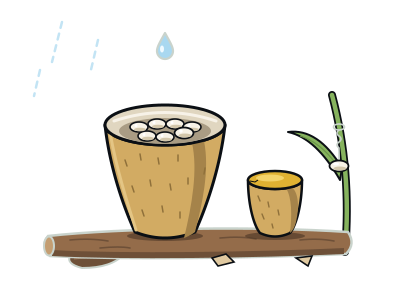
- Common bird's nest fungusA tiny cup holding spore 'eggs' that raindrops splash out, sometimes a metre away.
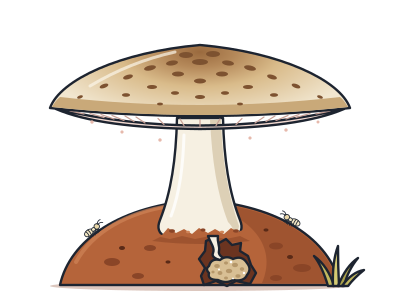
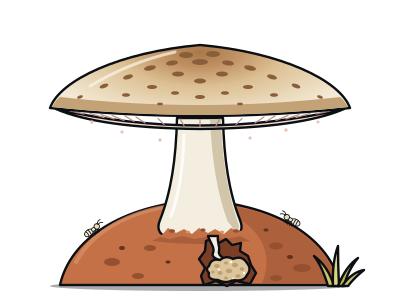
- Giant termite mushroomSprouts from termite mounds in Africa with a cap up to a metre across, the largest edible mushroom.
- MatsutakeA spicy-smelling pine-forest mushroom so prized in Japan that a single one can cost as much as a meal out.