A species
Matsutake
Tricholoma matsutake
A spicy-smelling pine mushroom that can cost as much as a restaurant meal
You and the matsutake meet in the Fungi and animals branch, shown at about 1.3 billion years ago (on 10 September, in a calendar from life's shared ancestor to today).
In Japan, this spicy-smelling mushroom is so prized that one Tokyo department store priced a single one at about 12,800 yen, roughly US$100. That could pay for a meal out at a good restaurant. Its Japanese name means 'pine mushroom', and it is known for its fresh, spicy smell and meaty flavour.
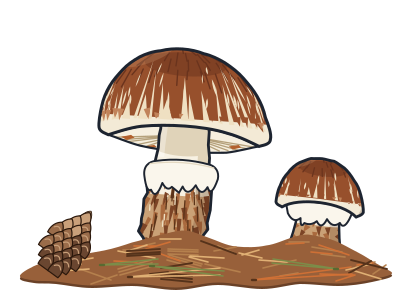
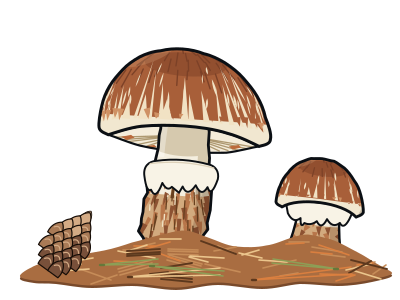
It is a gilled mushroom. It sits on the same big branch of the tree of life as the fly agaric, the deadly death cap and the oyster mushroom. Like all fungi, it is more closely related to animals than to plants. It has a brown, scaly cap about the width of a hand, white gills and a thick, firm stem.
Underground, its threads join onto the roots of living trees and trade with them. In Japan it grows mainly under Japanese red pine. Because it needs living roots, nobody has managed to farm it reliably. Nearly all of it is still picked from the wild.
Japan's own harvest has crashed. A tiny worm from North America has been killing the pines, and old pine woods have been left to grow over. The species is now listed as Vulnerable worldwide, and most matsutake eaten in Japan is imported from places like China, South Korea and Canada.
An ancient favourite
Matsutake is mentioned in Japanese poetry from the 600s, and people in Kyoto and Nara have been eating it for more than 1,000 years.
A Swedish twin
In 2000, DNA tests showed that a Swedish mushroom once given a different name is really the same species as Japan's matsutake. Later, DNA tests confirmed that a mushroom picked in Ukraine in 2020 was matsutake too. It was the first confirmed find in eastern Europe.
Rings in the forest
Underground it builds a thick mat of threads, soil and pine roots called a shiro. The mushrooms pop up around its edge, often in a ring or an arc.
Next to it on the tree
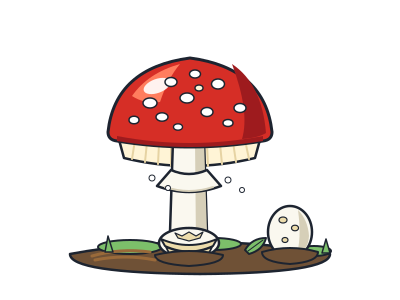
- Fly agaricThe red-and-white fairytale toadstool; poisonous, and partnered underground with birch and pine roots.
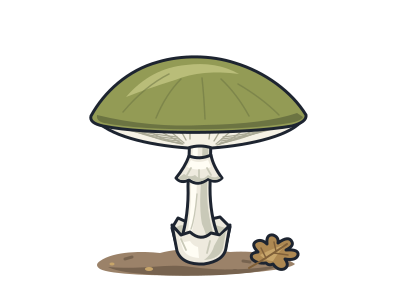
- Death capA plain greenish mushroom that is the world's most deadly; never pick it to eat.
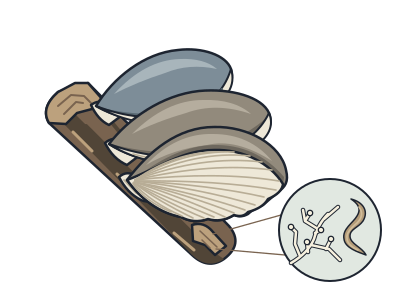
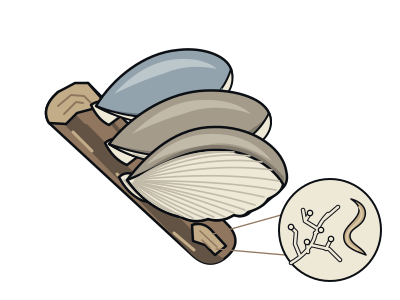
- Oyster mushroomFan-shaped shelves on dead wood that also trap and eat tiny worms.
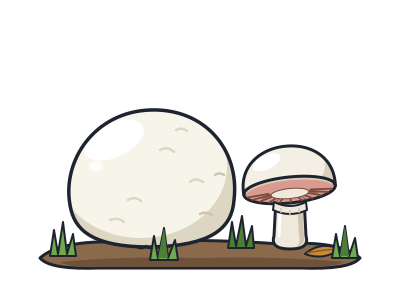
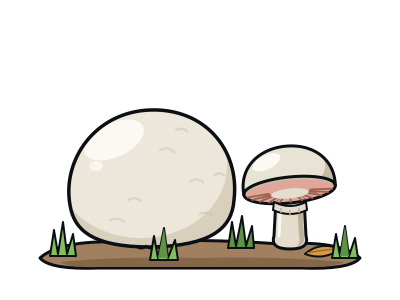
- Field mushrooms and puffballsOne family holds supermarket mushrooms, parasols, shaggy ink caps and round puffballs that never open a cap.
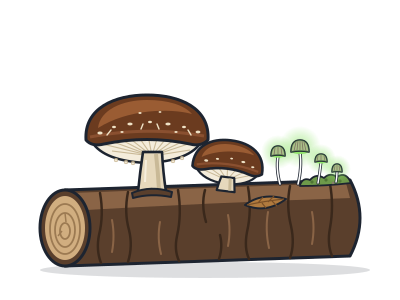
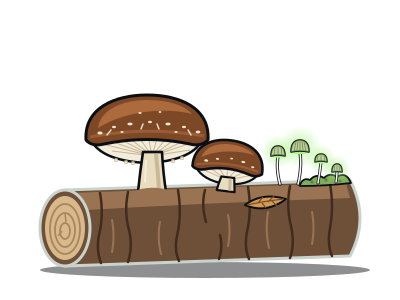
- Fairy rings, enoki and honey fungiTough little mushrooms that dry out and revive, plus log-growers, glow-in-the-dark kinds and giant honey fungi.
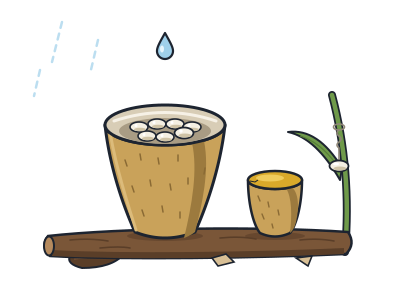
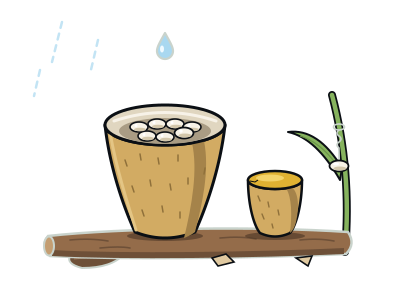
- Common bird's nest fungusA tiny cup holding spore 'eggs' that raindrops splash out, sometimes a metre away.
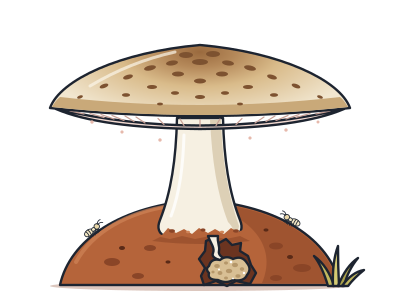
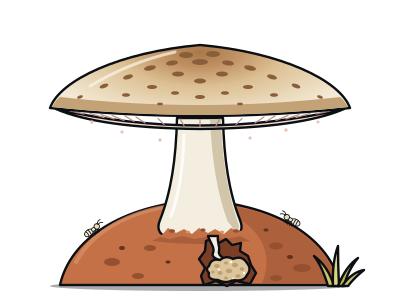
- Giant termite mushroomSprouts from termite mounds in Africa with a cap up to a metre across, the largest edible mushroom.
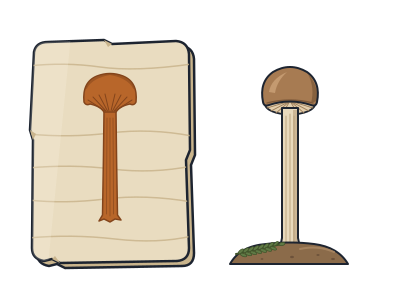
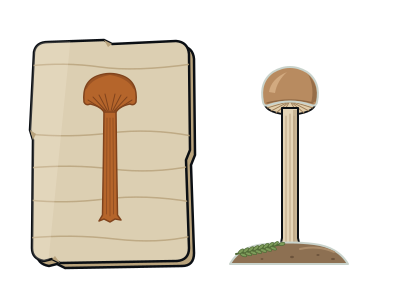
- GondwanagaricitesThe oldest gilled mushroom fossil, flattened in Brazilian limestone about 115 million years ago.