A species
Fairy ring champignon
Marasmius oreades
A lawn mushroom whose rings grow wider every year, and which shrivels in dry weather, then plumps up again after rain.
You and the fairy ring champignon meet in the Fungi and animals branch, shown at about 1.3 billion years ago (on 10 September, in a calendar from life's shared ancestor to today).
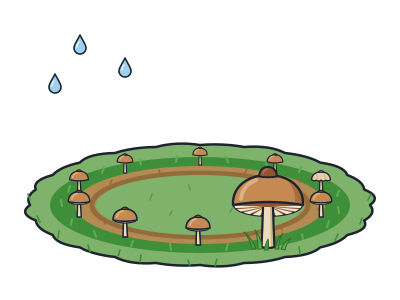
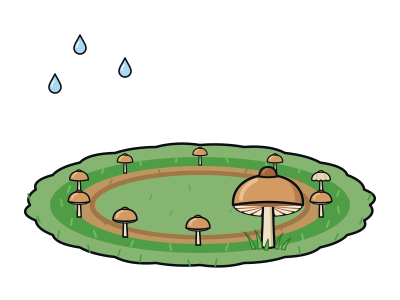
After rain, you may spot a circle of small tan mushrooms on a lawn. This fungus makes those rings, and each year they grow wider. Under the grass, the fungus lives all year round as a web of fine threads. The threads spread outwards from a central point in search of fresh food. They travel about 20 to 30 centimetres a year, which is roughly the length of a school ruler. Rings like these can grow more than 9 metres across.
The mushrooms are only the parts that make spores. In dry weather they shrivel up and look pale and papery, but they are not dead. A special sugar protects their cells while they are dried out. After rain they soak up water, swell back into shape and start making spores again.
A ring often has a band of extra-green grass next to a band of brown, dead grass. The green comes from nutrients released as dead material breaks down. The threads repel water, so in dry spells the grass roots nearby go thirsty.
This humble lawn mushroom shares a branch of the tree with shiitake and enoki, which you can buy in shops. Honey fungi and the glowing mushroom are on that branch too.
Dancing fairies
The name 'fairy ring' comes from old folklore. People once said that circles of mushrooms marked the places where fairies had danced.
Bendy stem, spaced gills
Its stem is tough but bends without snapping. The gills under the cap are spaced further apart than on most mushrooms. If you leave the cap on paper, it drops a white spore print.
Dried on a string
It is prized as a good mushroom to eat, and its caps are traditionally threaded on string to dry. Poisonous lookalikes grow in the same lawns, though. Never eat a wild mushroom unless an expert is certain what it is.
Next to it on the tree
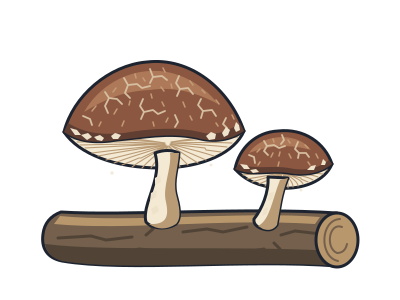
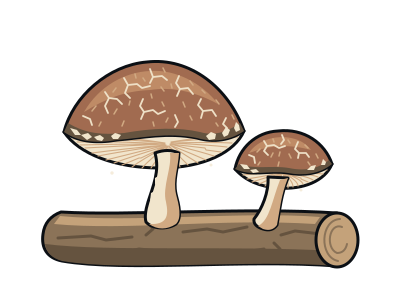
- ShiitakeGrown on logs in East Asia for about a thousand years and now a favourite in kitchens worldwide.
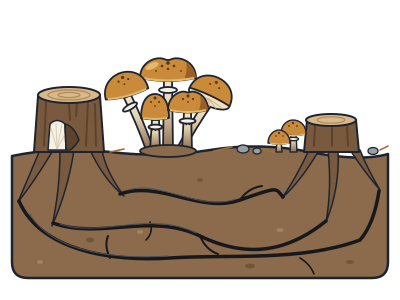
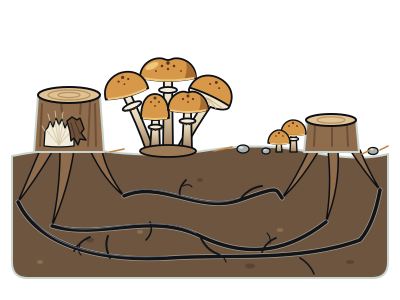
- Dark honey fungusOne underground fungus in Oregon spreads across nearly 10 square kilometres of forest.
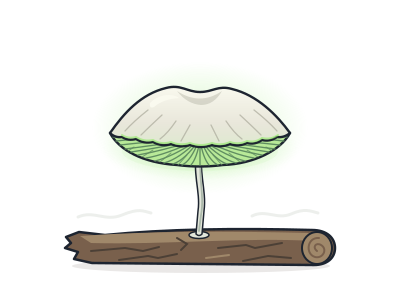
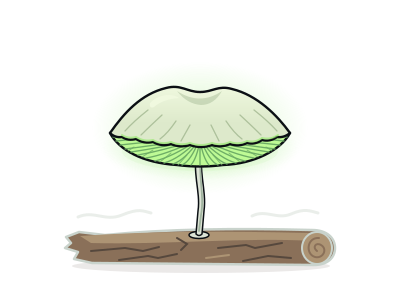
- Glowing mushroomTiny mushrooms that glow green at night on forest logs.
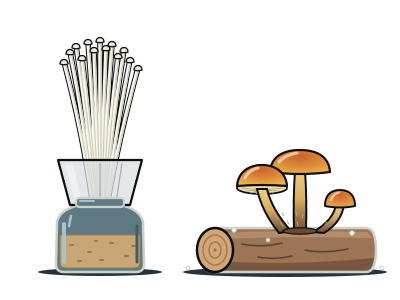
- EnokiGrown in jars in the dark, it becomes long white noodles; in the wild it is a sticky orange winter mushroom.

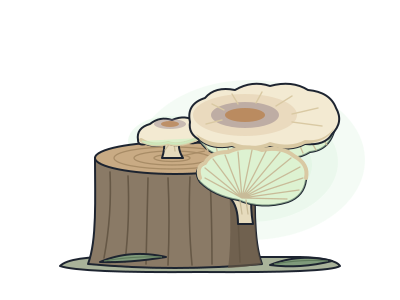
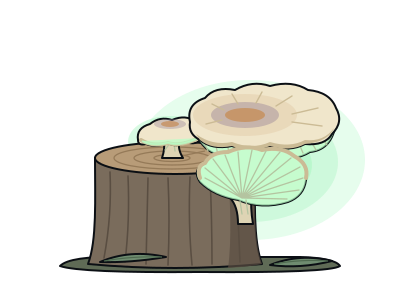
- Ghost fungusCreamy fans on Australian tree stumps that glow a soft green in the dark; poisonous to eat.