A species
Enoki
Flammulina filiformis
Long white noodles in the shop, a sticky golden-brown mushroom in the wild
You and the enoki meet in the Fungi and animals branch, shown at about 1.3 billion years ago (on 10 September, in a calendar from life's shared ancestor to today).
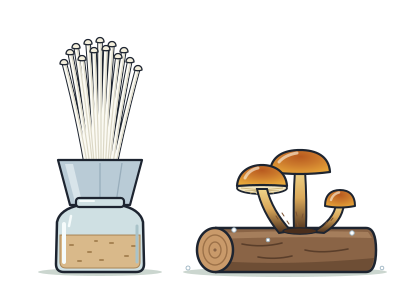
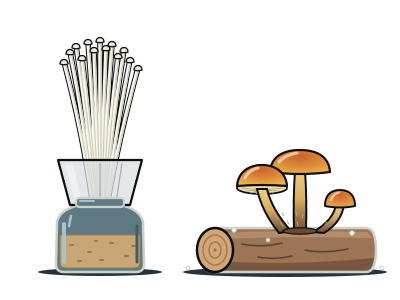
The enoki in a supermarket pack looks like a bundle of white noodles. Each thin stem ends in a tiny cap only a few millimetres wide. In the wild, the very same species looks completely different. There it grows as a tuft of small, sticky, yellow-to-brown mushrooms on dead wood in the cold months.
Its noodle shape comes from the way it is farmed. Growers raise it in narrow bottles of sawdust in cool, damp, dark rooms. In the dark it grows long, pale stems and hardly any cap. While it was being farmed, white forms sometimes popped up. Growers kept them, and today almost all enoki from large mushroom factories is one white variety.
Wild enoki lives in China, Korea and Japan. It grows on dead broad-leaved trees, breaking down the wood, and comes up from late autumn to early spring. Its caps grow up to about 4.5 cm across and feel slimy when damp. Its short stem is pale yellow at the top and darkens to brown towards the base.
On the tree of life it shares a branch with the honey fungi and the fairy ring champignon. For many years it was mixed up with the velvet shank, a look-alike from Europe and North America. Then DNA tests showed they are separate species.
Named after a tree
In Japanese, enoki-take means "hackberry mushroom" because it often grows at the base of hackberry trees. In Mandarin it is called "gold needle mushroom".
Cook it first
Enoki has been linked to outbreaks of Listeria food poisoning, so health authorities advise cooking it thoroughly rather than eating it raw.
A deadly double
A poisonous mushroom called Galerina grows in similar places. One way to tell them apart is the spore print: Galerina's is rusty brown, while enoki's is white. Even so, wild mushrooms should never be picked to eat without expert help.
Next to it on the tree
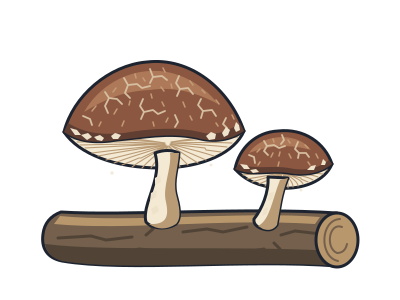
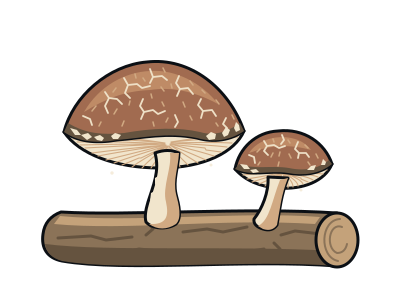
- ShiitakeGrown on logs in East Asia for about a thousand years and now a favourite in kitchens worldwide.
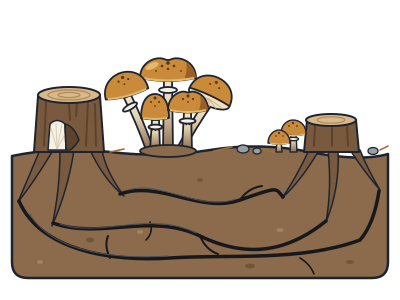
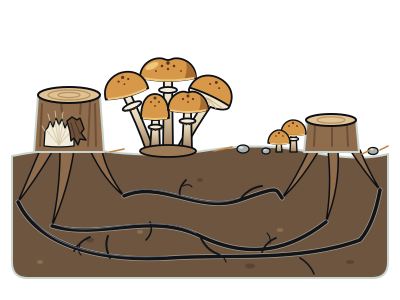
- Dark honey fungusOne underground fungus in Oregon spreads across nearly 10 square kilometres of forest.
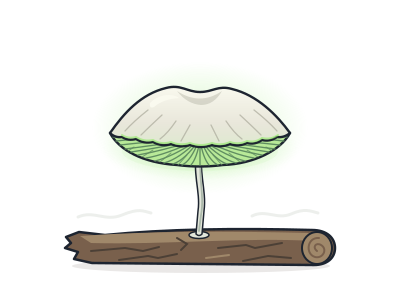
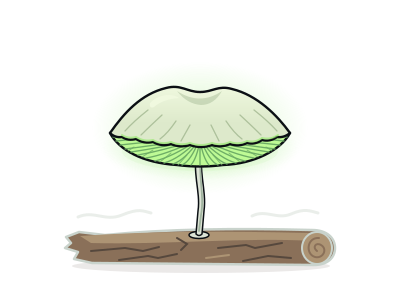
- Glowing mushroomTiny mushrooms that glow green at night on forest logs.
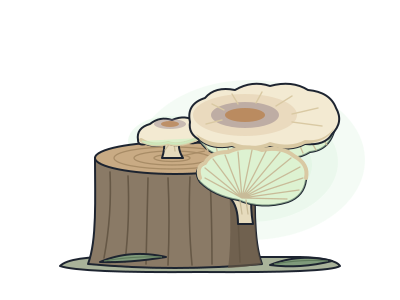
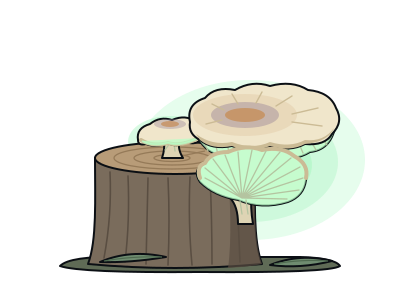
- Ghost fungusCreamy fans on Australian tree stumps that glow a soft green in the dark; poisonous to eat.
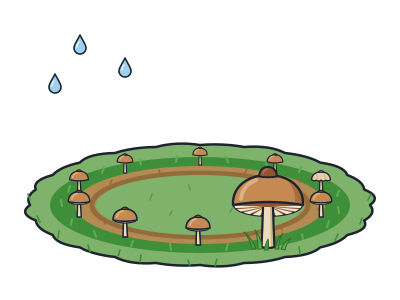
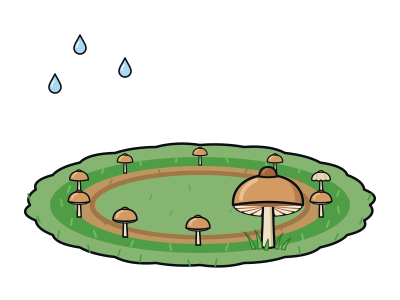
- Fairy ring champignonGrows in rings on lawns that widen each year; it shrivels in drought and springs back after rain.