A species
Glowing mushroom
Mycena chlorophos
Tiny forest mushrooms with a green night-time glow.
You and the glowing mushroom meet in the Fungi and animals branch, shown at about 1.3 billion years ago (on 10 September, in a calendar from life's shared ancestor to today).
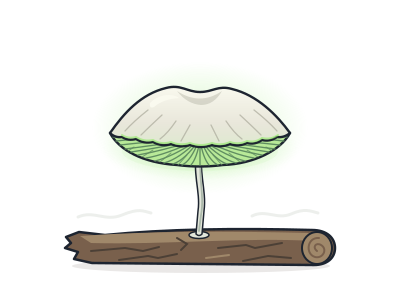
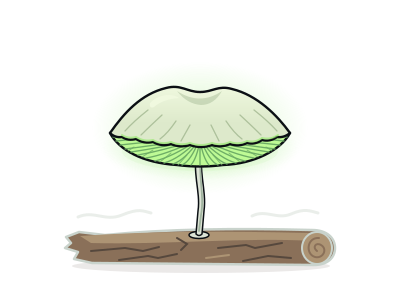
Tiny mushrooms glow green at night on fallen forest logs. These are bonnet mushrooms, relatives of familiar mushrooms such as shiitake and button mushrooms shown nearby on this tree. The cap and the gills underneath give off green light.
In daylight, they can look white rather than green. On Japan’s Hachijō Island, their caps are about 2 centimetres across: roughly the size of a thumbnail. A young cap is rounded. As it matures, it spreads out and may develop a shallow dip in the middle.
This fungus feeds on dead plant material in damp tropical and subtropical forests. Logs are not its only home: its mushrooms also appear on fallen twigs, branches and bark. In some places they grow on rotting bamboo or dead palm leaf stalks. Records include parts of Asia, Pacific islands, Australia and Brazil—not every forest across those regions.
Named for its light
The word chlorophos in its scientific name means “green light”.
A sticky little cap
The cap can be shiny and sticky, with fine lines running towards its edge.
First described in Japan
Scientists first described this species in 1860, using specimens from Japan’s Ogasawara Islands.
Next to it on the tree
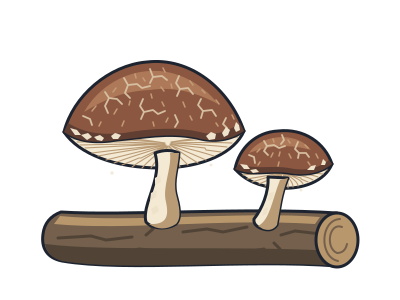
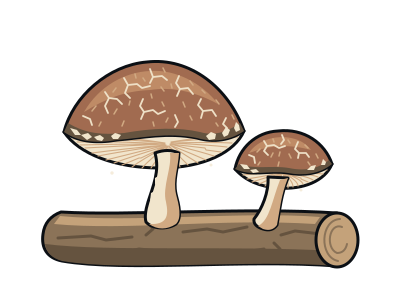
- ShiitakeGrown on logs in East Asia for about a thousand years and now a favourite in kitchens worldwide.
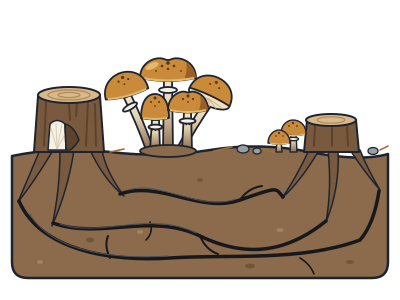
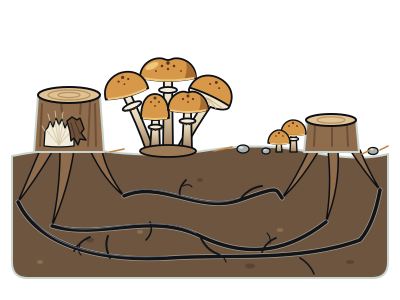
- Dark honey fungusOne underground fungus in Oregon spreads across nearly 10 square kilometres of forest.
- EnokiGrown in jars in the dark, it becomes long white noodles; in the wild it is a sticky orange winter mushroom.
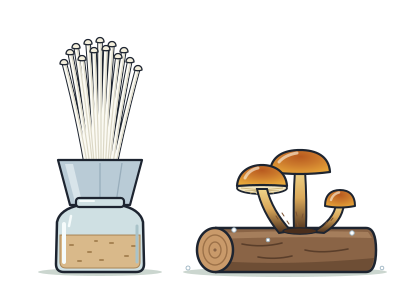
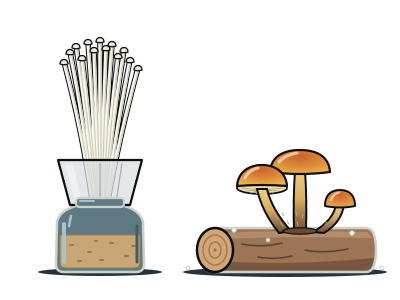
- Ghost fungusCreamy fans on Australian tree stumps that glow a soft green in the dark; poisonous to eat.
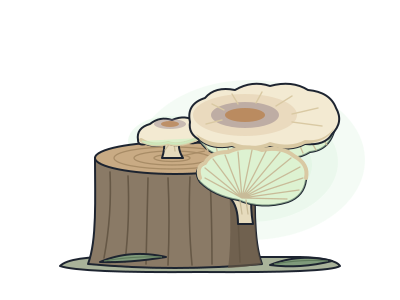
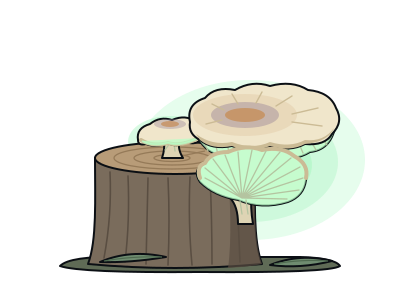
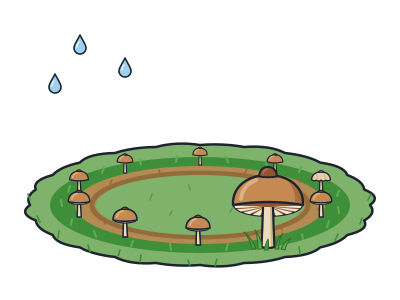
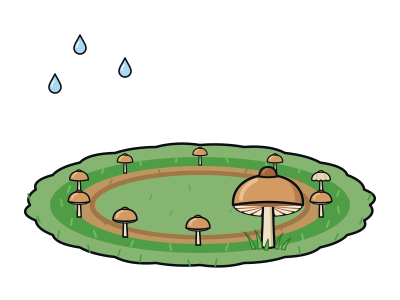
- Fairy ring champignonGrows in rings on lawns that widen each year; it shrivels in drought and springs back after rain.