A species
Shiitake
Lentinula edodes
From East Asian logs to kitchens worldwide
You and the shiitake meet in the Fungi and animals branch, shown at about 1.3 billion years ago (on 10 September, in a calendar from life's shared ancestor to today).
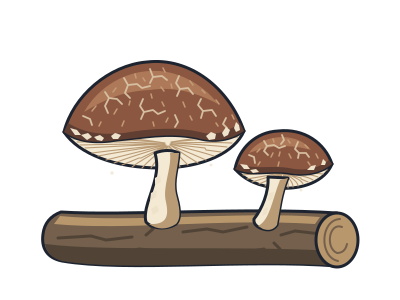
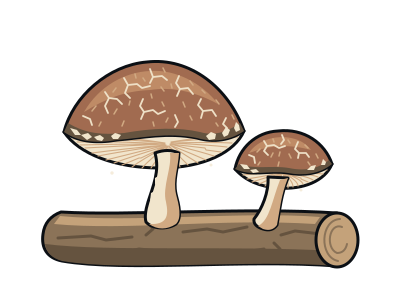
People have grown shiitake on hardwood logs in East Asia for about a thousand years. Cultivation began in China, and this mushroom is now a favourite in kitchens worldwide. Yet this familiar food has a surprising family connection: as a fungus, it is more closely related to animals than to plants.
Its rounded brown cap looks like a little umbrella. Pale flakes can gather around the curled edge, while closely packed cream-coloured gills line the underside. The colour varies: a cap may be reddish brown, plain brown or slightly greyish. These details describe shiitake, but they are not enough to identify a wild mushroom safely.
Away from the kitchen, shiitake helps break down dead hardwood. It can tackle the main ingredients of wood, including some especially tough material. A log is not simply a platform for the mushrooms: it is also their food.
A tree in its name
The Japanese name combines shii, a tree related to oaks, and take, meaning mushroom.
Where the wood goes
As shiitake breaks down wood, some of the wood’s carbon becomes part of the fungus. Some returns to the air as carbon dioxide.
An off-centre stalk
The tough, pale stalk is often bent and may join the cap away from its centre.
Next to it on the tree
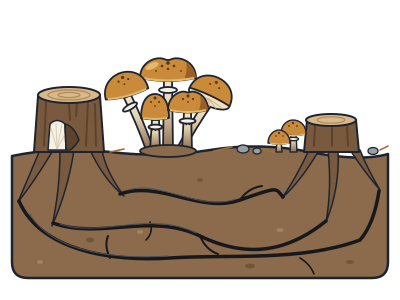
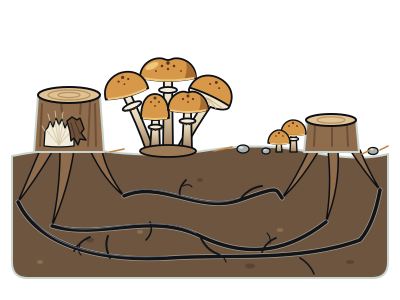
- Dark honey fungusOne underground fungus in Oregon spreads across nearly 10 square kilometres of forest.
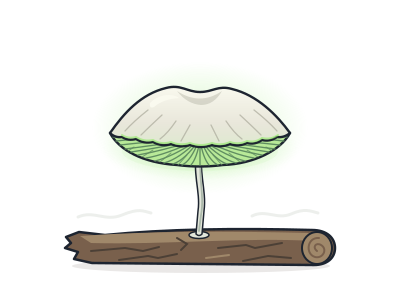
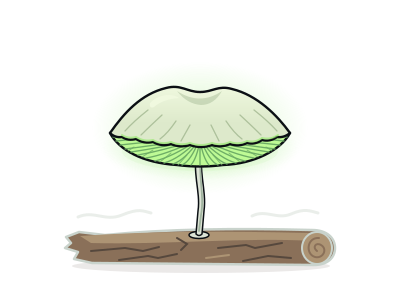
- Glowing mushroomTiny mushrooms that glow green at night on forest logs.
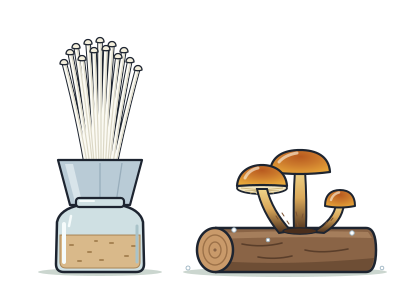
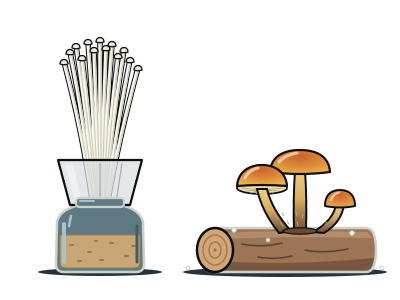
- EnokiGrown in jars in the dark, it becomes long white noodles; in the wild it is a sticky orange winter mushroom.
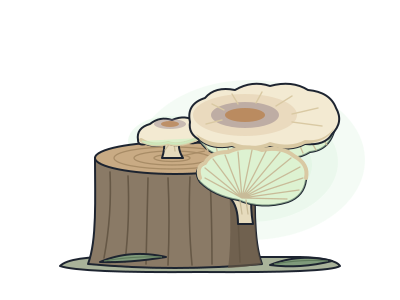
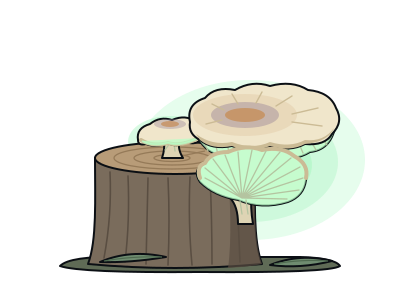
- Ghost fungusCreamy fans on Australian tree stumps that glow a soft green in the dark; poisonous to eat.
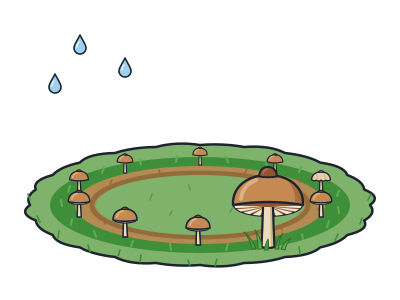
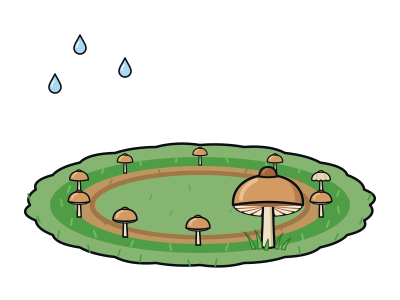
- Fairy ring champignonGrows in rings on lawns that widen each year; it shrivels in drought and springs back after rain.