A group of living things
Legumes
Fabaceae
Peas and beans that team up with soil bacteria to make their own fertiliser.
This branch is shown at about 70 million years ago; its age is a rough estimate.
You and legumes meet in the Eukaryotes branch, shown at about 1.8 billion years ago (on 28 July, in a calendar from life's shared ancestor to today).
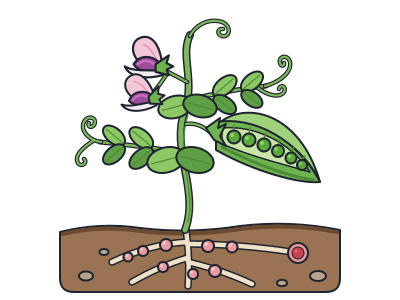
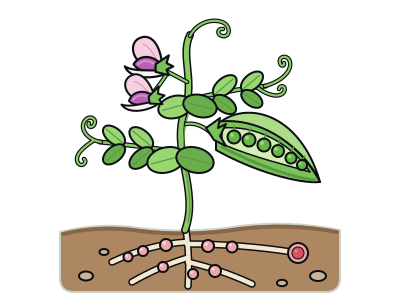
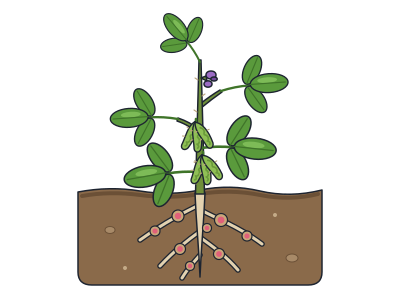
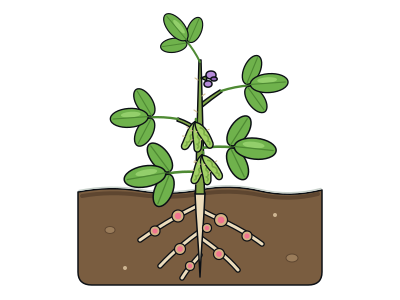
Peas and beans have a secret helper underground. Most legumes let tiny soil bacteria move into small bumps on their roots, called nodules. The bacteria take nitrogen gas from the air and turn it into a form the plant can use to grow. In return, the plant feeds them food made from sugars. It is a bit like keeping your own fertiliser factory in your roots.
If you cut open a working nodule, it is pink or red inside. The colour comes from a protein related to the haemoglobin in your blood. It keeps oxygen low inside the nodule, because oxygen would damage the tool the bacteria use to grab nitrogen.
This trick is rare. Among flowering plants, root nodules that capture nitrogen turn up in only one branch. That branch also holds the legumes' relatives: roses, oaks, birches, pumpkins and figs. Even so, most members of that branch cannot make nodules, and some legumes cannot either.
The legume family is huge, with about 19,000 species. It is the third-largest family of land plants, after orchids and daisies. Its members range from small herbs to giant rainforest trees, and they include soybeans, peas, chickpeas and peanuts. Their typical fruit is a dry pod, and in many legumes the pod splits open along two seams.
A flower like a boat
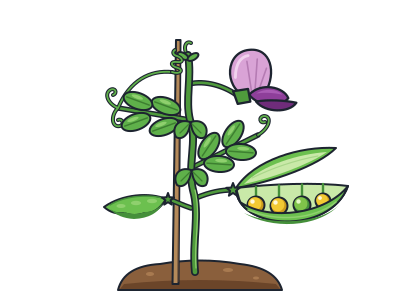
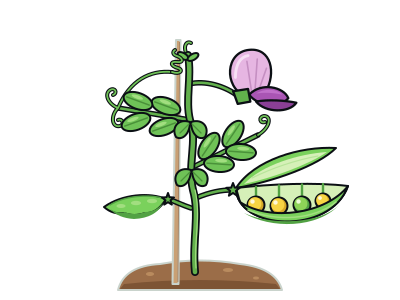
A pea-type flower has a big upright top petal called the banner, two side petals called wings, and two lower petals joined into a boat-shaped 'keel'.
Calling the right partner
Legume roots send out chemical signals that attract the right kind of bacteria. Different legumes send different signals, so many of them team up only with certain kinds of bacteria.
More than food
Legumes also give us animal feed, timber, gums such as gum arabic and guar gum, and the blue dye indigo.
Inside legumes
- Garden peaThe plant Gregor Mendel used to discover how traits are inherited.
- Sensitive plantFolds its leaves within seconds when touched.
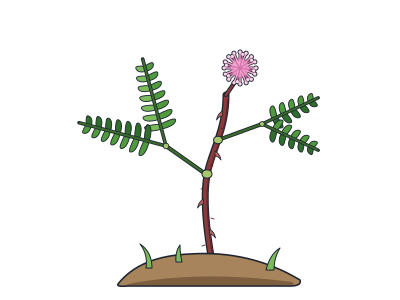
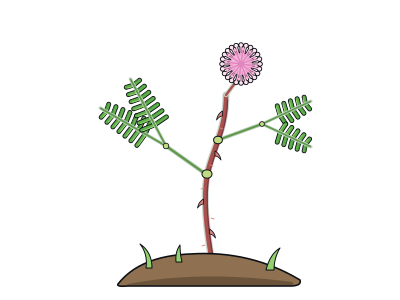
- SoybeanOne of the world's biggest crops, rich in protein thanks to its root bacteria.
- PeanutNot a nut: its flower stalks dive into the soil so pods ripen underground.
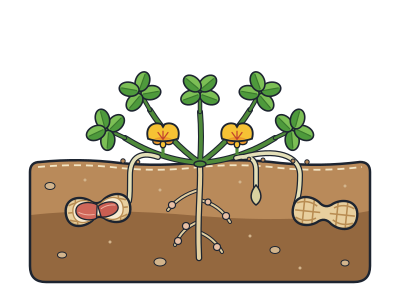
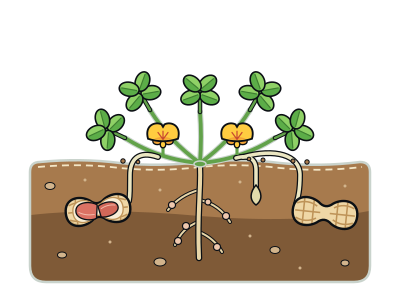
- Common beanKidney, pinto, black and green beans are all one species from the Americas.
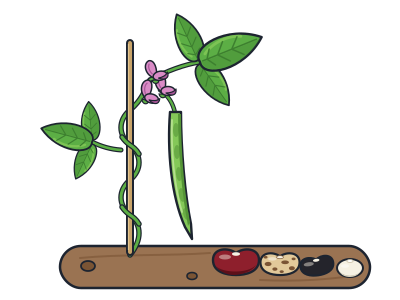
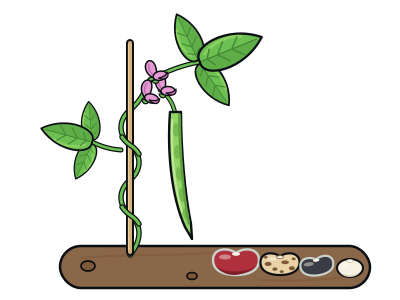
- ChickpeaThe bean behind hummus, grown for over 9,000 years.
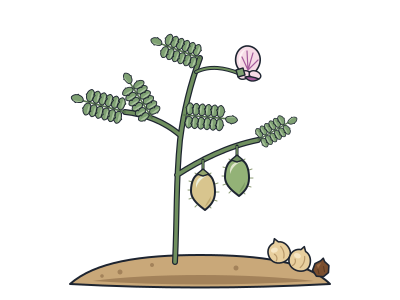
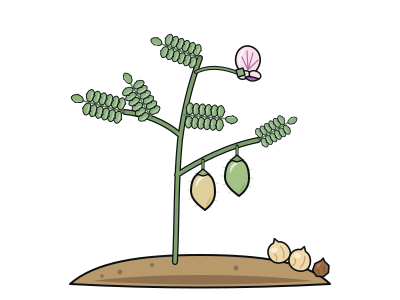
- Umbrella thorn acaciaThe flat-topped tree of African savanna, whose long thorns slow down browsers such as giraffes.
Next to it on the tree
- Rose familyRoses share their family with apples, cherries, strawberries and almonds.
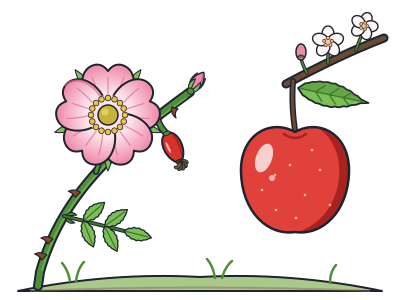
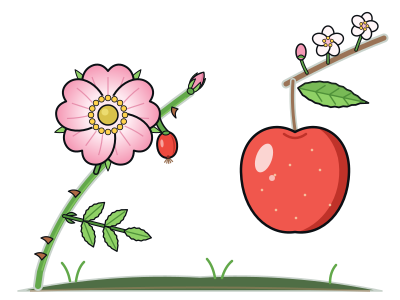
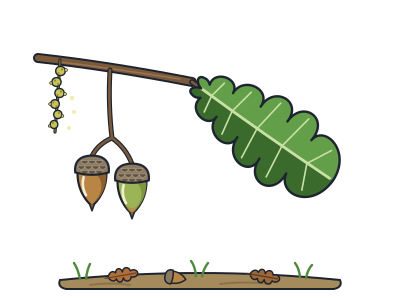
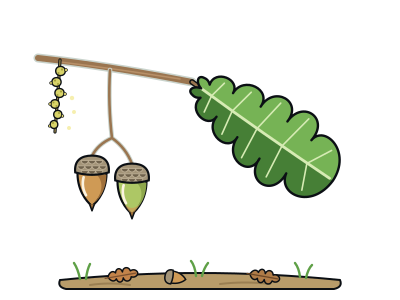
- Oaks, beeches and birchesWind-pollinated trees of temperate forests, including oaks, birches and walnuts.
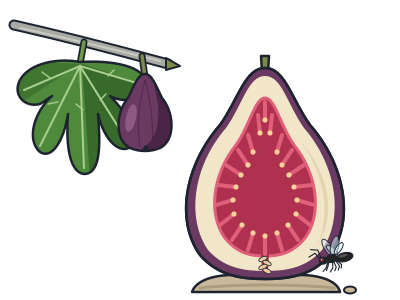
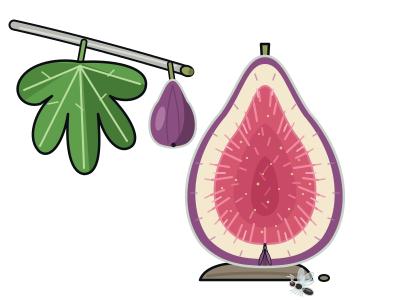
- Common figIts flowers bloom inside the fruit, pollinated by tiny wasps that crawl in.
- Gourd familyClimbing vines with coiling tendrils that give us pumpkins, melons and cucumbers.
- BanyanIts hanging roots become new trunks, so one tree can cover a whole park.
- St Helena oliveA small island tree whose last plant died in 2003, despite efforts to save it.