A species
Raspberry
Rubus idaeus
One flower, dozens of tiny fruits
You and the raspberry meet in the Eukaryotes branch, shown at about 1.8 billion years ago (on 28 July, in a calendar from life's shared ancestor to today).
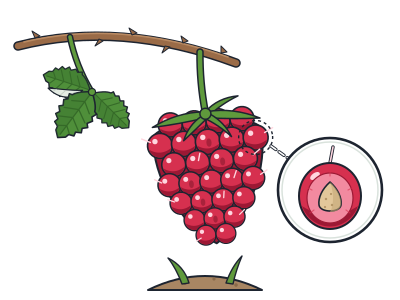
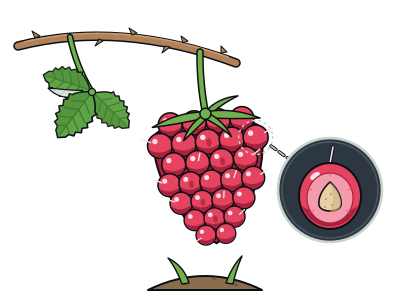
A raspberry looks like one berry, but it is really a cluster of about 75 to 85 tiny fruits packed together like beads. Each little bead is called a drupelet, and each one usually holds its own seed. They all grow from a single white flower. The centre of the flower has many separate female parts, and each one can swell into its own drupelet.
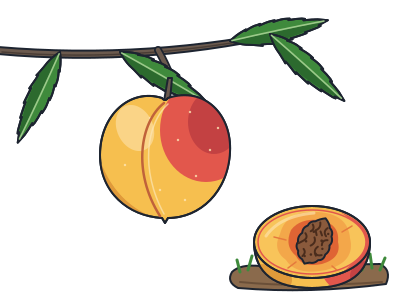
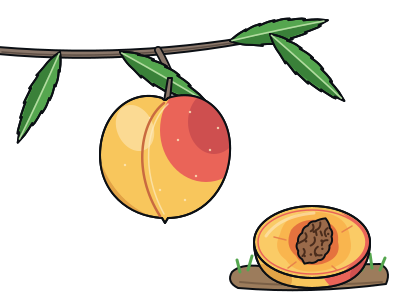
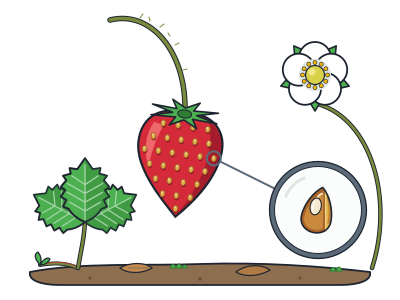
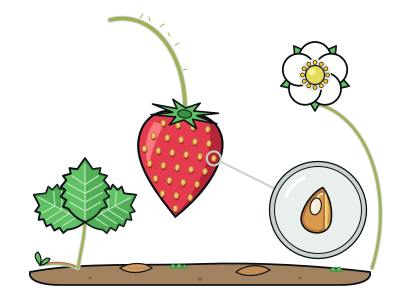
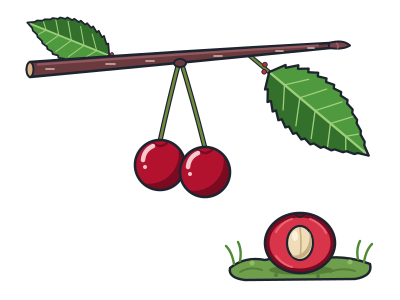
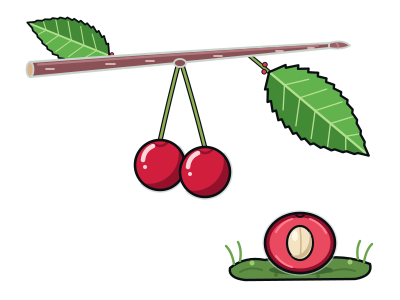
Here is the surprise. Each drupelet is the same kind of fruit as a cherry or a peach: soft flesh around a hard stone. Cherries and peaches are relatives in the rose family, but they grow one big fruit with one stone. A raspberry grows dozens of tiny ones at once. Other relatives use the 'many tiny fruits' idea in their own way. On a strawberry, each little yellow 'seed' on the outside is really a separate tiny fruit.
Bees matter a lot. The outer parts of the flower can use the flower's own pollen, but the parts in the middle need an insect, usually a bee, to visit. Without these visits, the berry comes out misshapen and about a third lighter.
Wild raspberries grow in woodland clearings, hedges and scrub across Europe and northern Asia. Young stems grow about 1.5 to 2.5 metres tall, so the tallest reach above an adult's head.
Hollow on purpose
When you pick a raspberry, the pale core stays on the plant, which is why the berry is hollow like a thimble. A blackberry keeps its core when picked, so that's an easy way to tell them apart.
More tries than fruits
A raspberry flower has about 100 to 125 tiny female parts, and each could become a drupelet. Not all of them do, so a finished berry usually ends up with fewer.
Named after a mountain
Its scientific name refers to Mount Ida, near the ancient city of Troy in what is now Turkey. The ancient Greeks knew the plant there.
Next to it on the tree
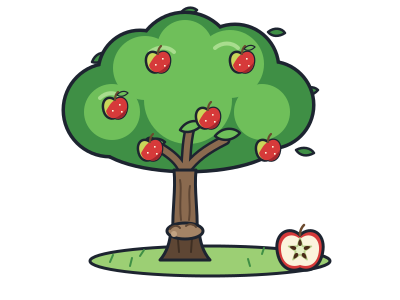
- AppleEvery apple variety is grafted, because seeds grow into trees unlike their parent.
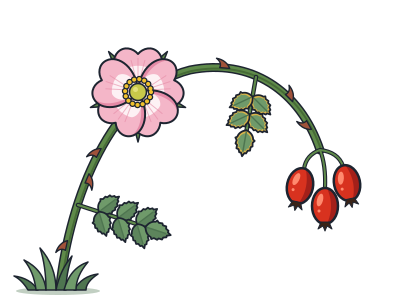
- Dog roseA wild hedgerow rose whose red hips are rich in vitamin C.
- Woodland strawberryThe 'seeds' on the outside are the real fruits; the red part is a swollen stem.
- Wild cherrySame genus as plums, peaches and almonds, all with a stony pit.
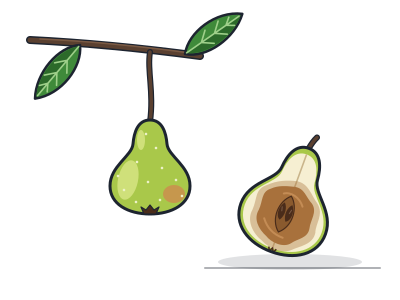
- PearIts fruit ripens from the inside out, which is why pears are picked hard.
- PeachDespite its Latin name meaning Persian, the peach comes from China.