A species
Pear
Pyrus communis
A fruit that ripens from the inside out, so it has to be picked hard.
You and the pear meet in the Eukaryotes branch, shown at about 1.8 billion years ago (on 28 July, in a calendar from life's shared ancestor to today).
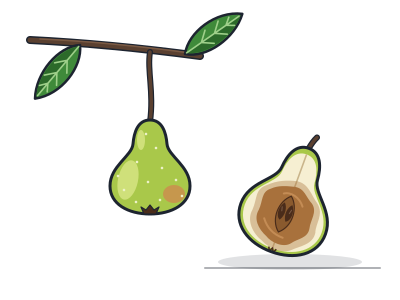
A pear can fool you. If a European pear is left to ripen on the tree, it ripens from the inside out. By the time the skin looks ready, the middle is often brown and mushy. That is why pears are picked while they are still hard and then ripened indoors. A picked pear is ready to eat when the flesh just below the stalk gives a little to gentle pressure.
Pears belong to the rose family, along with cherries, peaches, strawberries, raspberries and roses. Their closest relative here is the apple. Pears and apples sit in the same smaller group within the family, and both make the same kind of fruit, called a pome. The surprise is where the juicy flesh comes from. Most of it grows from the cup-shaped base of the flower, not from the part that holds the seeds. The true fruit wall is the papery core around the seeds.
If nobody prunes it, a pear tree can grow up to about 20 metres tall, about the height of a six-storey building. In spring it is covered in clusters of white flowers with red to purple tips in the middle. People have grown pears for more than 3,000 years.
Every tree is a copy
Named pear varieties are not copied by planting seeds. Instead, a cut branch is joined onto another tree's roots (this is called grafting). So the top part of every tree of one variety is basically a clone.
Gritty bits are like wood
The tiny gritty specks in pear flesh are called stone cells. They are ordinary flesh cells whose walls have thickened and hardened with lignin, the same tough material found in wood.
A Roman fruit bowl
The ancient Greek poet Homer mentions pears. The Roman writer Pliny the Elder described about 40 pear varieties grown in the Roman Empire.
Next to it on the tree
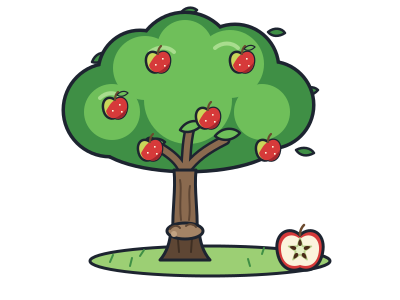
- AppleEvery apple variety is grafted, because seeds grow into trees unlike their parent.
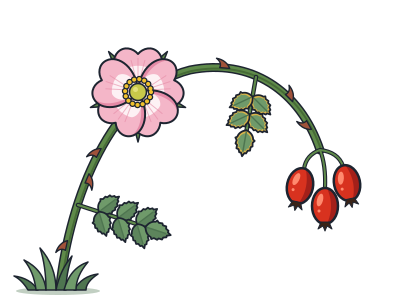
- Dog roseA wild hedgerow rose whose red hips are rich in vitamin C.
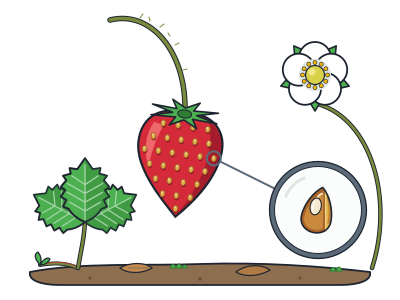
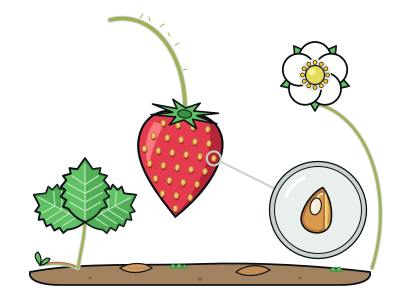
- Woodland strawberryThe 'seeds' on the outside are the real fruits; the red part is a swollen stem.
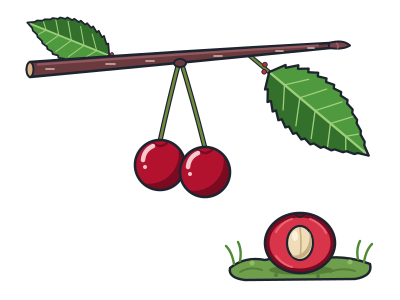
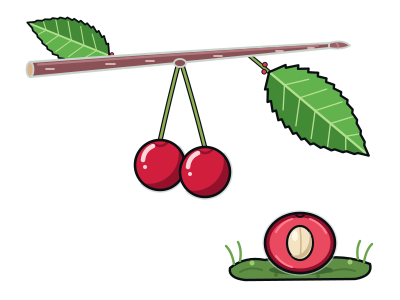
- Wild cherrySame genus as plums, peaches and almonds, all with a stony pit.
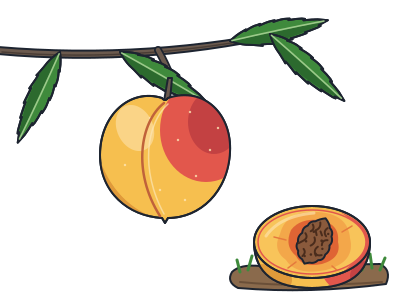
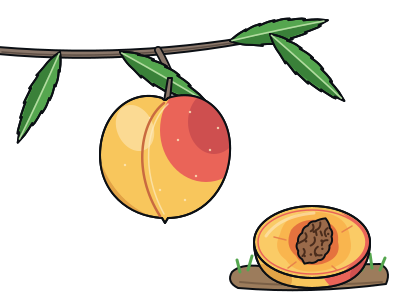
- PeachDespite its Latin name meaning Persian, the peach comes from China.
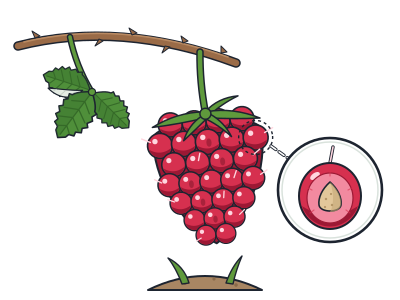
- RaspberryEach berry is a cluster of tiny fruits, each with its own seed.