A species
Woodland strawberry
Fragaria vesca
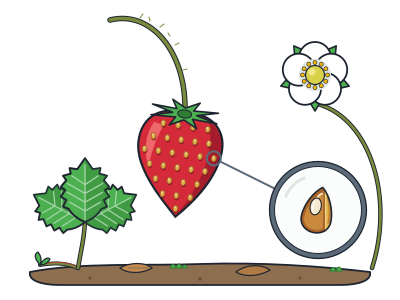
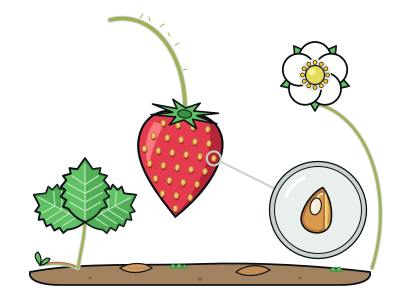
The specks are the real fruits. The red part is a swollen stem.
You and the woodland strawberry meet in the Eukaryotes branch, shown at about 1.8 billion years ago (on 28 July, in a calendar from life's shared ancestor to today).
Look closely at a wild strawberry. The tiny specks on its skin are not just seeds. Each one is a whole fruit: a hard little case with a single seed inside. The red, juicy part you eat is not a true fruit at all. It grows from the tip of the flower stalk, which swells up as the petals fall away.
The specks control the swelling. In a classic experiment in 1950, a scientist removed them from strawberries and the red part stopped growing. When he spread on auxin, a plant hormone like the one the specks normally make, the red part grew again.
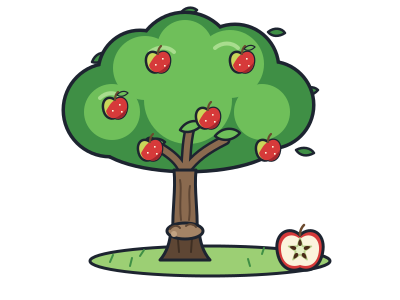
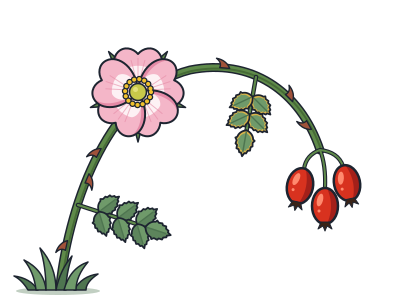
Some close relatives play a similar trick. Strawberries belong to the rose family, along with apples, roses and cherries. In an apple, the papery core is the real fruit, and the crunchy flesh grows from tissue around it. Rose hips are also built from tissue around the real fruits, not from the fruits themselves.
Woodland strawberry is a low plant, usually under 30 cm tall, with leaves in threes and white five-petalled flowers. It spreads by runners, thin stems that creep along the ground and root to make new plants. Its fruits are only about 1 to 2 cm long, much smaller than shop strawberries.
A thief in the garden
In the 1800s the designer William Morris watched thrushes taking strawberries in his garden. It inspired his famous 'Strawberry Thief' fabric pattern.
White and yellow strawberries
Alpine strawberries are garden forms of this plant that keep fruiting all season. People have grown them since at least the 1700s, and some forms have white or yellow fruit.
Seed to seed in weeks
In a climate-controlled greenhouse, this plant can grow from a seed to making its own seeds in about 14 to 15 weeks. That is one reason scientists like to study it.
Next to it on the tree
- AppleEvery apple variety is grafted, because seeds grow into trees unlike their parent.
- Dog roseA wild hedgerow rose whose red hips are rich in vitamin C.
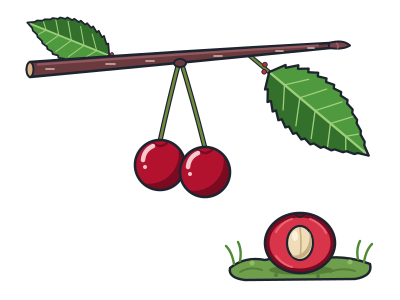
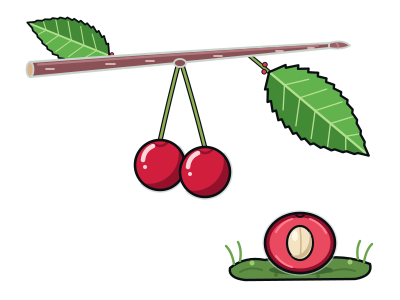
- Wild cherrySame genus as plums, peaches and almonds, all with a stony pit.
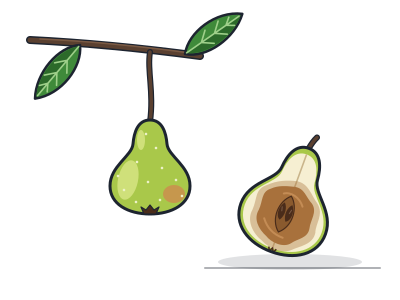
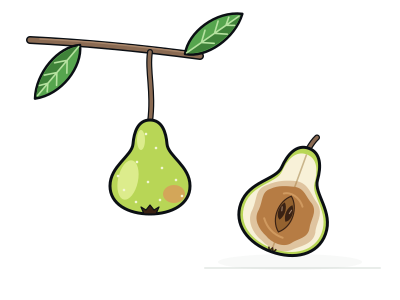
- PearIts fruit ripens from the inside out, which is why pears are picked hard.
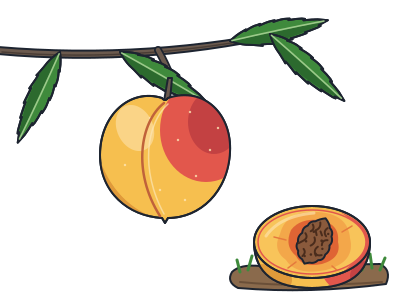
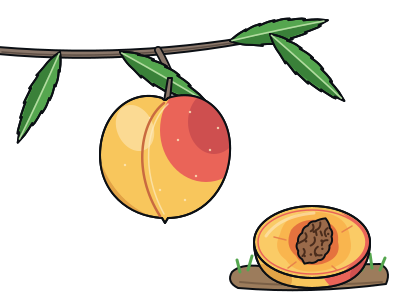
- PeachDespite its Latin name meaning Persian, the peach comes from China.
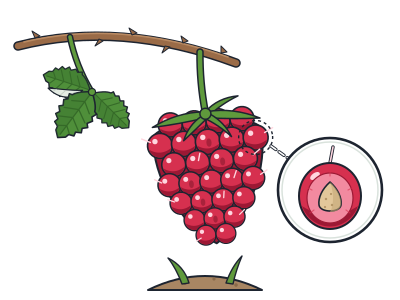
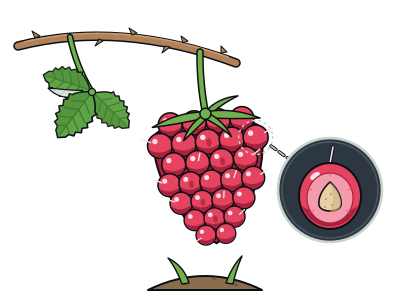
- RaspberryEach berry is a cluster of tiny fruits, each with its own seed.