A species
Apple
Malus domestica
Every named variety you buy is a clone, kept going by grafting.
You and the apple meet in the Eukaryotes branch, shown at about 1.8 billion years ago (on 28 July, in a calendar from life's shared ancestor to today).
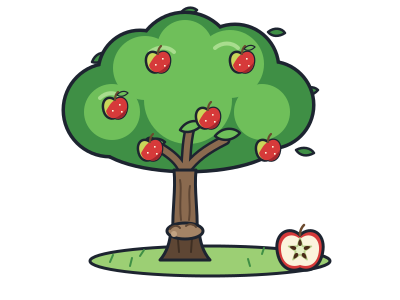
Plant a pip from your favourite apple and you won't get that apple back. Each apple tree carries many different versions of its genes. So almost every seed grows into a tree with its own new kind of fruit, and it is often not as good as the parent's. It might be mealy, too sweet or too sour. That is why every named variety is kept going by grafting: a shoot cut from the wanted tree is joined onto the roots of another tree. The shoot decides the fruit. The roots can control how big the tree grows.
This means the trees of one variety are clones, or nearly so. Every Red Delicious tree is descended from one chance seedling that an Iowa farmer found around 1880. A nursery company bought the rights and took cuttings. Within about 60 years it had sold more than 10 million trees. People have kept favourite apples going this way for thousands of years.
The apple belongs to the rose family, so roses, strawberries and cherries are all relatives. Of those three, the cherry is the closest, but the pear is an even closer relative. The apple's main wild ancestor still grows on mountain slopes in Kazakhstan. Travellers on the Silk Road carried it east and west. Along the way it mixed a great deal with the sour European crab apple, so today's apple carries genes from both.
Appleseed's cider apples
In the 1800s Johnny Appleseed planted orchards from seed. Most of those trees gave small, bitter apples that were better for making cider than for eating.
The tree that wouldn't quit
The farmer who found the first Red Delicious tree cut it down twice, and it grew back both times. In 1940 an ice storm split it in two. The next spring a new shoot grew from the split, and the tree still grows in Iowa.
Big but bland
The wild Kazakh ancestor grows much larger fruit than other wild apples, but the fruit is soft and plain-tasting, and people don't much like it.
Next to it on the tree
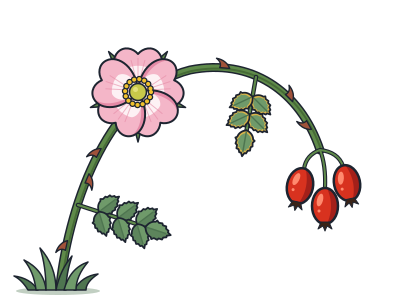
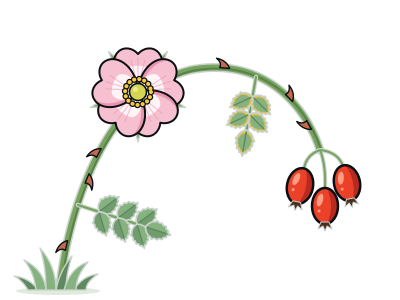
- Dog roseA wild hedgerow rose whose red hips are rich in vitamin C.
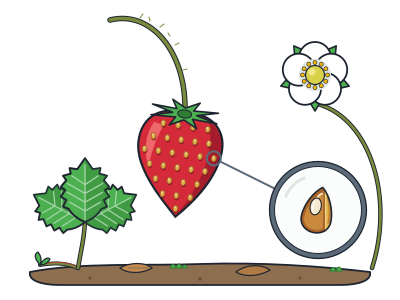
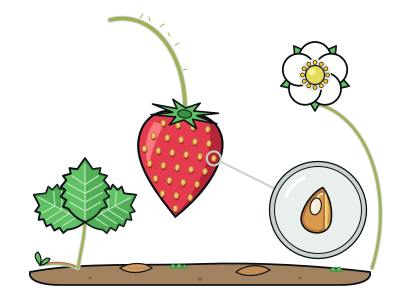
- Woodland strawberryThe 'seeds' on the outside are the real fruits; the red part is a swollen stem.
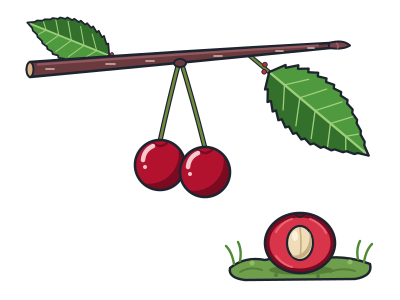
- Wild cherrySame genus as plums, peaches and almonds, all with a stony pit.
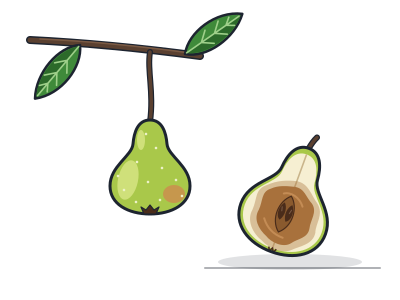
- PearIts fruit ripens from the inside out, which is why pears are picked hard.
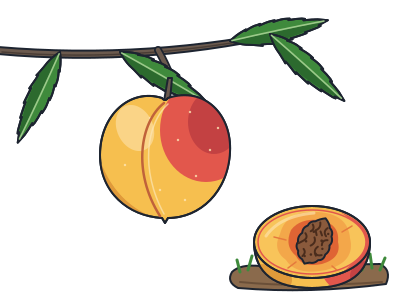
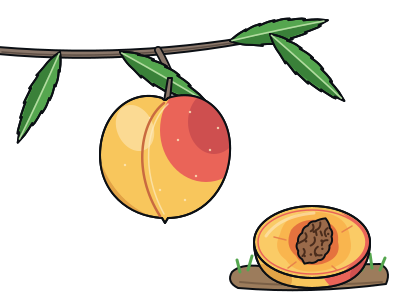
- PeachDespite its Latin name meaning Persian, the peach comes from China.
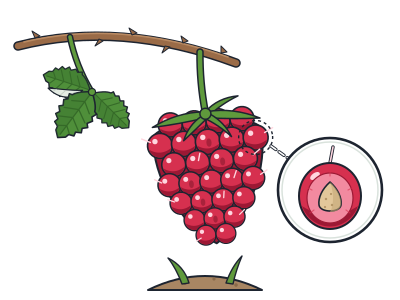
- RaspberryEach berry is a cluster of tiny fruits, each with its own seed.