A species
Wild cherry
Prunus avium
A woodland tree whose stony little fruit links it to plums, peaches and almonds.
You and the wild cherry meet in the Eukaryotes branch, shown at about 1.8 billion years ago (on 28 July, in a calendar from life's shared ancestor to today).
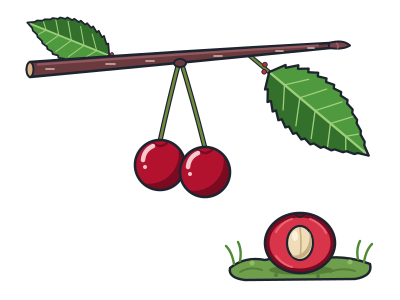
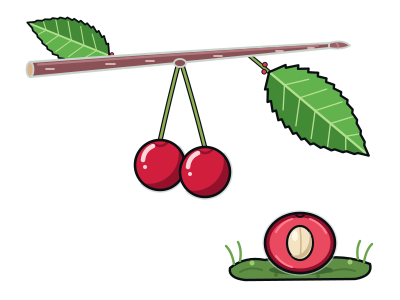
Bite into a wild cherry and your teeth hit a hard stone in the middle. That stone is a family badge. The wild cherry belongs to the same genus as plums, peaches, apricots and almonds. That group has about 340 kinds of trees and shrubs. All of them make "stone fruits": a fleshy outer layer around a single seed, which sits inside a hard shell.
Almonds turn this the other way round. With cherries, plums and peaches, we eat the flesh and throw the stone away. With almonds, we crack open the stone and eat the seed inside. The whole group is part of the rose family, and apples are fairly close relatives too.
Wild cherry grows fast and loves light. It is usually about 5 to 25 metres tall, so a big one can be as tall as an eight-storey building. It grows wild across Europe and western Asia, and in parts of north-west Africa. In early spring it is covered in white, five-petalled flowers, which open just before or as its leaves come out. Its small cherries go from green to red and then dark purple by midsummer.
Birds and other animals eat the fruit and pass the stones in their droppings, which spreads the seeds to new places. People love the fruit too: wild cherry is the main wild ancestor of the sweet cherries we buy.
Only the flesh is safe
Every part of the wild cherry except the flesh of the ripe fruit is slightly poisonous. The leaves, bark and the seed inside the stone contain a substance that can release cyanide.
An ancient snack
Cherry stones have been found at Bronze Age sites across Europe, including Britain. People have been eating wild cherries for thousands of years.
A confusing name
Its Latin name means "cherry of the birds". But in English, "bird cherry" is the name of a different species, another member of the same genus.
Next to it on the tree
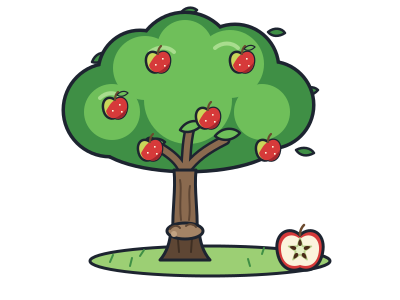
- AppleEvery apple variety is grafted, because seeds grow into trees unlike their parent.
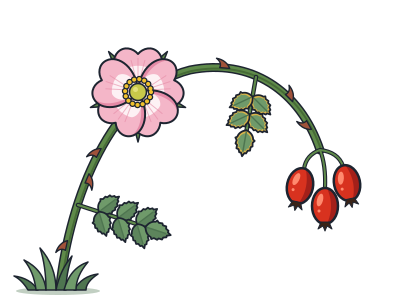
- Dog roseA wild hedgerow rose whose red hips are rich in vitamin C.
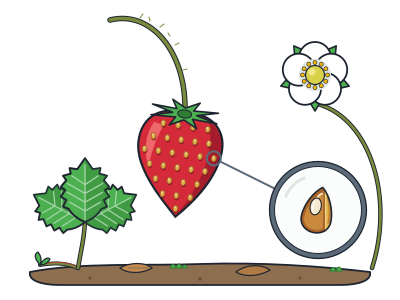
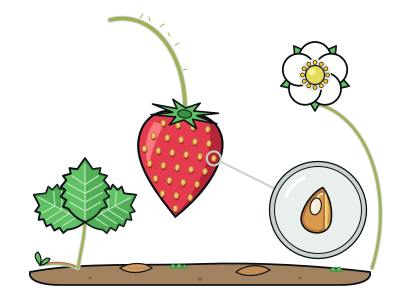
- Woodland strawberryThe 'seeds' on the outside are the real fruits; the red part is a swollen stem.
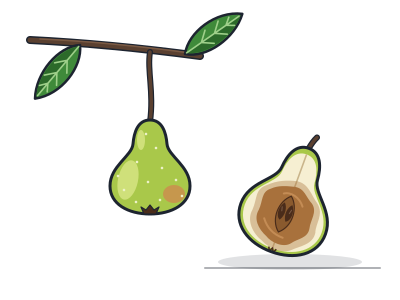
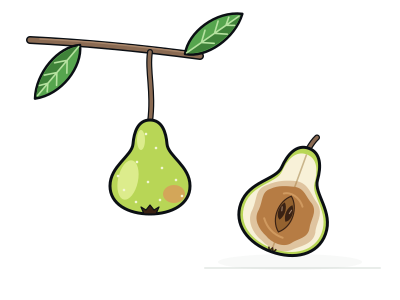
- PearIts fruit ripens from the inside out, which is why pears are picked hard.
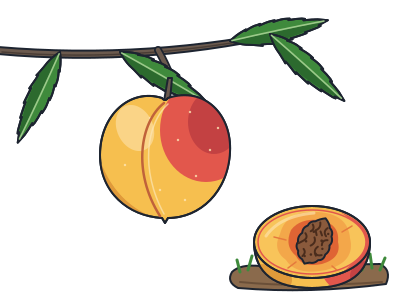
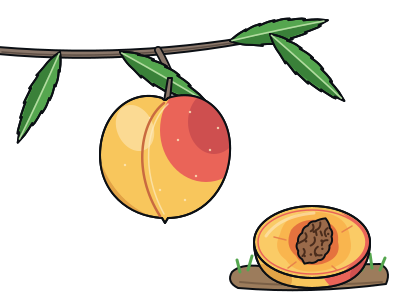
- PeachDespite its Latin name meaning Persian, the peach comes from China.
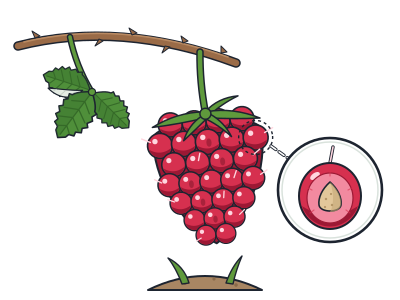
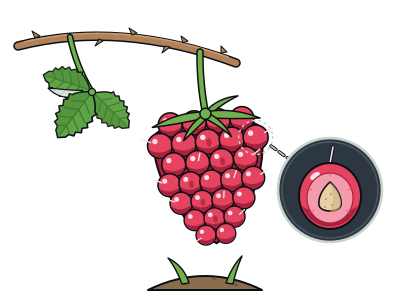
- RaspberryEach berry is a cluster of tiny fruits, each with its own seed.