A species
Chickpea
Cicer arietinum
The bean behind hummus, grown for over 9,000 years.
You and the chickpea meet in the Eukaryotes branch, shown at about 1.8 billion years ago (on 28 July, in a calendar from life's shared ancestor to today).
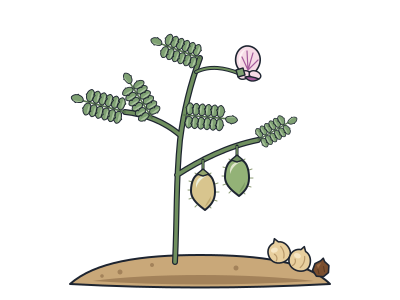
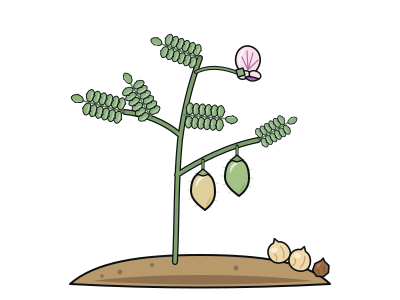
If you have ever eaten hummus, you have eaten this plant. In Arabic, the word "hummus" simply means "chickpeas". People have grown chickpeas for more than 9,000 years. In the Near East, they were among the very first crops ever farmed, along with wheat, barley, peas and lentils.
The chickpea is a legume. That makes it a relative of the garden pea, the peanut and the soybean on the tree. Its wild ancestor still grows only in a small area of south-eastern Turkey. Genetic studies suggest that farmers tamed it just once, from that one wild source.
The plant is a small, bushy herb that grows to about knee height or lower, with feathery leaves. Like many of its legume relatives, it has small lumps on its roots that are home to helpful bacteria. These bacteria turn nitrogen from the air into plant food, which also makes the soil richer for the next crop.
There are two main kinds. Small, dark "desi" chickpeas are common in South Asia and Ethiopia. Larger, cream-coloured "kabuli" chickpeas are typical of the Mediterranean. Both are cooked whole, mashed into dips like hummus, made into falafel, or ground into flour.
Named after a ram
Its scientific name comes from the word for a ram, because each seed is shaped a bit like a ram's head.
Garbanzo is the same thing
Chickpeas and garbanzo beans are one and the same seed. The name "garbanzo" came into Spanish from an old Greek word.
India grows the most
India grows about three-quarters of the world's chickpeas, around 12 million tonnes in 2023.
Next to it on the tree
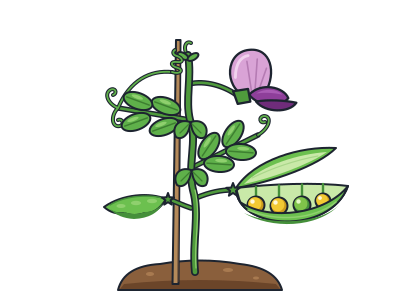
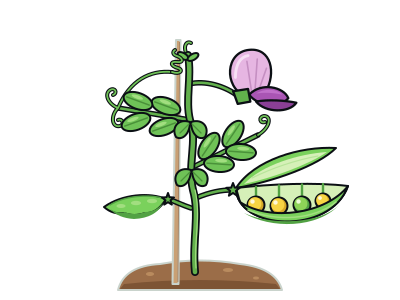
- Garden peaThe plant Gregor Mendel used to discover how traits are inherited.
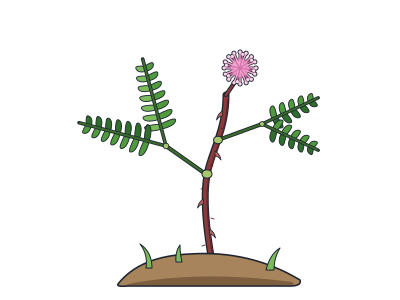
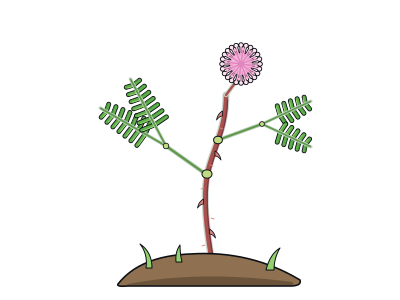
- Sensitive plantFolds its leaves within seconds when touched.
- SoybeanOne of the world's biggest crops, rich in protein thanks to its root bacteria.
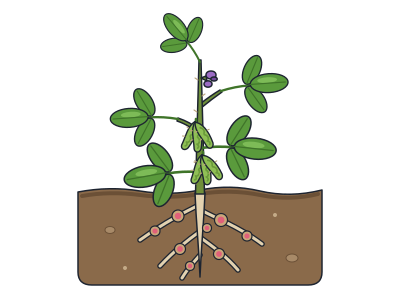
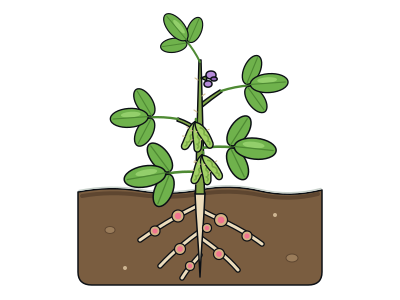
- PeanutNot a nut: its flower stalks dive into the soil so pods ripen underground.
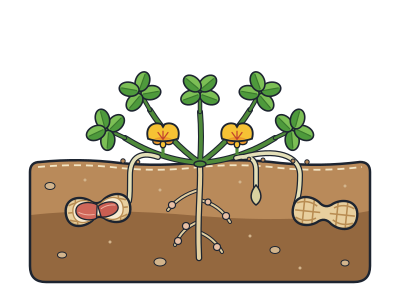
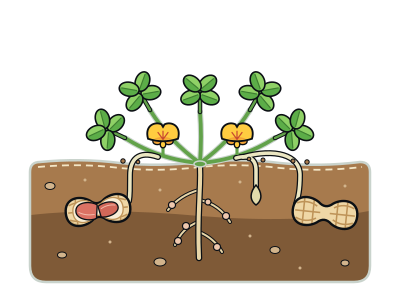
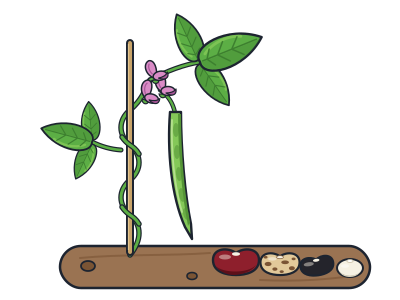
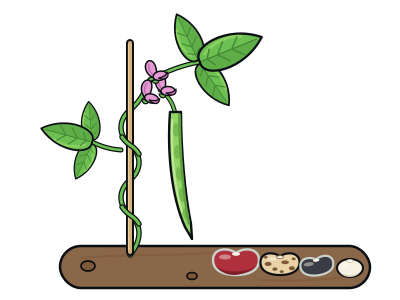
- Common beanKidney, pinto, black and green beans are all one species from the Americas.
- Umbrella thorn acaciaThe flat-topped tree of African savanna, whose long thorns slow down browsers such as giraffes.