A species
Soybean
Glycine max
A protein-packed bean that gets help from bacteria living in its roots.
You and the soybean meet in the Eukaryotes branch, shown at about 1.8 billion years ago (on 28 July, in a calendar from life's shared ancestor to today).
Soybean is one of the world's biggest crops. Farmers grow about 350 million tonnes a year, more than ten times as much as in the 1960s. The USA and Brazil each grow about a third of it. Dry beans are more than one-third protein. Soy is a 'complete' protein, so it matters to many vegetarians and vegans.
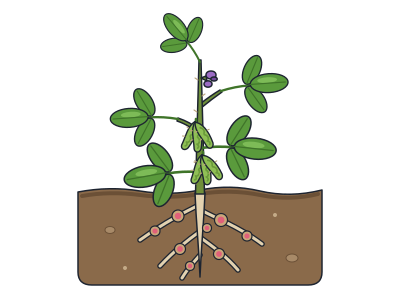
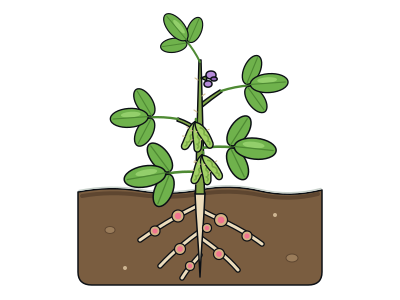
Part of the secret is underground. Plants need nitrogen to build protein. Soybean roots grow small, bead-like swellings called nodules, and soil bacteria live inside them. The bacteria turn nitrogen gas from the air into a form the plant can use, and the plant gives them sugars in return. Working nodules are pink to red inside. On average, the bacteria supply about half of the crop's nitrogen, and the rest comes from the soil. Between the two, farmers in places such as North Dakota in the USA usually don't need to add nitrogen fertiliser.
Soybean is a legume, part of the pea family. It belongs to the pea-flowered legumes along with the garden pea and the peanut, though each sits on its own branch. The sensitive plant is a more distant legume from a different part of the family. Like its pea-flowered relatives, soybean has small flowers shaped like pea flowers, in white, pink or purple.
People in China first farmed soybeans from wild soybean about 6,000 to 9,000 years ago. Wild soybean still grows in China, Korea, Japan and eastern Russia.
Mostly animal feed
About three-quarters of the world's soy goes to feed farm animals, mostly chickens and pigs. Only about 7% is eaten directly by people, as foods like tofu, soy milk, edamame and tempeh.
A doubled genetic code
Twice in its ancestry, about 59 million and about 13 million years ago, soybean's whole genetic code was copied. It has kept about three-quarters of that doubled material. A small lab plant called thale cress kept only about a fifth of its doubled material.
Soy sauce for England
Soybeans first came to North America from China in 1765. A former sailor named Samuel Bowen planted them near Savannah, Georgia, and made soy sauce to sell to England.
Next to it on the tree
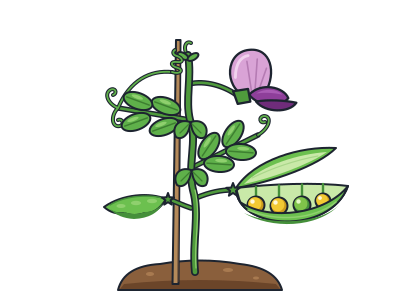
- Garden peaThe plant Gregor Mendel used to discover how traits are inherited.
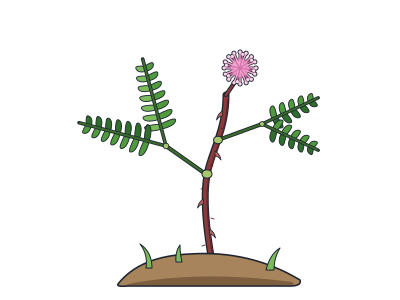
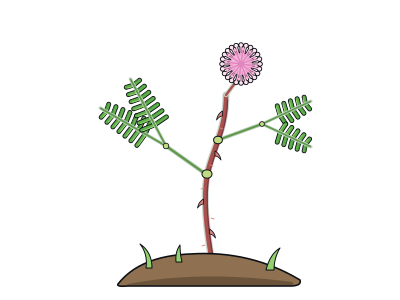
- Sensitive plantFolds its leaves within seconds when touched.
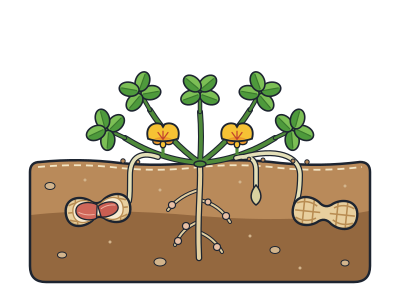
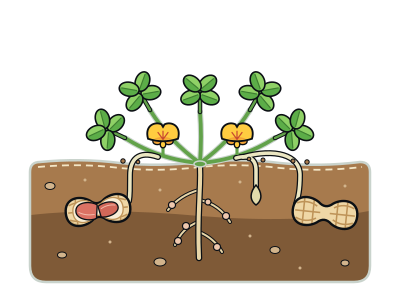
- PeanutNot a nut: its flower stalks dive into the soil so pods ripen underground.
- Common beanKidney, pinto, black and green beans are all one species from the Americas.
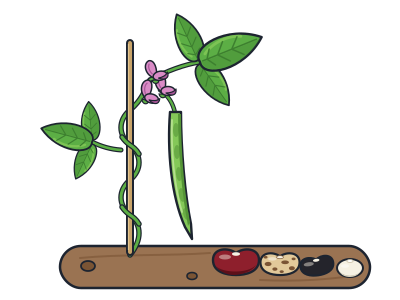
- ChickpeaThe bean behind hummus, grown for over 9,000 years.
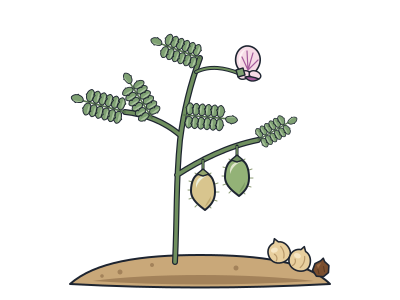
- Umbrella thorn acaciaThe flat-topped tree of African savanna, whose long thorns slow down browsers such as giraffes.