A species
Sensitive plant
Mimosa pudica
A little plant that folds its leaves within seconds when you touch it.
You and the sensitive plant meet in the Eukaryotes branch, shown at about 1.8 billion years ago (on 28 July, in a calendar from life's shared ancestor to today).
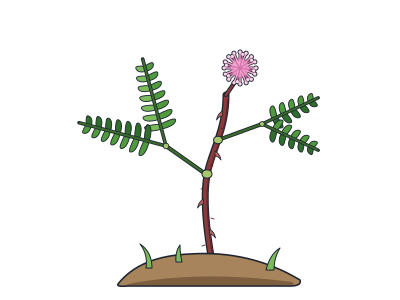
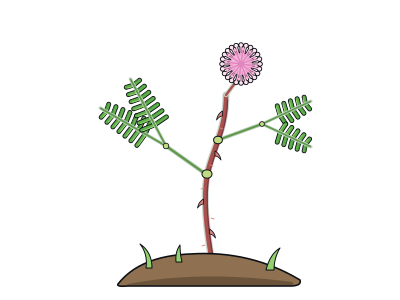
Brush a leaf of the sensitive plant and it springs into action. Within seconds, its tiny leaflets fold together in pairs and the whole leaf droops. A few minutes later, it slowly opens again. The leaves also fold up at night and open in daylight.
The plant has no muscles or nerves. Instead, small swollen joints at the base of each leaflet and leaf stalk work like water-powered 'muscles'. When the plant is touched, water rushes out of cells on one side of a joint. Those cells shrink, so the leaf bends. Folding seems to protect the plant. When scientists stopped the leaves from moving, grasshoppers ate about twice as much.
This twitchy plant is a legume, in the same family as the garden pea, soybean and peanut. Like them, it has little lumps on its roots that hold bacteria. The bacteria turn nitrogen from the air into plant food. Within the family, though, it sits on a different branch from those crops.
It comes from tropical Central and South America. It usually grows about shin to knee height, with prickly stems and fluffy pink flower balls about the size of a fingernail. It is now a weed across the tropics, including northern Australia.
Folds like a concertina
A 2023 study found that the leaf joints fold like the bellows of a concertina. Fibres in the cell walls act like straps that steer the swelling.
A comb of leaflets
Each feathery section of a leaf carries about 10 to 25 pairs of tiny leaflets, lined up like the teeth of a comb.
Garden escapee
It was brought to Australia as a garden curiosity, then escaped. Its seeds hitch rides by clinging to people and animals, which helps it spread along the Queensland coast.
Next to it on the tree
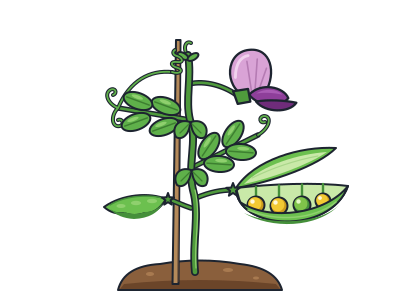
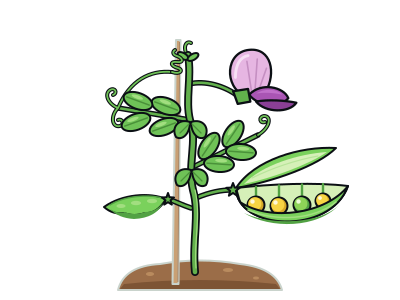
- Garden peaThe plant Gregor Mendel used to discover how traits are inherited.
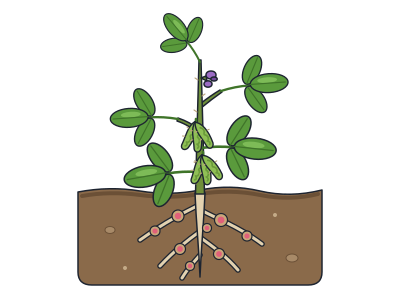
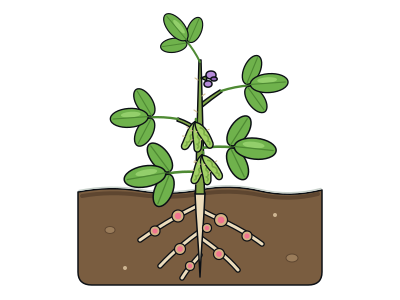
- SoybeanOne of the world's biggest crops, rich in protein thanks to its root bacteria.
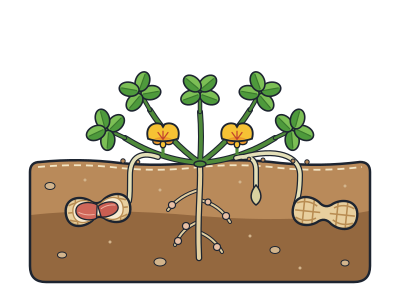
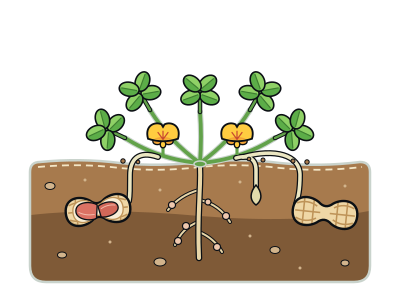
- PeanutNot a nut: its flower stalks dive into the soil so pods ripen underground.
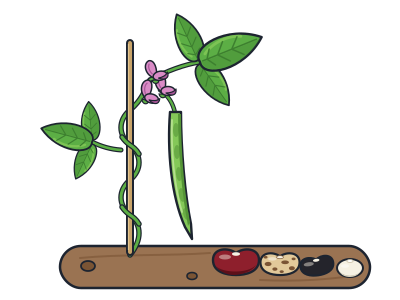
- Common beanKidney, pinto, black and green beans are all one species from the Americas.
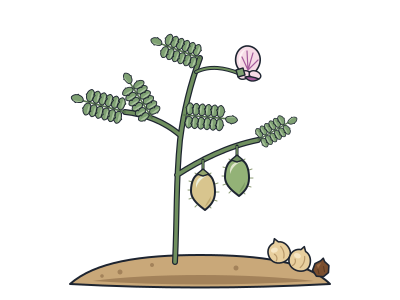
- ChickpeaThe bean behind hummus, grown for over 9,000 years.
- Umbrella thorn acaciaThe flat-topped tree of African savanna, whose long thorns slow down browsers such as giraffes.