A species
Peanut
Arachis hypogaea
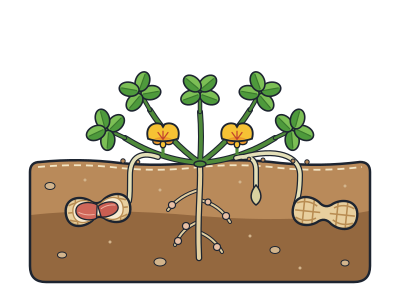
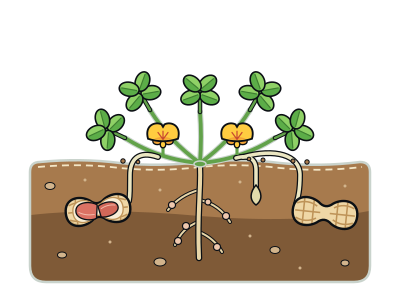
The "nut" that is really a pod and ripens underground.
You and the peanut meet in the Eukaryotes branch, shown at about 1.8 billion years ago (on 28 July, in a calendar from life's shared ancestor to today).
A peanut is not really a nut. A true nut is a fruit with a hard wall. The peanut is a pod, like a pea pod, and the plant is a legume, part of the pea and bean family. Its relatives on the tree include the garden pea and the soybean.
The surprise is where the pods grow. The small yellow flowers open above ground and pollinate themselves, so they don't need insects. After a flower is fertilised, a thin stalk called a peg grows out. It bends down and pushes into the soil. Only there, in the dark and damp, does its tip swell into a pod. Very few legumes grow their fruit underground like this.
The plant is low and bushy, about knee height. Each leaf has four leaflets in two pairs, and they fold up at night. Like the pea and the soybean, it has small lumps on its roots that hold helpful bacteria. These bacteria take nitrogen from the air and turn it into plant food, which makes the soil richer.
Peanuts first came from South America, east of the Andes mountains. The oldest peanut pods that archaeologists have found come from Peru and are about 7,600 years old.
Ground nuts and goobers
Another name for the peanut is "groundnut", because its pods form underground. The American nickname "goober" comes from Kikongo, a language from Central Africa.
A crop with two parents
The farmed peanut is a cross between two wild South American peanut species, and it carries a full set of genes from each. A wild plant of one parent species found in Bolivia shares about 99.96% of its DNA with the matching half of the farmed peanut's genes.
A mountain of peanuts
In 2023 the world grew about 54 million tonnes of peanuts. China grew about a third of them and India about a fifth.
Next to it on the tree
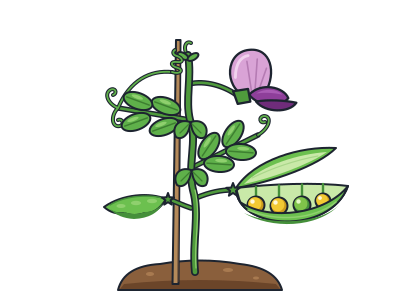
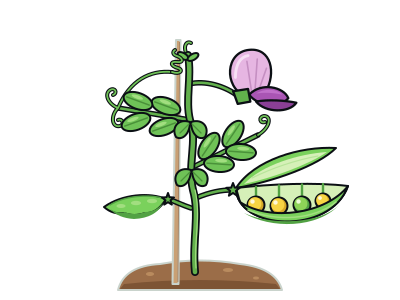
- Garden peaThe plant Gregor Mendel used to discover how traits are inherited.
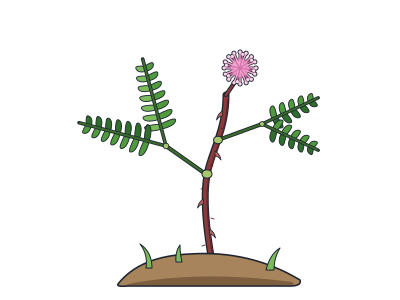
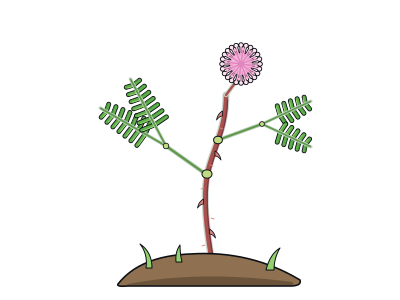
- Sensitive plantFolds its leaves within seconds when touched.
- SoybeanOne of the world's biggest crops, rich in protein thanks to its root bacteria.
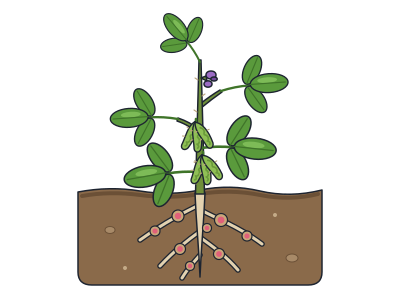
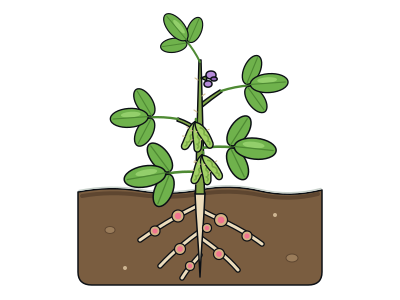
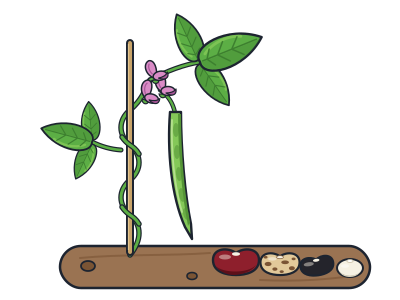
- Common beanKidney, pinto, black and green beans are all one species from the Americas.
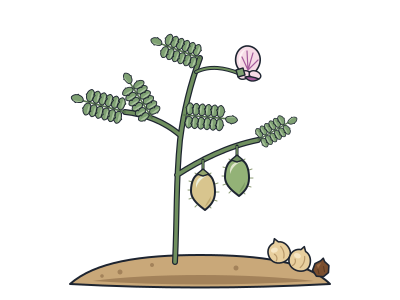
- ChickpeaThe bean behind hummus, grown for over 9,000 years.
- Umbrella thorn acaciaThe flat-topped tree of African savanna, whose long thorns slow down browsers such as giraffes.