A species
Common fig
Ficus carica
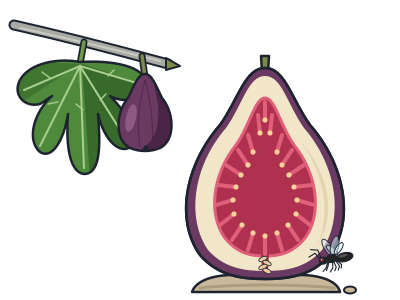
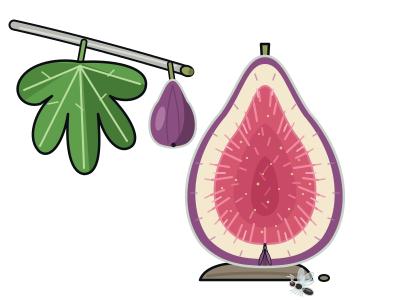
A fruit that hides its flowers inside, and the tiny wasp that crawls in to find them.
You and the common fig meet in the Eukaryotes branch, shown at about 1.8 billion years ago (on 28 July, in a calendar from life's shared ancestor to today).
A fig looks like a fruit, but it is really a hollow pouch lined inside with hundreds of tiny flowers. You never see a fig tree bloom, because every flower is hidden away. The only way in is a small hole at the end of the fig.
So who carries the pollen? A wasp about 2 mm long, small enough to pass through the eye of a needle. These wasps hatch inside the figs of wild pollen-making trees called caprifigs. Males have no wings and never leave the fig they hatch in. They mate with the females and chew tunnels out. Then the females fly off, carrying pollen to another fig. Each female squeezes in through the hole and loses her wings and most of her antennae on the way.
Not every fig needs a wasp. Many figs sold in shops are a type that ripens with no pollination at all, so no wasp ever went inside. In figs that wasps do pollinate, the crunchy bits you eat are seeds, not wasps. Each seed comes from one tiny flower.
The fig tree belongs to the mulberry family. On the tree of life it sits in the same big branch as roses, beans and oaks. That is a surprising group of relatives for a plant that keeps its flowers out of sight.
An ancient crop
Nine whole burnt figs and more than 300 fig pieces were found in a house near ancient Jericho. They are about 11,400 years old. They were a seedless kind that can only be grown from cuttings, so figs may be one of the oldest crops people ever planted.
Wasps in paper bags
Smyrna-type figs were planted in California in the late 1800s, but they gave no crop until about 1900, when the fig wasp was brought in. Growers still hang paper bags of wasp-filled figs from pollen-making trees in their orchards.
No room for eggs
In edible Smyrna figs, part of each tiny flower is too long for the wasp to reach the right spot to lay her eggs. She pollinates the flowers while she keeps trying, but no young wasps grow up there.
Next to it on the tree
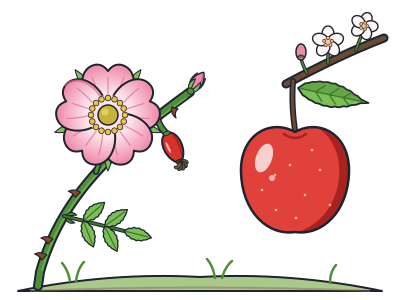
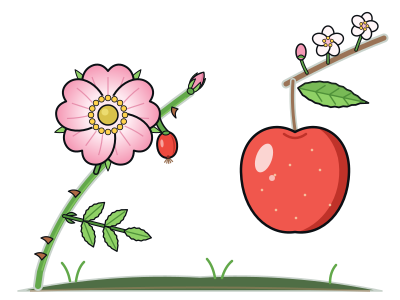
- Rose familyRoses share their family with apples, cherries, strawberries and almonds.
- LegumesPeas and beans that partner with soil bacteria to make their own fertiliser.
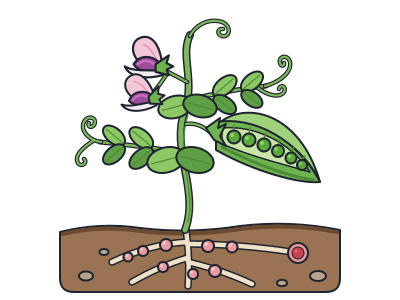
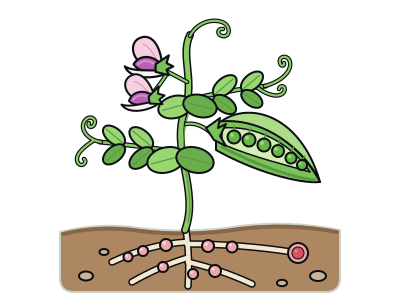
- Oaks, beeches and birchesWind-pollinated trees of temperate forests, including oaks, birches and walnuts.
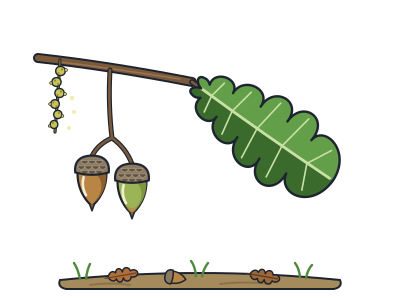
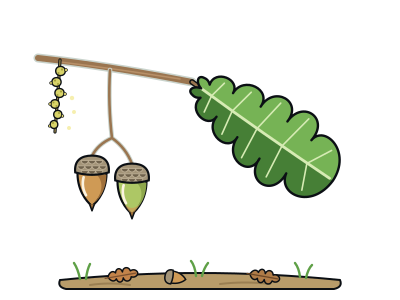
- Gourd familyClimbing vines with coiling tendrils that give us pumpkins, melons and cucumbers.
- BanyanIts hanging roots become new trunks, so one tree can cover a whole park.
- St Helena oliveA small island tree whose last plant died in 2003, despite efforts to save it.