A group of living things
Oaks, beeches and birches
Fagales
Oaks, birches and walnuts: forest trees that let the wind spread their pollen
This branch is shown at about 90 million years ago; its age is a rough estimate.
You and oaks, beeches and birches meet in the Eukaryotes branch, shown at about 1.8 billion years ago (on 28 July, in a calendar from life's shared ancestor to today).
Oaks, birches and walnuts look quite different, but they are close relatives on the tree of life. Most are trees and shrubs of cool, temperate forests in Europe, Asia and North America. Most of them use the wind, not insects, to carry their pollen. Each tree usually has separate male and female flowers. In many of them, the male flowers hang in long, dangling strings called catkins, which shake out clouds of pollen.
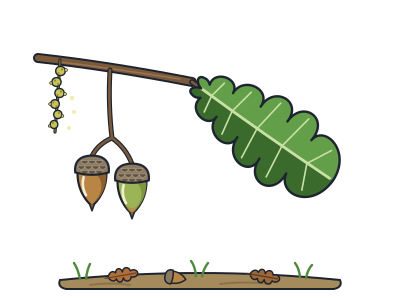
Their fruits usually hold just one seed. Acorns, nuts and tiny winged seeds are all examples. Jays and squirrels bury nuts to eat later, then forget some. Without meaning to, they plant new trees.
These trees also have hidden partners underground. Most of them team up with fungi around their roots, and many woodland mushrooms are partners of these trees. The group holds a surprise too. She-oaks, common in Australia, are not true oaks, despite their name. Yet they belong to this same group, in a family of their own. Further out on the tree, this group shares a bigger branch with roses, beans, pumpkins and figs.
A home for thousands
In the UK, about 2,300 kinds of living things are linked to native oaks such as the English oak. They include insects, lichens, mosses, birds and mammals.
Old giants
An English oak often lives for more than 500 years, and some are thought to be over 1,000 years old.
A pollen blizzard
A single male catkin on a silver birch releases about 1.7 million pollen grains on average.
Inside oaks, beeches and birches
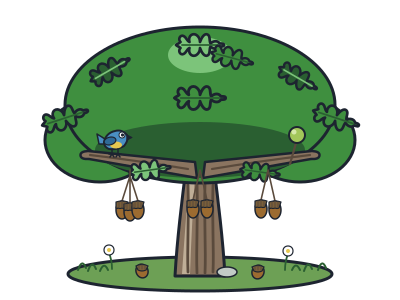
- English oakOne oak can host hundreds of species of insects, birds and fungi.
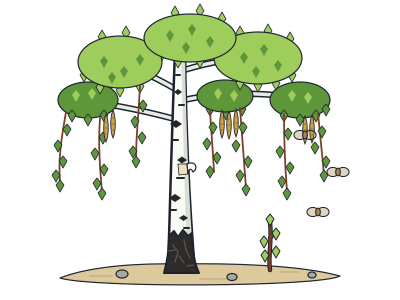
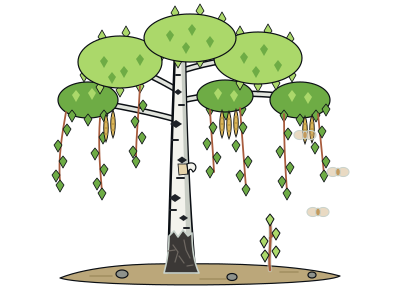
- Silver birchWhite papery bark and one of the first trees to recolonise land after the Ice Age.
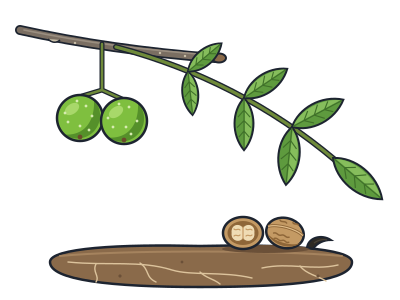
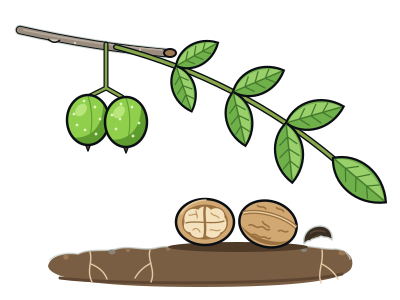
- WalnutIts roots release a chemical that stops other plants growing nearby.
- European beechSmooth grey bark and a dense canopy that leaves little light for anything below.
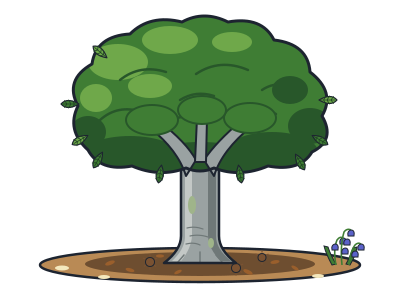
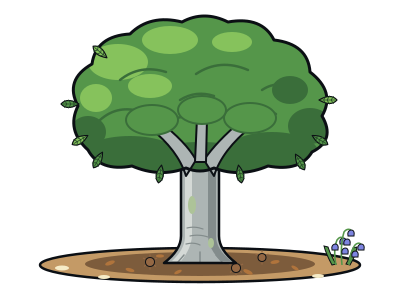
- Sweet chestnutSpiny cases hide the chestnuts roasted on winter streets.
Next to it on the tree
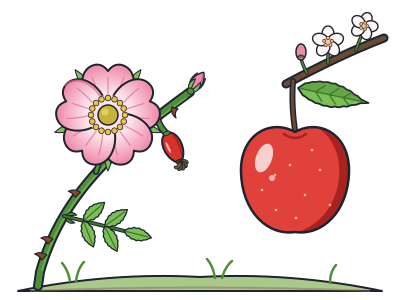
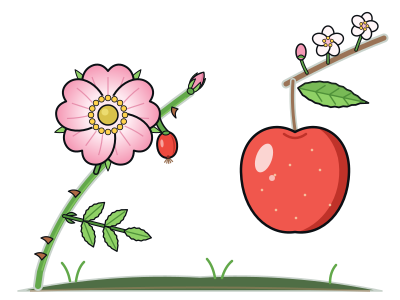
- Rose familyRoses share their family with apples, cherries, strawberries and almonds.
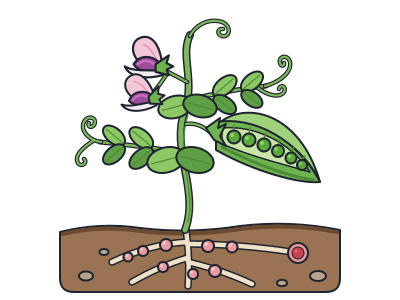
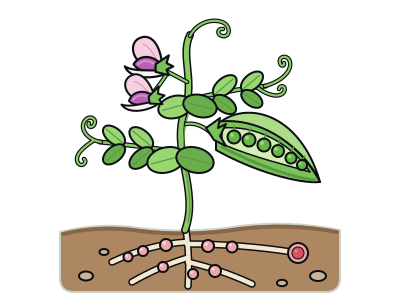
- LegumesPeas and beans that partner with soil bacteria to make their own fertiliser.
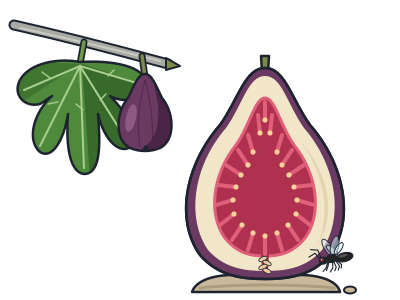
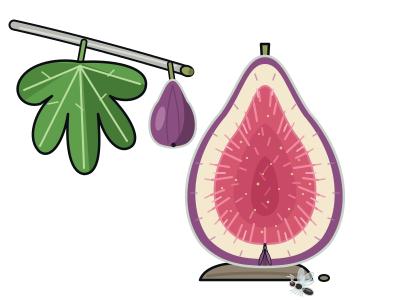
- Common figIts flowers bloom inside the fruit, pollinated by tiny wasps that crawl in.
- Gourd familyClimbing vines with coiling tendrils that give us pumpkins, melons and cucumbers.
- BanyanIts hanging roots become new trunks, so one tree can cover a whole park.
- St Helena oliveA small island tree whose last plant died in 2003, despite efforts to save it.