A species
Walnut
Juglans regia
The tree with a reputation for poisoning its neighbours, and a relative of oaks and birches.
You and the walnut meet in the Eukaryotes branch, shown at about 1.8 billion years ago (on 28 July, in a calendar from life's shared ancestor to today).
Walnut trees have a famous reputation: plants struggle to grow beneath them. Their roots, leaves, husks and bark hold a harmless chemical. Once it meets air or soil, it turns into a plant poison called juglone. Juglone can harm sensitive plants such as tomatoes, potatoes and blueberries. It seems to stop them releasing the energy they need to grow.
But this walnut, the common or English walnut, makes only small amounts of juglone, so harm to its neighbours is rarely seen. Most of the bad reputation belongs to a relative, the black walnut from North America. Plenty of plants, including grasses, grow happily under walnut trees.
The real surprise is the walnut's relatives. Despite their names, walnuts are not close relatives of peanuts or nutmeg. They belong to the same big group as oaks, beeches and birches. The group has nearly 1,900 species, including many of the most important trees in cool-climate forests.
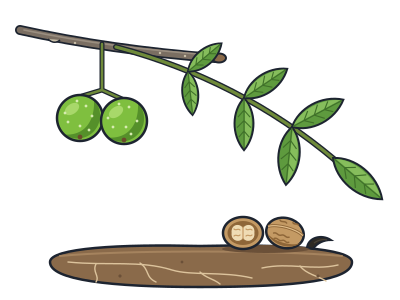
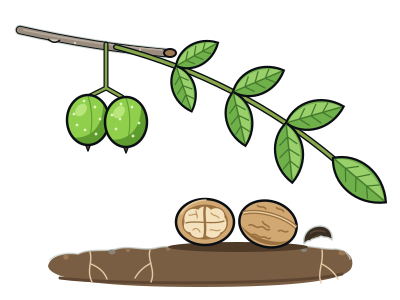
The common walnut is a big tree, usually about 10 to 25 metres tall. It has a short, stout trunk and a wide crown. Its large, feathery leaves can be nearly half a metre long. Each nut grows inside a smooth green husk, with a wrinkled brown shell inside.
Wild walnut forests
The biggest wild walnut forests grow in the mountains of Kyrgyzstan, about 1,000 to 2,000 metres above sea level. Arslanbob is the best-known example.
A world crop
In 2022 the world grew about 3.9 million tonnes of shelled walnuts. More than a third of them came from China.
Bred for easy cracking
Farmed walnuts have been bred to have thinner shells than wild ones, so they are easier to crack.
Next to it on the tree
- English oakOne oak can host hundreds of species of insects, birds and fungi.
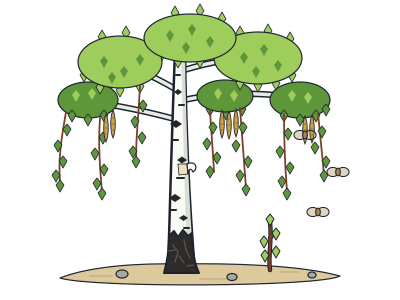
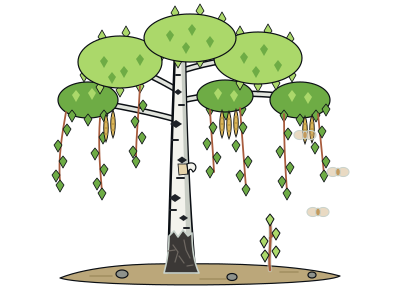
- Silver birchWhite papery bark and one of the first trees to recolonise land after the Ice Age.
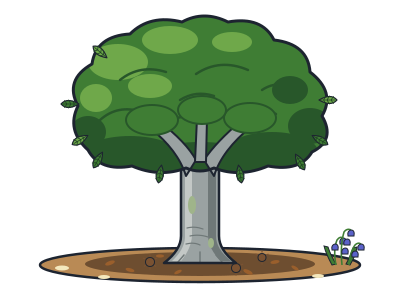
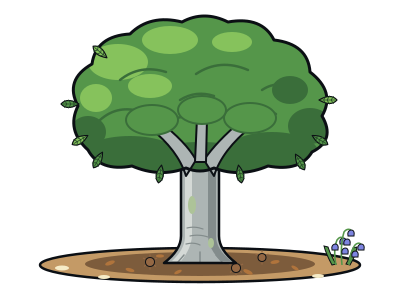
- European beechSmooth grey bark and a dense canopy that leaves little light for anything below.
- Sweet chestnutSpiny cases hide the chestnuts roasted on winter streets.