A species
Silver birch
Betula pendula
The white-barked tree that was one of the first to move in when the Ice Age glaciers melted
You and the silver birch meet in the Eukaryotes branch, shown at about 1.8 billion years ago (on 28 July, in a calendar from life's shared ancestor to today).
When the glaciers of the last Ice Age melted, they left behind bare, scraped land. Silver birch was one of the first trees to move back in. In Ireland, for example, birches made some of the earliest woodlands, together with hazel and rowan.
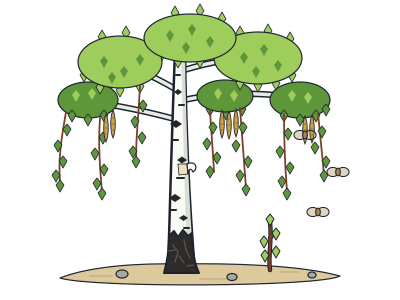
It still does this today. Silver birch is a pioneer, one of the first trees to grow on open or cleared ground. A large tree can let go of up to a million tiny winged seeds a year, each only about 1 to 2 millimetres in size, and the wind carries them away. Once it has taken hold, birch works as a 'nurse tree', making the soil better so that other trees can grow there later.
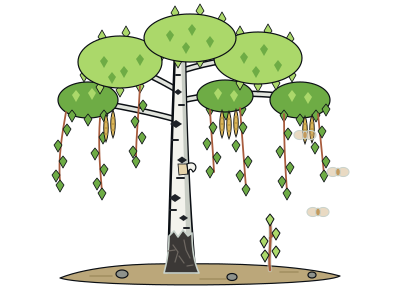
You can recognise it by its bark. Young trees are reddish-brown, but as they grow older the trunk turns bright white with black patches, and the bark peels away in thin, papery layers. Near the ground, old trunks become black, rough and cracked. The outer bark is rich in a natural substance called betulin, which can make up as much as a fifth of it. Its thin outer twigs hang down like a weeping fringe.
Silver birch sits on the same branch of the tree of life as oaks, beeches and walnuts. They look quite different from it, but they are its relatives.
A nation's tree
Silver birch is the national tree of Finland. People make drinks from its sap, which is about 1% sugar, and use bundles of leafy birch twigs in saunas.
A wildlife café
In Scotland, 334 kinds of insects and other small creatures without backbones are known to feed on birches. Among the country's native trees, only oaks and willows support more. Small finches called siskins eat the seeds in autumn.
Toadstool partners
Birch roots team up with many fungi, including the red-and-white-spotted fly agaric toadstool, as well as chanterelles and boletes.
Next to it on the tree
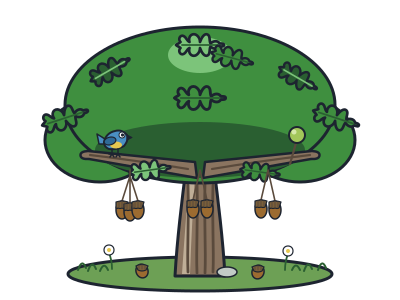
- English oakOne oak can host hundreds of species of insects, birds and fungi.
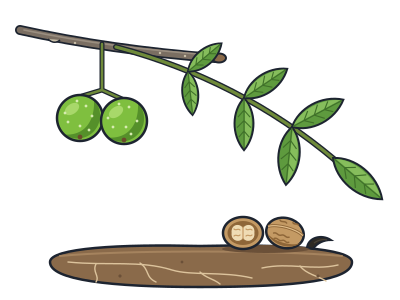
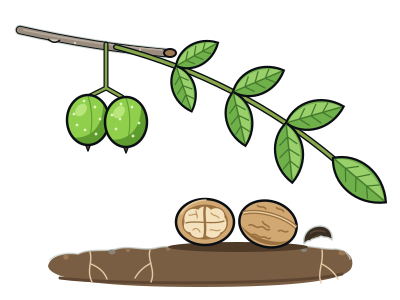
- WalnutIts roots release a chemical that stops other plants growing nearby.
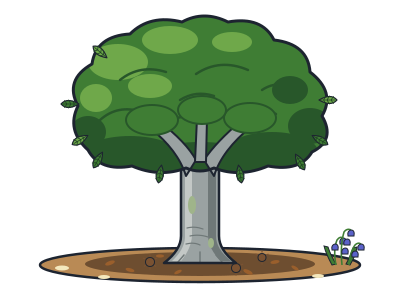
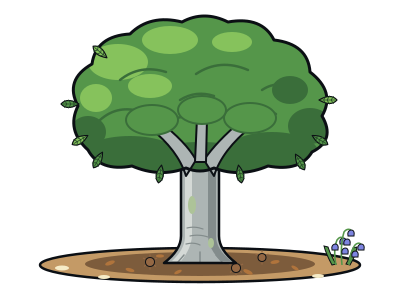
- European beechSmooth grey bark and a dense canopy that leaves little light for anything below.
- Sweet chestnutSpiny cases hide the chestnuts roasted on winter streets.