A group of living things
Orb-weavers
Araneidae
The spiders behind the classic round web of spokes and a sticky spiral.
This branch is shown at about 130 million years ago; its age is a rough estimate.
You and orb-weavers meet in the Two-sided animals branch, shown at about 580 million years ago (on 11 November, in a calendar from life's shared ancestor to today).
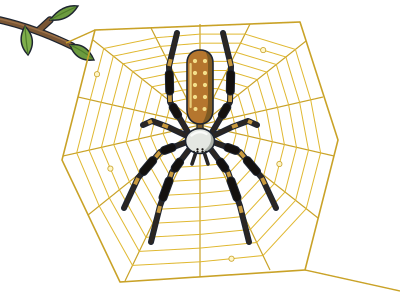
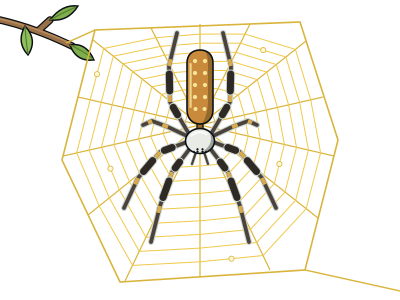
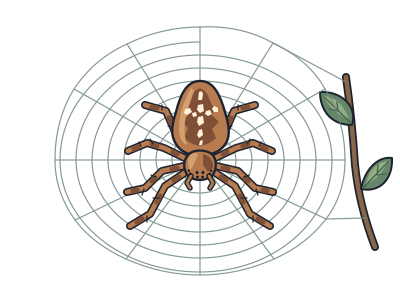
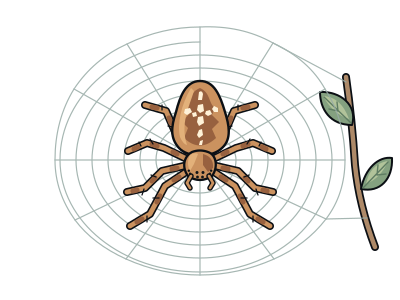
Picture a classic spider web, with straight spokes running out from a centre and a neat spiral wound across them. Very often, that is the work of an orb-weaver. They are one of the biggest spider families, with more than 3,000 kinds living on every continent except Antarctica. On the tree they sit among other true spiders, such as jumping spiders and wolf spiders.
Building a web follows a set routine. First, the spider lets a thread float across a gap on the breeze to make a bridge. Next come a Y-shaped frame, then the spokes, then a temporary spiral. Last of all, it lays the sticky spiral from the outside inward. It even uses its own body as a ruler to space the threads evenly.
Only the spiral is sticky. The spokes stay dry, and a third claw on each foot helps the spider walk along them. Webs do not last for ever. Many orb-weavers eat their old web to recycle the silk, then spin a new one, often every day. A few members of the family, such as bolas spiders, skip the web. Instead they swing a sticky blob on a silk line to catch moths.
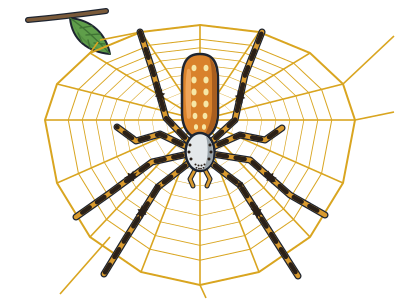
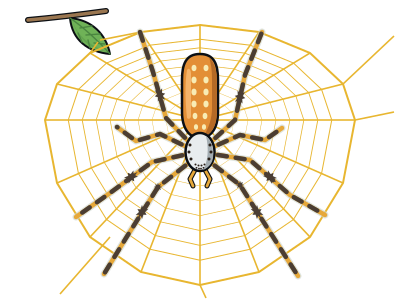
Females are often much bigger than males. A female golden silk orb-weaver can be up to about 4 centimetres long, but the male is only about 6 millimetres. Her golden-yellow web can be 1 to 2 metres across, wider than a doorway.
Record-breaking webs
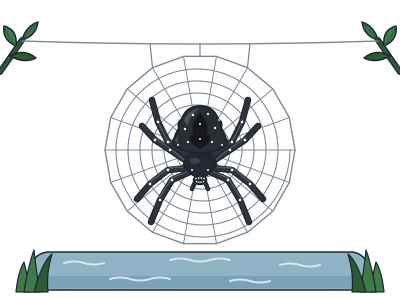
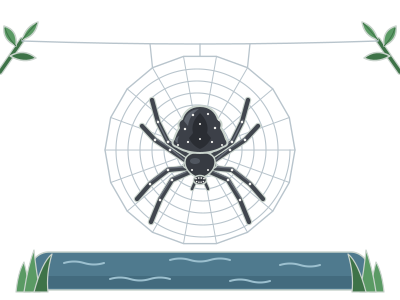
Darwin's bark spider from Madagascar hangs the largest known orb webs over rivers and lakes. Its bridge lines can be about 25 metres long, about as long as two buses.
Club feet
The golden silk orb-weaver's scientific name means 'club foot'. It refers to the dark, fluffy tufts of hair on the female's legs.
Mystery zigzags
Some orb-weavers weave a bold white zigzag or band of silk through the middle of the web. Nobody is sure why. It might lure prey, warn birds away or help the spider hide.
Inside orb-weavers
Next to it on the tree
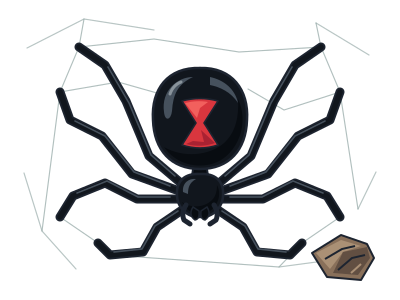
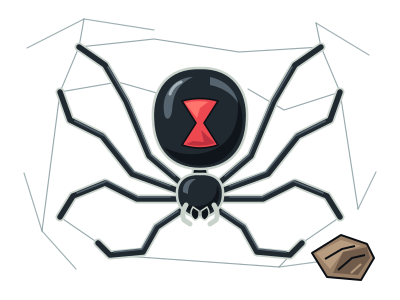
- Southern black widowA shiny black spider with a red hourglass and a strong nerve venom.
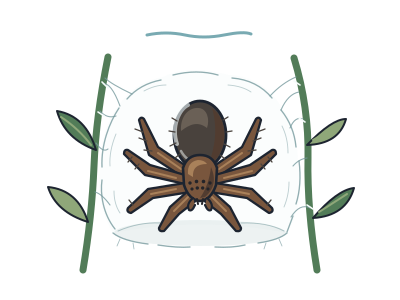
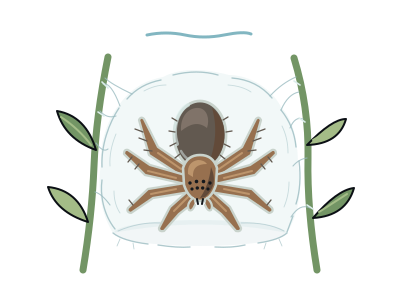
- Diving bell spiderLives underwater in a silk bubble of air that it fills from the surface.
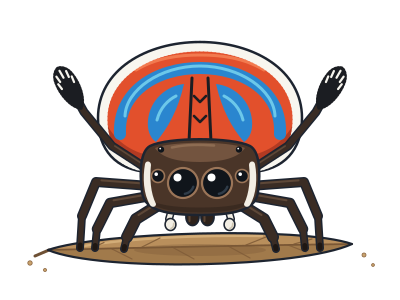
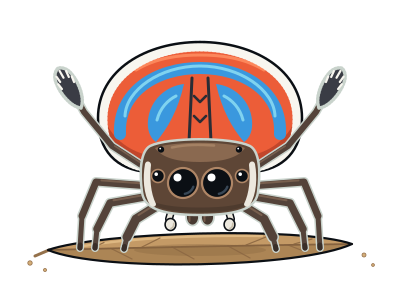
- Jumping spidersThe largest spider family, sharp-eyed hunters that leap onto prey instead of using webs.
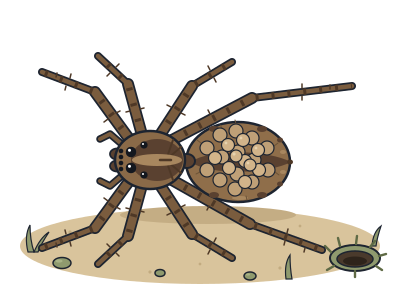
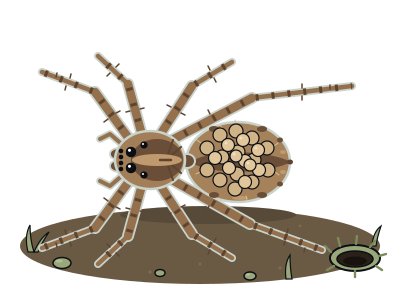
- Carolina wolf spiderA hunter that runs prey down, and the mother carries her babies piled on her back.
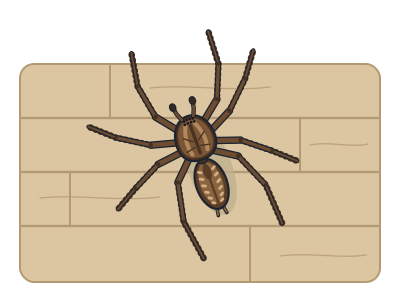
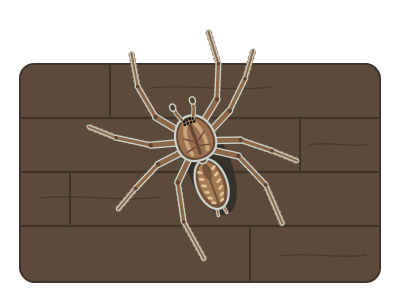
- Giant house spiderThe long-legged spider that sprints across the living-room floor in autumn.
- Daddy long-legs spiderA spindly cellar spider that shakes its web into a blur when disturbed.
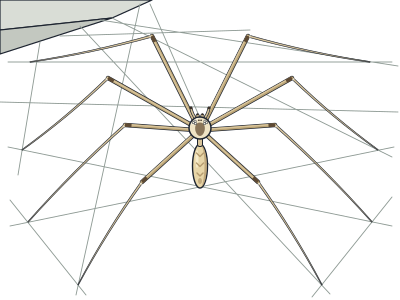
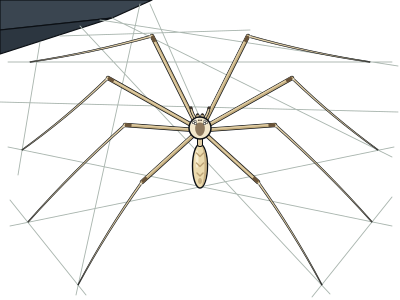
- Ogre-faced spiderHas two enormous night-vision eyes and holds a stretchy net to throw over passing insects.
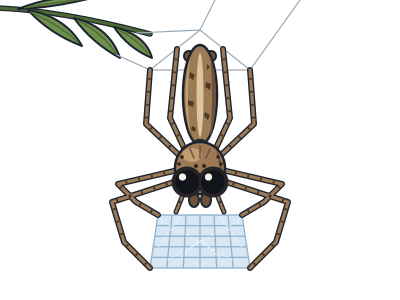
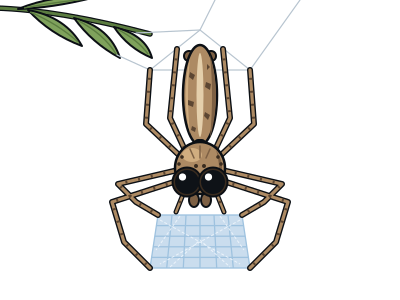
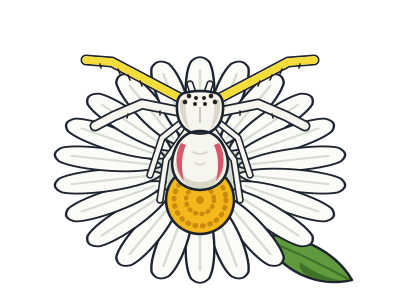
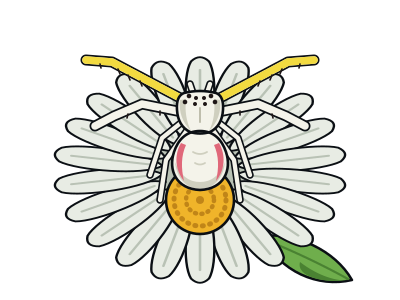
- Goldenrod crab spiderWaits on flowers and slowly changes between white and yellow to match them.