A species
Southern black widow
Latrodectus mactans
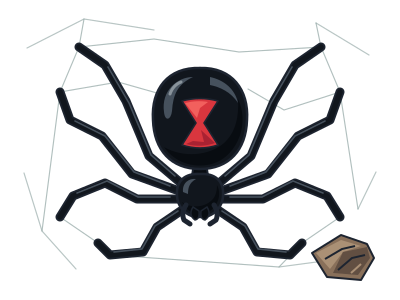
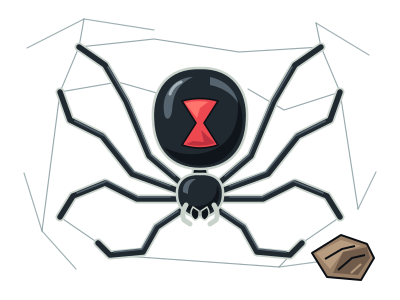
A red hourglass on a glossy black hunter.
You and the southern black widow meet in the Two-sided animals branch, shown at about 580 million years ago (on 11 November, in a calendar from life's shared ancestor to today).
A shiny black body, a red hourglass and strong venom that affects nerves: meet the adult female southern black widow. She belongs to the cobweb spider family, rather than the jumping spider or tarantula families shown nearby on the tree. Her rounded rear body section usually carries the hourglass underneath, not on her back.
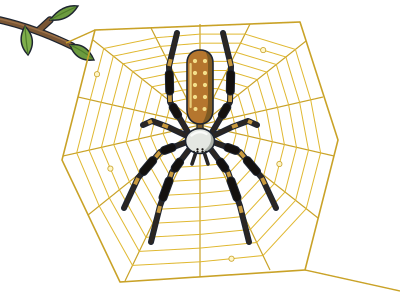
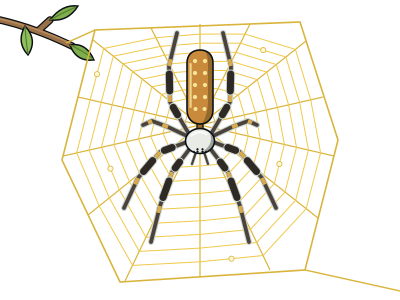
Instead of a neat wheel, this spider builds an irregular tangle of silk, usually low down, with a sheltered hiding place. The web catches small animals such as flies, crickets, moths and beetles. The spider uses its venom to subdue its catch.
Its home range stretches across the southeastern United States, with records north to Ohio and west to Texas. Woodpiles, hollow stumps, rock piles and sheds can all offer shelter. Despite its reputation, a black widow is usually timid and retreats when disturbed. Strong venom does not mean an aggressive spider.
A smaller, spotty male
Males have bodies about 6 millimetres long and flatter rear body sections marked with red and white spots.
Colours change with age
Young spiders gradually develop their adult colours and markings as they shed their outer skins.
Hunters can be hunted
Blue mud-dauber wasps hunt young black widows.
Next to it on the tree
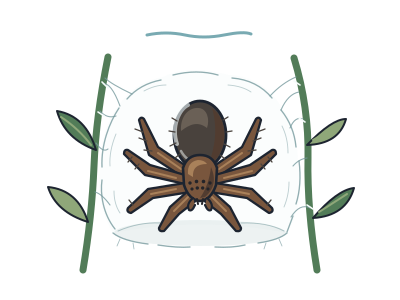
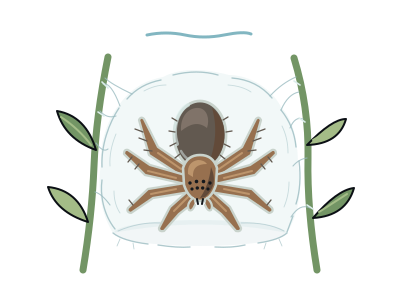
- Diving bell spiderLives underwater in a silk bubble of air that it fills from the surface.
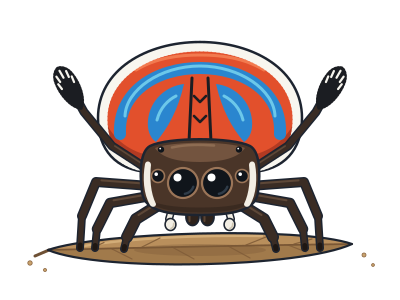
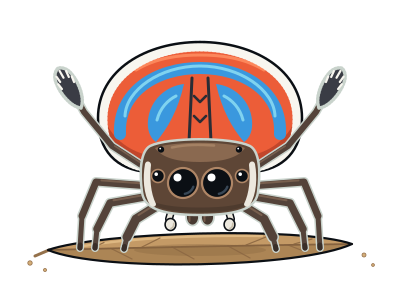
- Jumping spidersThe largest spider family, sharp-eyed hunters that leap onto prey instead of using webs.
- Orb-weaversThe spiders that spin the classic round web with spokes and a sticky spiral.
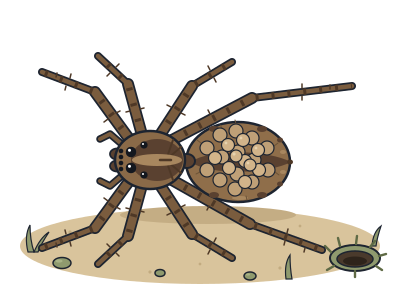
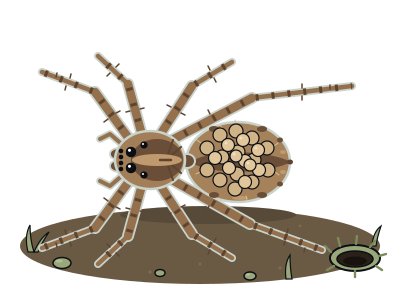
- Carolina wolf spiderA hunter that runs prey down, and the mother carries her babies piled on her back.
- Giant house spiderThe long-legged spider that sprints across the living-room floor in autumn.
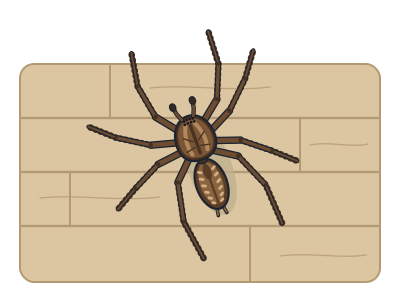
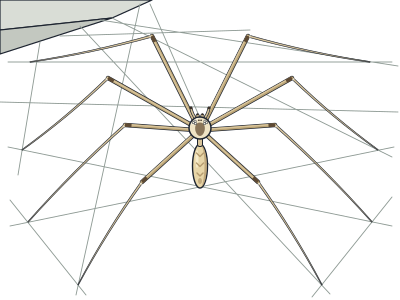
- Daddy long-legs spiderA spindly cellar spider that shakes its web into a blur when disturbed.
- Ogre-faced spiderHas two enormous night-vision eyes and holds a stretchy net to throw over passing insects.
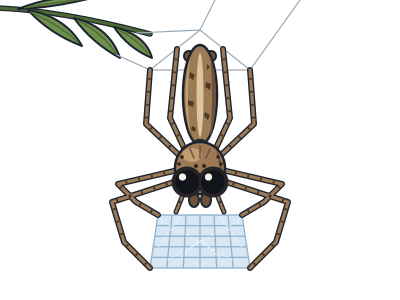
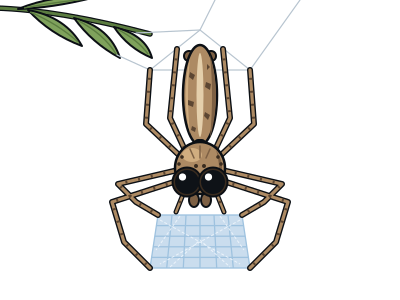
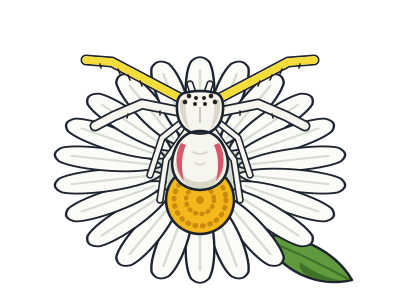
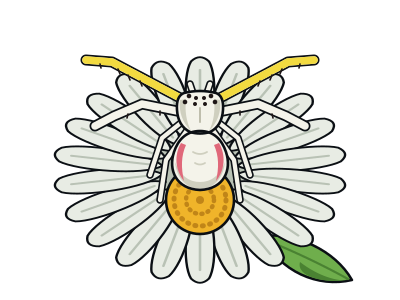
- Goldenrod crab spiderWaits on flowers and slowly changes between white and yellow to match them.