A group of living things
Jumping spiders
Salticidae
Big-eyed hunters that leap onto their food instead of waiting in a web
This branch is shown at about 50 million years ago; its age is a rough estimate.
You and jumping spiders meet in the Two-sided animals branch, shown at about 580 million years ago (on 11 November, in a calendar from life's shared ancestor to today).
Jumping spiders are the biggest family of spiders, with about 7,000 known kinds. That is roughly one in every eight known spider species. Many of their relatives on the tree, such as orb-weavers and black widows, catch food in webs. Yet most jumping spiders do not build webs to catch prey. Instead, they hunt in daylight. They creep up on prey and then leap onto it.
Their secret is their eyes. They have eight. The big front pair are camera-type eyes like ours, not the many-part eyes of insects. These eyes see sharp detail and colour. The smaller eyes watch for movement almost all the way around the spider's body.
They have not given up silk. Before a jump, the spider fixes a silk line that works like a safety rope, and it can sometimes hang from it after a missed leap. It also spins small silk shelters for resting, moulting and laying eggs. Its legs are not flung out by big jumping muscles like a grasshopper's. Instead, a quick rise in the pressure of its blood straightens them.
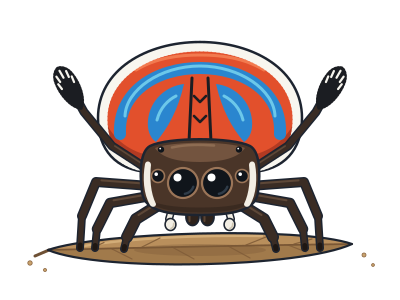
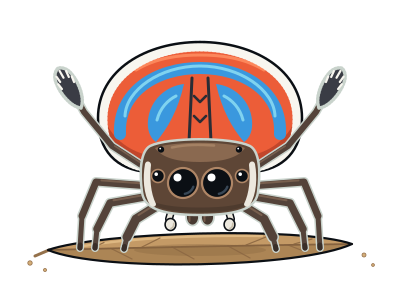
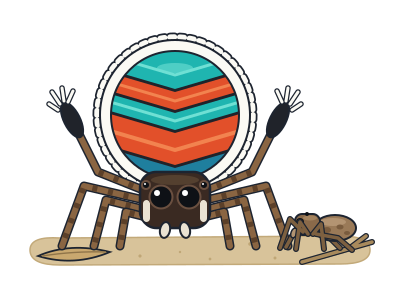
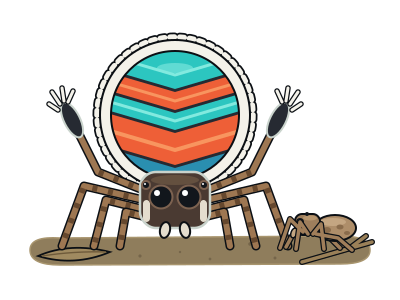
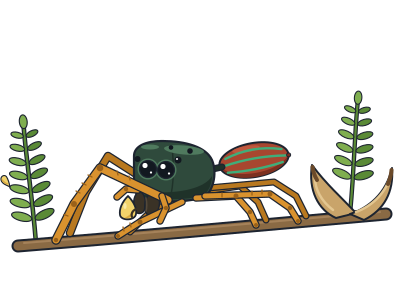
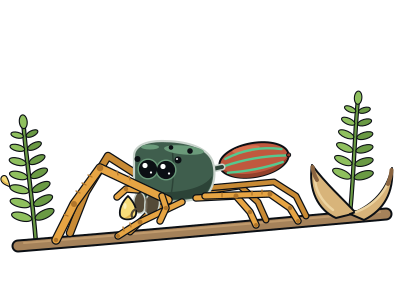
The family includes the tiny peacock spiders, which live mainly in Australia. One well-known kind is only about 5 millimetres long, about the size of a grain of rice. To court a female, the male of this kind raises a bright red, blue and black flap on his back. He also waves one pair of legs high in a dance.
Spider milk
In one jumping spider species, the mother feeds her young a milk-like fluid for about their first 40 days.
A long dance
A male peacock spider's courtship dance can last from about 6 to 50 minutes, and about 24 minutes on average.
Safe to watch
Jumping spiders are not considered harmful to people. They rarely bite unless they are handled or cornered, although a bite can hurt.
Inside jumping spiders
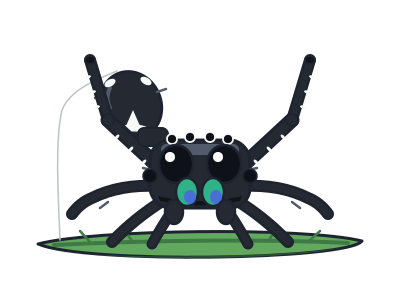
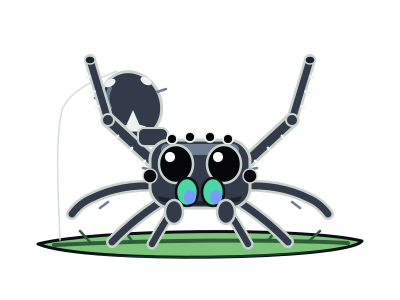
- Regal jumping spiderEight eyes, colour vision and a curious face; it stalks and pounces like a tiny cat.
- Peacock spiderA rice-grain-sized male raises a rainbow flap and dances to win over a female.
- Vegetarian jumping spiderThe only spider known to eat mostly plants, nibbling food bodies made by acacia trees.
Next to it on the tree
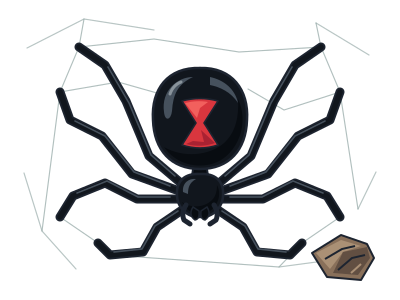
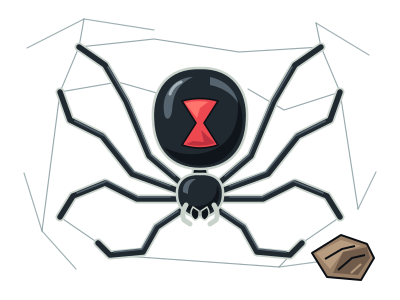
- Southern black widowA shiny black spider with a red hourglass and a strong nerve venom.
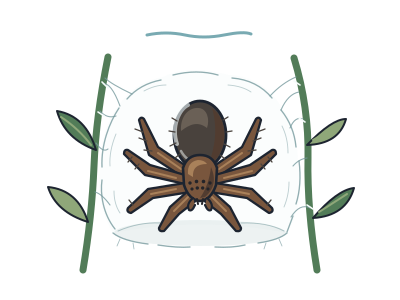
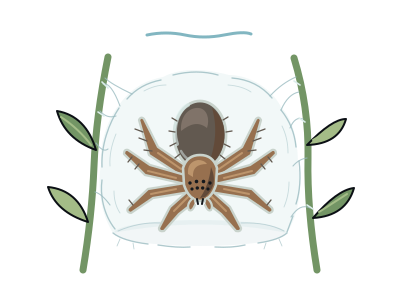
- Diving bell spiderLives underwater in a silk bubble of air that it fills from the surface.
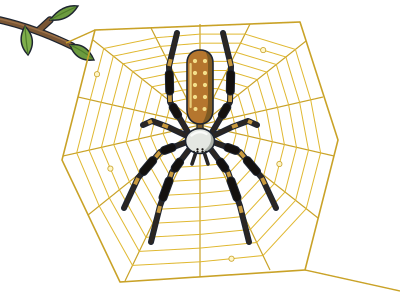
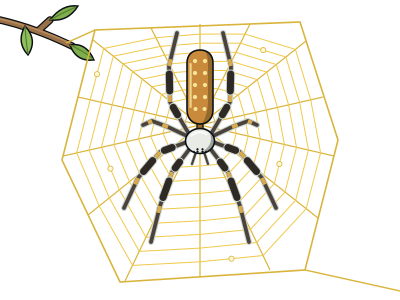
- Orb-weaversThe spiders that spin the classic round web with spokes and a sticky spiral.
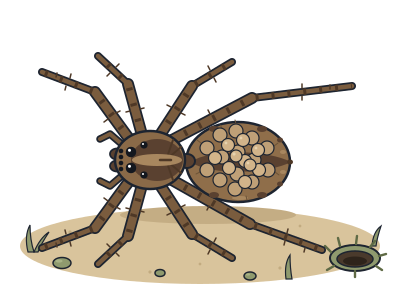
- Carolina wolf spiderA hunter that runs prey down, and the mother carries her babies piled on her back.
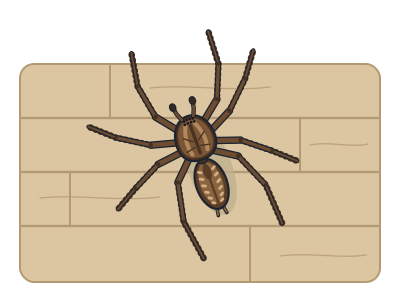
- Giant house spiderThe long-legged spider that sprints across the living-room floor in autumn.
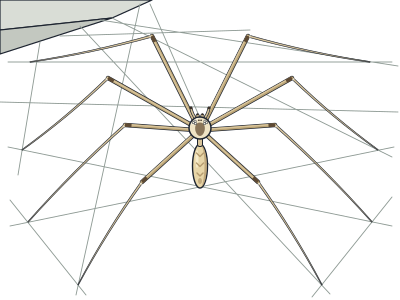
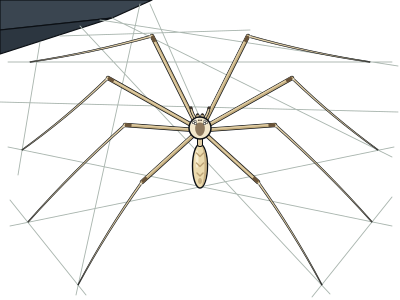
- Daddy long-legs spiderA spindly cellar spider that shakes its web into a blur when disturbed.
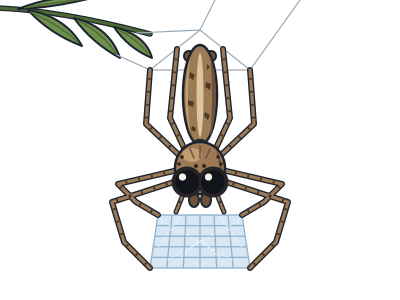
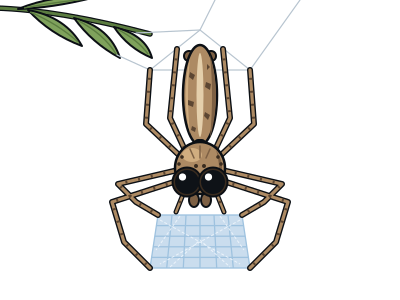
- Ogre-faced spiderHas two enormous night-vision eyes and holds a stretchy net to throw over passing insects.
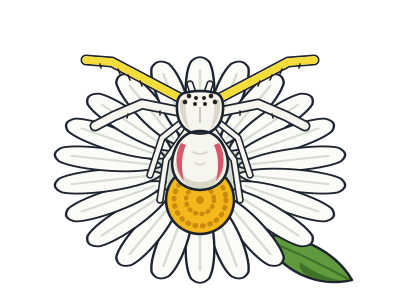
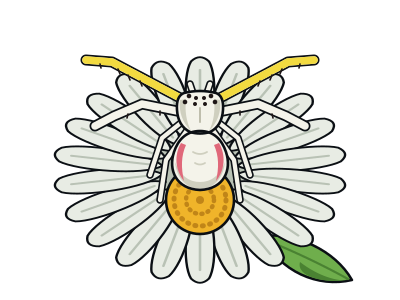
- Goldenrod crab spiderWaits on flowers and slowly changes between white and yellow to match them.