A group of living things
Spiders
Araneae
Eight-legged hunters with a talent for silk
This branch is shown at about 350 million years ago; its age is a rough estimate.
You and spiders meet in the Two-sided animals branch, shown at about 580 million years ago (on 11 November, in a calendar from life's shared ancestor to today).
Spiders are eight-legged hunters that spin silk. More than 50,000 species have been named, and nearly all hunt other animals. They are not insects. They belong to the arachnids, alongside scorpions, ticks, mites and harvestmen. These are their relatives, not different kinds of spider. A spider has two main body sections joined by a narrow waist.
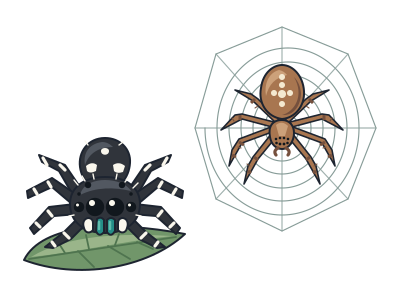
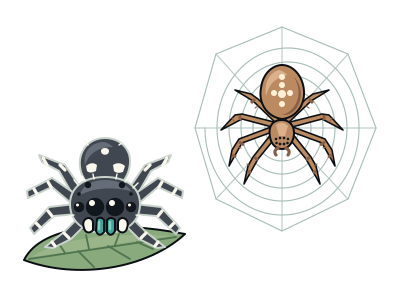
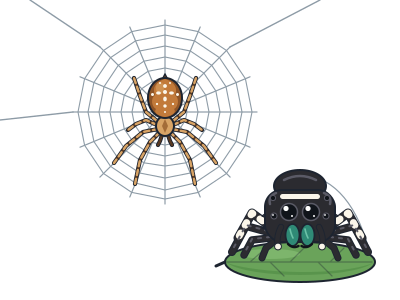
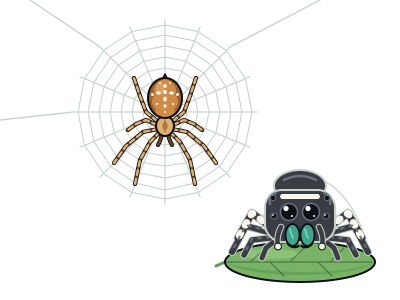
Picture a jumping spider beside an orb-weaver in its web. The jumping spider spots its food with sharp eyesight, then leaps onto it. A European garden spider waits in a spiral web, sensing vibrations when an insect is caught. These are two different ways of being a hunter.
Silk is useful even without a food-catching web. Regal jumping spiders trail a silk safety line as they hunt. Spiders also use silk to protect eggs and make shelters. Unlike jumping spiders, most spiders have poor eyesight and rely heavily on touch and vibration.
Dancing to impress
Male regal jumping spiders perform courtship dances, showing off the fringes on their legs.
An underwater air room
The diving bell spider spends most of its life underwater. It builds a silk structure among submerged plants and fills it with air.
Travelling on silk
Some young spiders and small adults travel through the air on silk threads. This is called ballooning, but no balloon or wings are involved.
Inside spiders
- Segmented trapdoor spiderA living fossil spider that still has armour plates across its back, like its ancient ancestors.
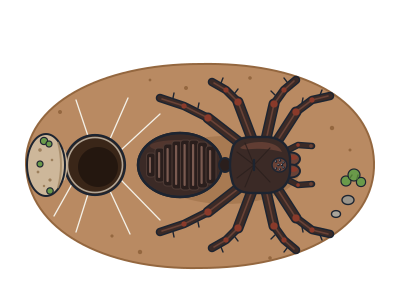
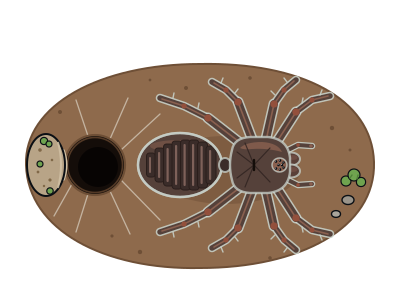
- Tarantulas and trapdoor spidersHeavy, long-lived spiders whose fangs strike straight down, from tarantulas to trapdoor builders.
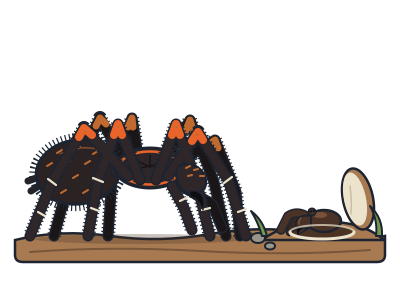
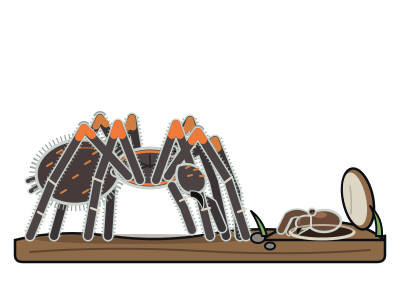
- True spidersThe great majority of spiders, whose fangs pinch sideways like tweezers.
Next to it on the tree
- ScorpionsEight-legged hunters with grasping pincers and a curled tail ending in a sting.
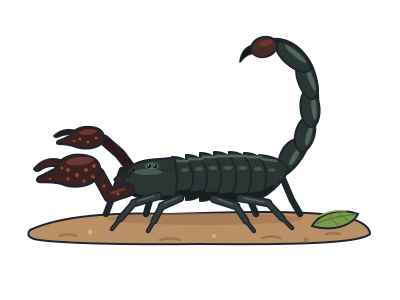
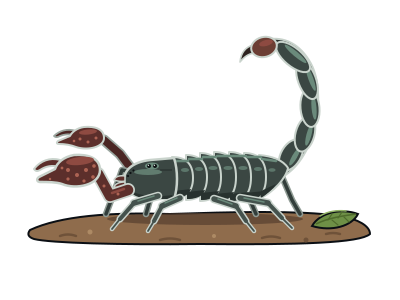
- PulmonoscorpiusA giant land scorpion of the coal-swamp age, as long as a forearm.
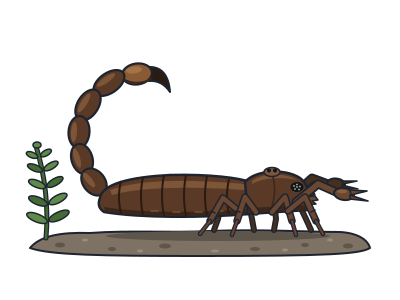
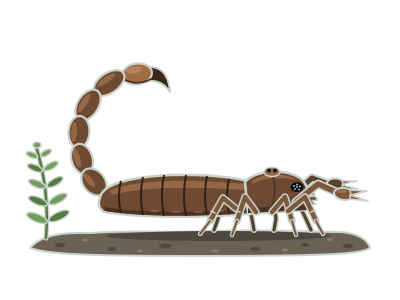
- VinegaroonA whip scorpion with no sting that sprays a vinegar-smelling mist from its tail.
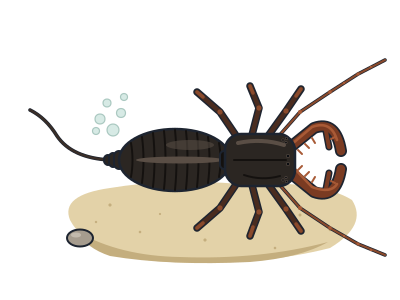
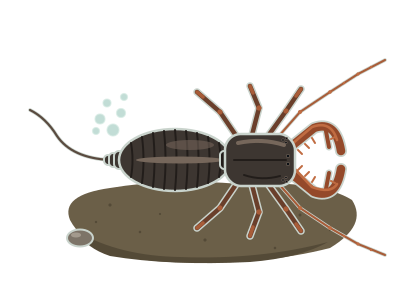
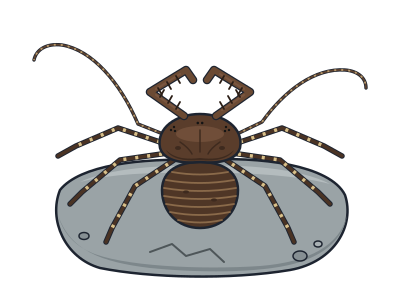
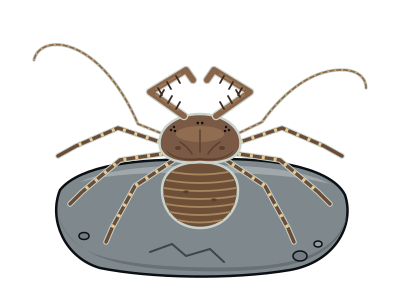
- Tailless whip scorpionA flat arachnid that walks sideways and feels its way with two extremely long, whip-like legs.