A species
Segmented trapdoor spider
Liphistius malayanus
A living fossil spider that still wears armour plates on its back
You and the segmented trapdoor spider meet in the Two-sided animals branch, shown at about 580 million years ago (on 11 November, in a calendar from life's shared ancestor to today).
Look at this spider's back and you will see something almost no living spider has: a row of hard plates across its abdomen, like bands of armour. Only its own small group of segmented spiders still has them. Its ancient relatives had them too. Fossils of this branch of spiders probably go back more than 300 million years, which is why it is often called a living fossil.
Its group is the sister group of all other living spiders, from tarantulas to the spiders in your garden. It keeps another old-fashioned feature too. Its silk-making nozzles sit in the middle of its belly, not at the tip. Tarantula-like trapdoor spiders build similar doors, but they belong to a different branch of the tree.
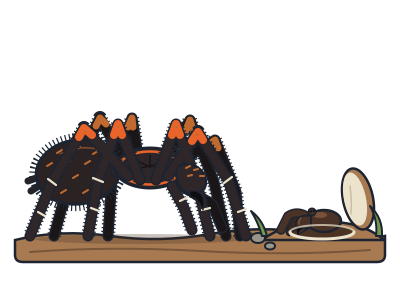
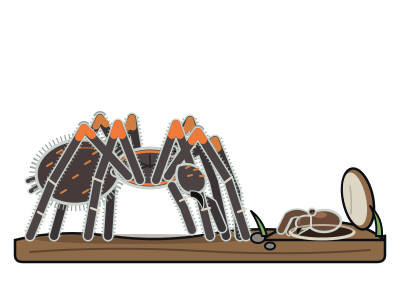
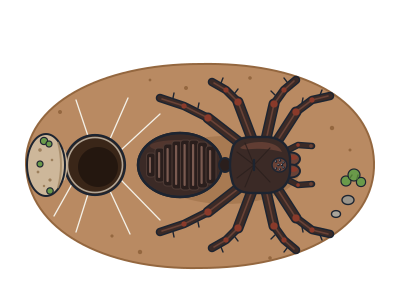
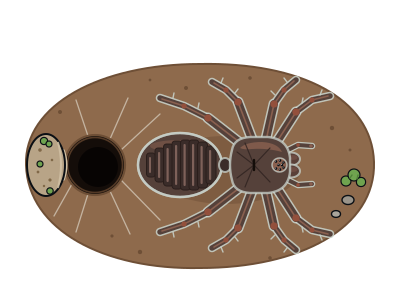
This large black or dark brown spider, with some red on it, lives only on the Malay Peninsula in Malaysia. It digs burrows in soil banks, sloping forest floors and rotting logs, always near forest. The longest burrow recorded was about 20 cm, roughly the length of a pencil. A thin, round silk door hidden under soil and moss closes it.
By day it hides deep inside. At night it waits just under the door. Silk lines spread out from the entrance like the spokes of a wheel. When an insect or woodlouse touches one, the spider feels the shake and rushes out to catch it.
A long life
For spiders, its family lives a very long time: about 5 to 18 years.
Eyes in a huddle
Its eight eyes are bunched together on a small bump at the front of its body.
Under threat
Malaysian spiders in this group are threatened by forest loss and by illegal collecting for the pet trade.