A group of living things
Tarantulas and trapdoor spiders
Mygalomorphae
Heavy, long-lived spiders with fangs that strike straight down
This branch is shown at about 290 million years ago; its age is a rough estimate.
You and tarantulas and trapdoor spiders meet in the Two-sided animals branch, shown at about 580 million years ago (on 11 November, in a calendar from life's shared ancestor to today).
This group includes the heavyweights of the spider world. Their big jaws point down, and their fangs strike straight down, side by side, without crossing. Most other spiders, the true spiders, pinch their fangs sideways towards each other instead.
Segmented trapdoor spiders also have downward fangs and two pairs of book lungs. Even so, tarantulas and trapdoor spiders are closer relatives of the true spiders. The features they share with segmented trapdoor spiders are old traits that both kept from long ago. They are not a sign of close family ties.
There are more than 3,000 species. The smallest are under 1 mm long. The Goliath birdeater is the heaviest spider in the world. It can weigh about as much as a large apple. Tarantulas make up about a third of the group.
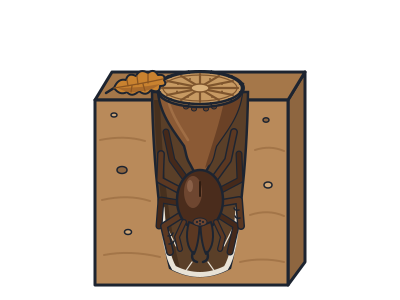
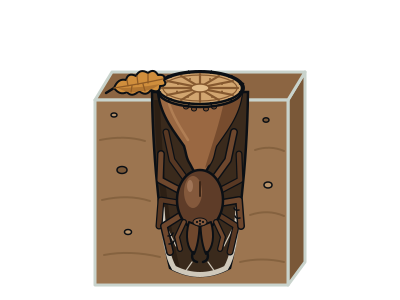
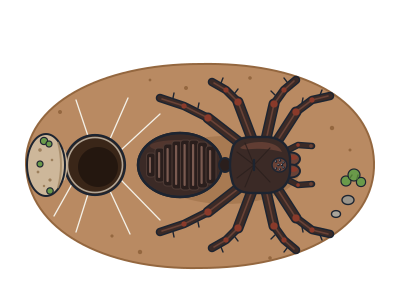
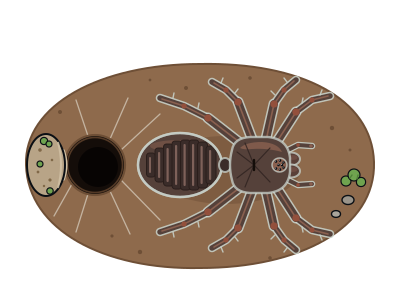
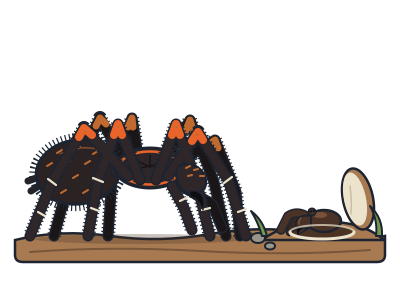
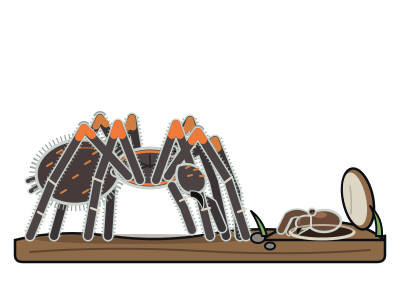
Many of these spiders live slow lives in silk-lined burrows. Trapdoor spiders don't catch prey in webs. They wait at the entrance and rush out at insects and other small animals passing by. Some burrows have hidden, hinged doors. These spiders can live a very long time. A female trapdoor spider in Western Australia reached about 43 years old, the oldest spider on record.
A hissing giant
When the Goliath birdeater feels threatened, it can make a hissing sound by rubbing together bristles on its legs and on the small leg-like feelers near its mouth.
A one-way journey
Adult male trapdoor spiders leave their burrows to search for females. If a male survives mating, he may mate with more than one female before he dies. In the Mexican redknee tarantula, females can live up to about 30 years, but males only about 5.
Rare in Europe
Most of these spiders live in the tropics and subtropics. Europe has only a few dozen species, mostly around the Mediterranean, and Britain has just one, the purseweb spider.
Inside tarantulas and trapdoor spiders
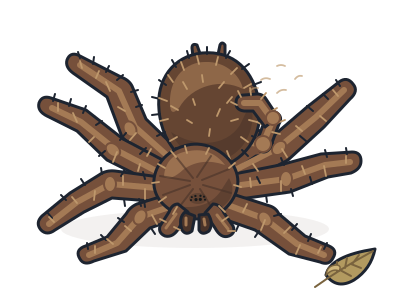
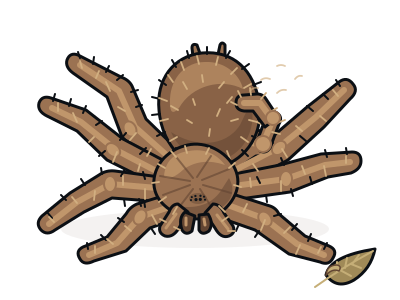
- Goliath birdeaterThe heaviest spider, as big as a dinner plate, that flicks itchy hairs at attackers.
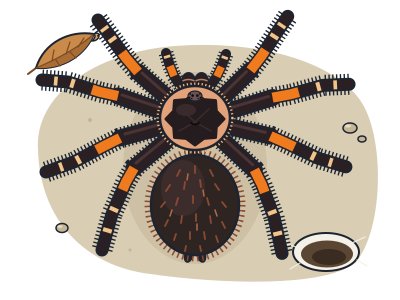
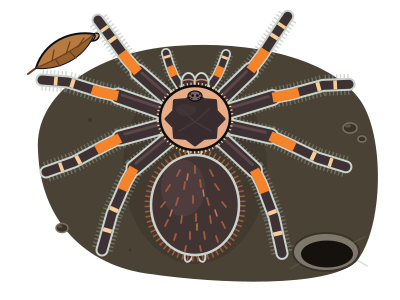
- Mexican redknee tarantulaA calm, slow-growing tarantula with orange knees; females can live for 30 years.
- Hourglass trapdoor spiderBlocks its burrow with its own flat, patterned rear end, like a living manhole cover.