A species
Mexican redknee tarantula
Brachypelma hamorii
A calm, orange-kneed tarantula that can live for about 30 years
You and the mexican redknee tarantula meet in the Two-sided animals branch, shown at about 580 million years ago (on 11 November, in a calendar from life's shared ancestor to today).
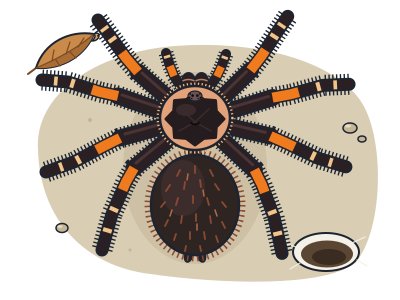
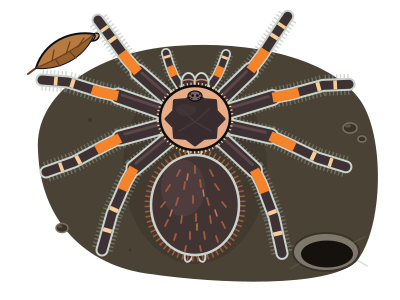
This big, hairy spider has bright orange patches on its 'knees', and it takes life slowly. It grows up slowly too. In a very similar red-knee species, females take about six or seven years to become adults. Females of this species can live for about 30 years, but males usually live only about five.
That long life is surprising for a spider. Most other spiders die after about a year. Tarantulas belong to a group of heavy-bodied spiders that also includes trapdoor spiders and Australian funnel-webs. Their fangs point straight down instead of crossing like pincers, and some spiders in this group can live for decades. One wild female trapdoor spider lived for 43 years.
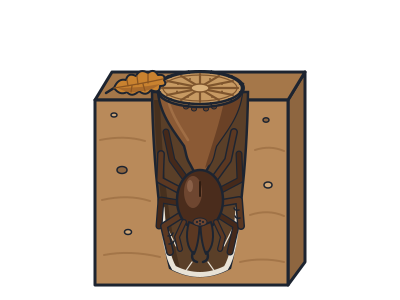
In the wild, this tarantula lives only in the hilly dry forests of western Mexico, where the trees drop their leaves in the dry season. It digs a burrow under a log, rock or tree root. Then it waits at the entrance and grabs large insects as they pass. Sometimes it catches a frog or a mouse.
When it is disturbed, it usually doesn't bite. Instead, it uses its back legs to flick barbed, itchy hairs off its body. These hairs can irritate skin and are dangerous if they get into someone's eyes.
A case of mistaken identity
For decades, pet shops, books and zoos called this spider by the wrong name. They mixed it up with a look-alike species from further south-east in Mexico. In 2017, a study using DNA and body features showed that the two are separate species.
Eight eyes, poor eyesight
Like other tarantulas, it has eight small eyes, but it does not see well.
Protected from smugglers
Red-kneed tarantulas are some of the most wanted pet spiders. Many are bred in captivity, but large numbers are still smuggled out of the wild. International trade is controlled by law, and DNA tests can help catch illegal sellers.