A group of living things
Arthropods and kin
Panarthropoda
Jointed legs and stubby-legged cousins
This branch is shown at about 550 million years ago; its age is a rough estimate.
You and arthropods and kin meet in the Two-sided animals branch, shown at about 580 million years ago (on 11 November, in a calendar from life's shared ancestor to today).
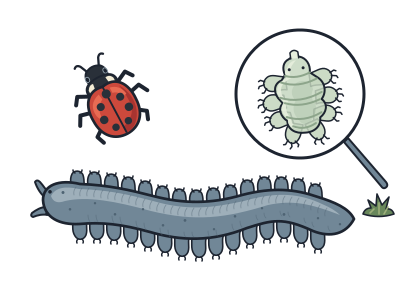
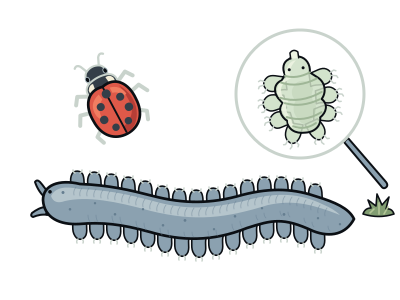
Arthropods, including beetles, share this branch of the family tree with two unlikely cousins: water bears and velvet worms. A beetle’s jointed legs look quite different from its relatives’ soft, stubby legs. Yet all three groups share a body plan with pairs of limbs repeated along the body.
These animals also belong to the wider family that sheds its outer covering as it grows. Arthropods have an outer skeleton and bodies divided into sections. Water bears have no bones: fluid inside their flexible covering helps support their bodies. Hard armour is not a feature of this whole family.
Velvet worms make the family connection especially surprising. Despite their worm-like shape, they are much closer relatives of arthropods than of earthworms. They shelter in damp places because they dry out easily. Living velvet worms and water bears are relatives of beetles, not unchanged ancestors waiting on a lower rung of an evolutionary ladder.
Eight little legs
Water bears have eight legs: three pairs along their sides and one pair at the rear. Many have claws that help them grip nearby surfaces.
No lungs needed
Water bears absorb oxygen from the water around them rather than breathing with lungs.
Sticky defence
Velvet worms squirt sticky slime from two tubes near the mouth to catch small animals and defend themselves.
Inside arthropods and kin
- Water bearsEight-legged micro-animals that survive freezing, boiling, drying out and even open space.
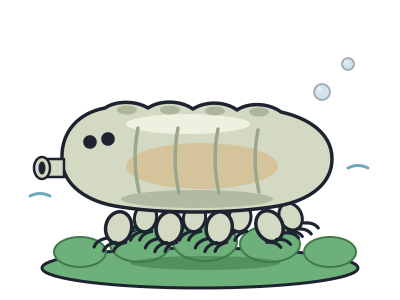
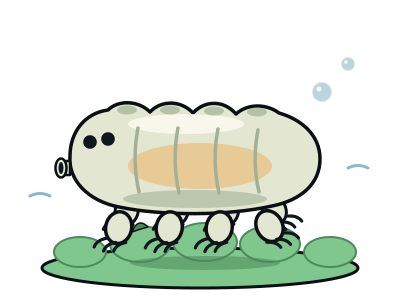
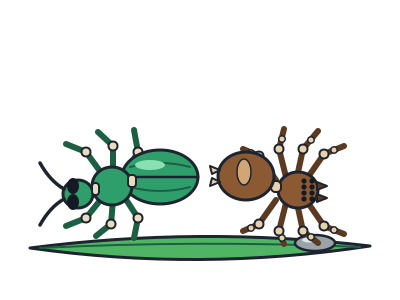
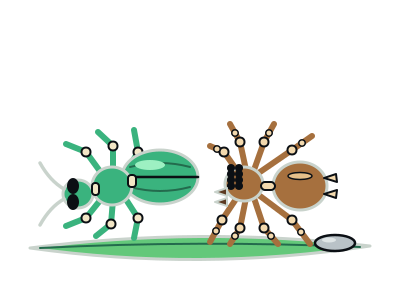
- ArthropodsJointed legs and armour on the outside: the most successful animal design on Earth.
- Velvet wormA soft, many-legged hunter that shoots sticky slime nets at insects.
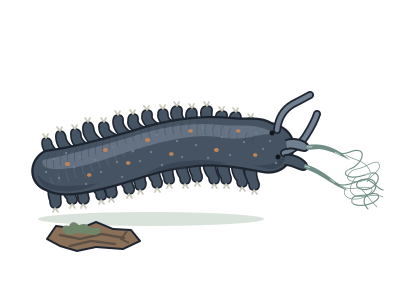
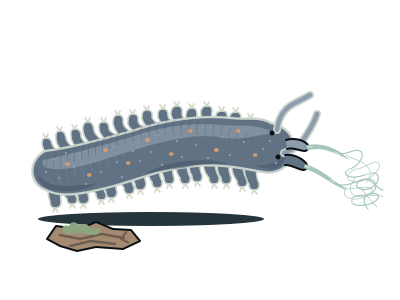
- HallucigeniaSo strange that scientists first drew it upside down and back to front.
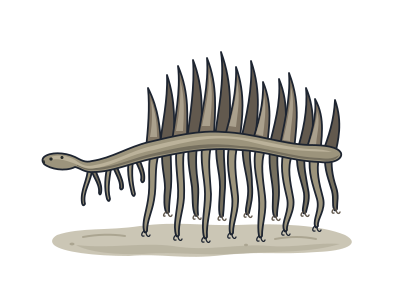
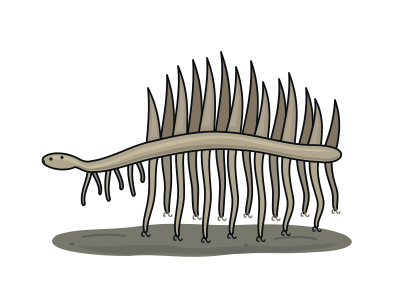
- OpabiniaFive eyes and a grabbing nozzle on its face; it made scientists laugh when first shown.
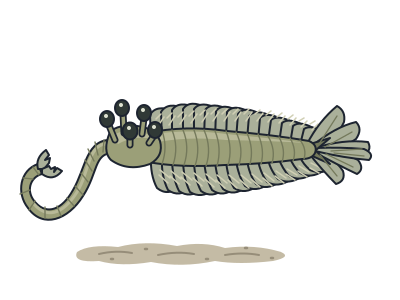
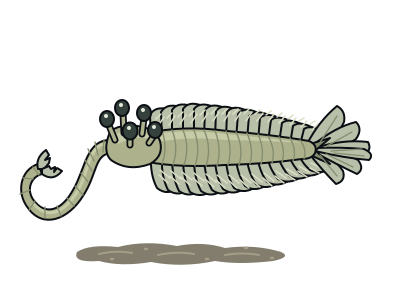
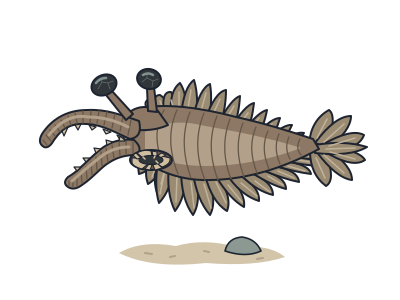
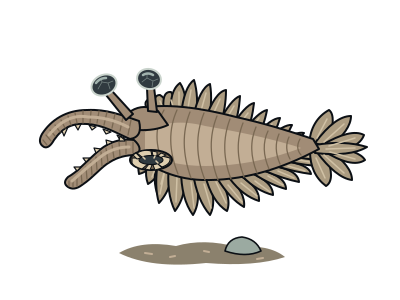
- RadiodontsThe first big hunters and filter-feeders, with spiky head arms and round, ringed mouths.
- FuxianhuiaA 518-million-year-old fossil so finely preserved that its brain and heart can still be traced.
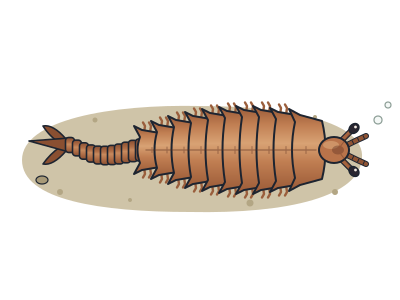
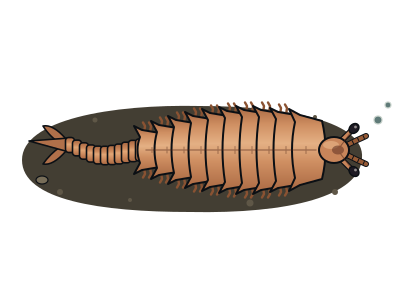
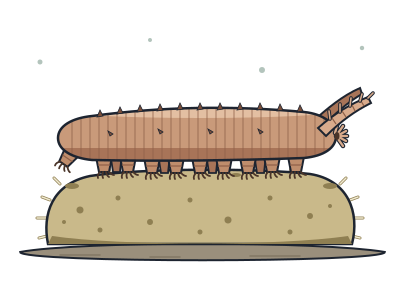
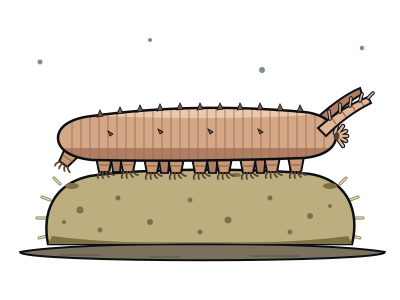
- AysheaiaA caterpillar-like Burgess Shale creature that may have clambered over sponges and fed on them.
Next to it on the tree
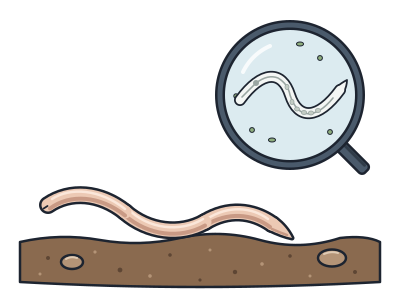
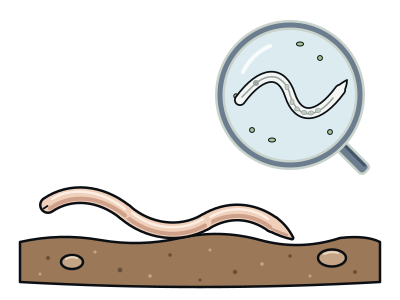
- RoundwormsSmooth, unsegmented worms found almost everywhere, from soil to deep rock to your gut.
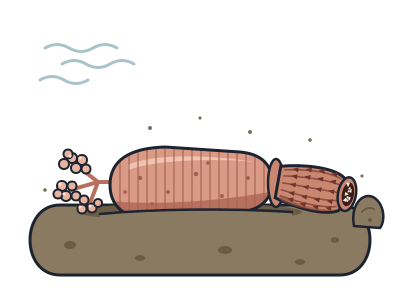
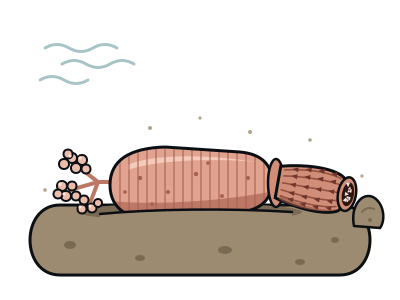
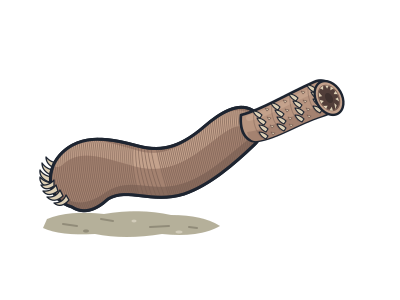
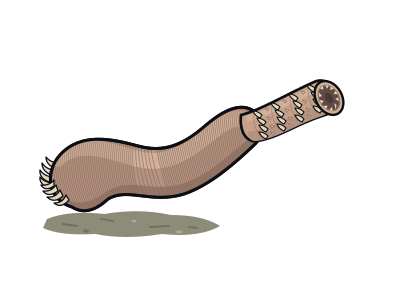
- OttoiaA Cambrian burrowing worm with a spiny mouth that turned inside out to grab prey.
- Mud dragonA spiny animal smaller than a grain of sand that pulls itself through seafloor mud with its head.
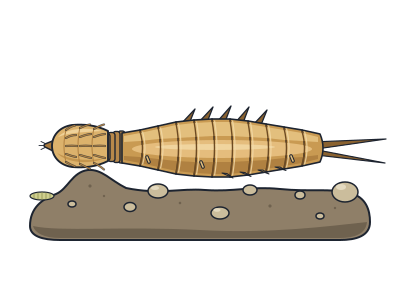
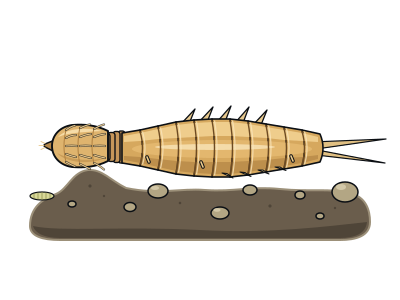
- Priapulid wormA fat burrowing worm whose body plan has barely changed since the Cambrian.