A group of living things
Roundworms
Nematoda
Smooth, simple worms that live almost everywhere, from garden soil to deep rock to your gut.
This branch is shown at about 450 million years ago; its age is a rough estimate.
You and roundworms meet in the Two-sided animals branch, shown at about 580 million years ago (on 11 November, in a calendar from life's shared ancestor to today).
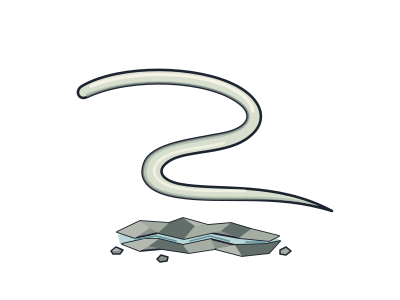
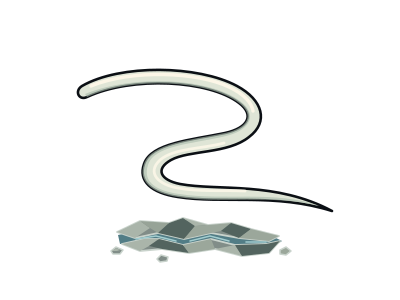
Roundworms are smooth worms with no segments, and they turn up almost everywhere. They live in soil, seabed mud, fresh water and rotting fruit, and inside plants and animals, including people. One of them, the devil worm, was found as deep as about 3.6 kilometres underground in South African gold mines.
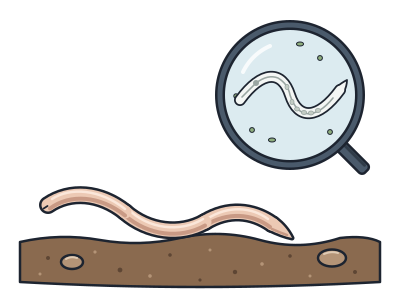
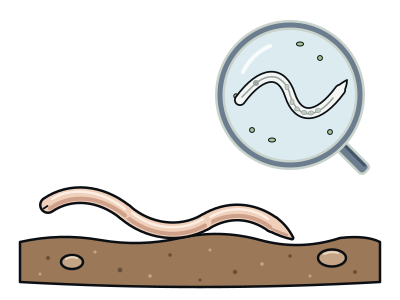
They may be the most common animals on Earth. One study estimated that about 440 quintillion of them live in the world's topsoil. That is roughly 60 billion for every person alive. Most free-living ones are tiny, under 2.5 millimetres long, so you need a strong magnifying glass or a microscope to see them.
They may look a bit like earthworms, which have rings, but they are only distant relatives. Roundworms belong to the moulting animals, along with insects, spiders and crabs. Like those relatives, they shed their tough outer skin as they grow up. Their closest living relatives are horsehair worms.
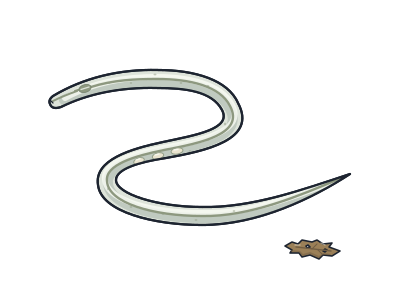
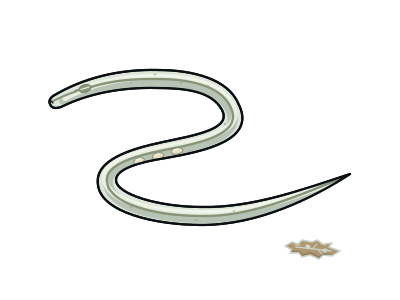
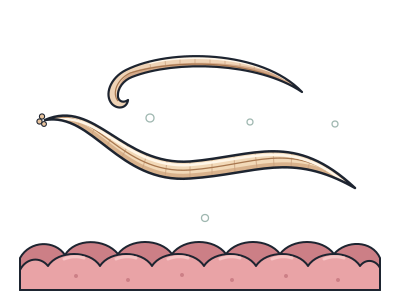
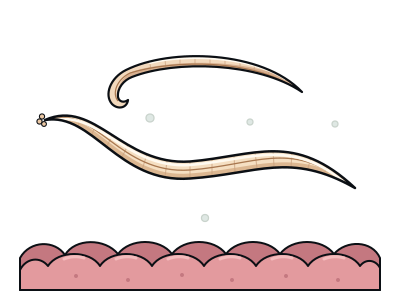
Inside a roundworm, the gut is a tube that runs from a mouth at one end to an anus at the other. It has no heart, blood vessels or breathing organs. Its body muscles run only along its length, so it moves by whipping from side to side. The see-through C. elegans is about 1 millimetre long. The giant roundworm, a parasite of people, can grow to almost half a metre.
Counted cell by cell
An adult C. elegans hermaphrodite has exactly 959 body cells, and 302 of them are nerve cells. It was the first animal to have its whole genome (its full set of genes) read, in 1998.
Egg machine
One female giant roundworm can lay about 200,000 eggs a day, and she can keep this up for more than a year. The thick-shelled eggs can last a long time in soil.
Survivors from space
C. elegans worms that were on board the Space Shuttle Columbia survived when it broke apart in 2003.
Inside roundworms
Next to it on the tree
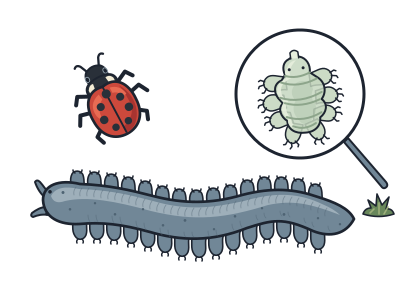
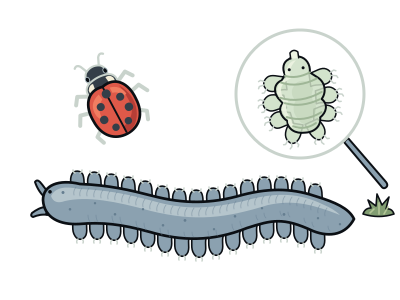
- Arthropods and kinArthropods plus their stubby-legged cousins, water bears and velvet worms.
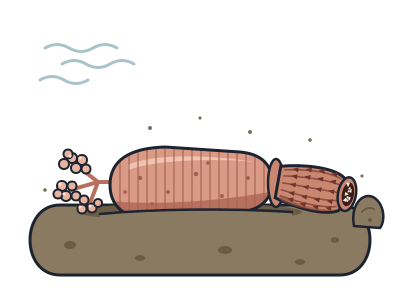
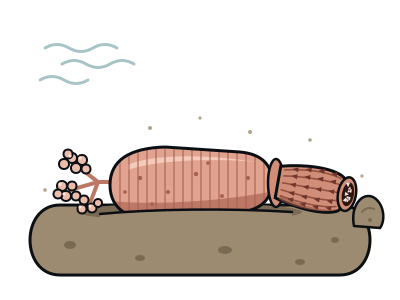
- OttoiaA Cambrian burrowing worm with a spiny mouth that turned inside out to grab prey.
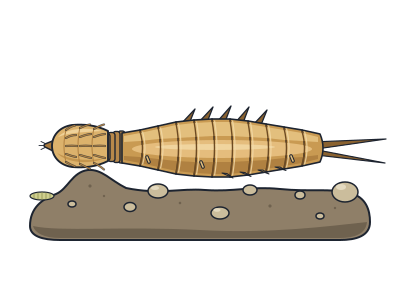
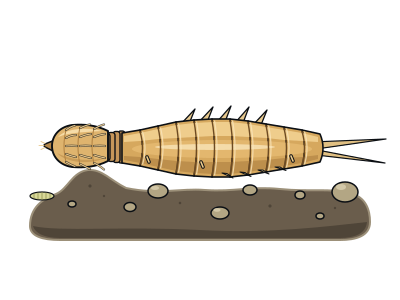
- Mud dragonA spiny animal smaller than a grain of sand that pulls itself through seafloor mud with its head.
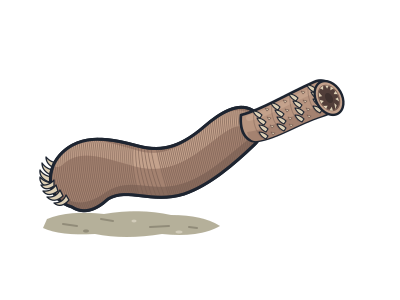
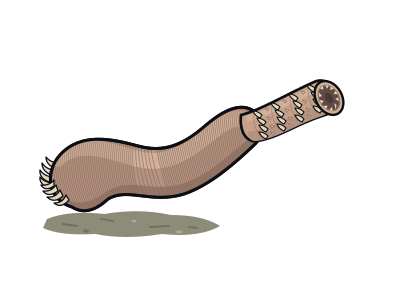
- Priapulid wormA fat burrowing worm whose body plan has barely changed since the Cambrian.