A species
C. elegans
Caenorhabditis elegans
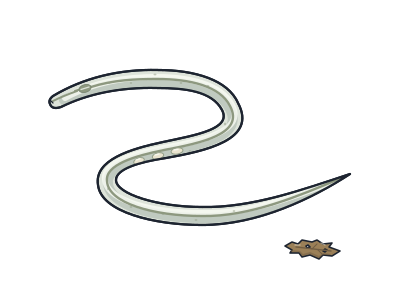
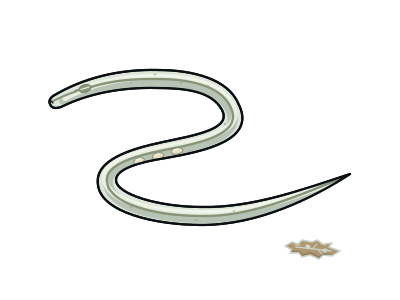
A see-through roundworm behind Nobel-winning discoveries.
You and the c. elegans meet in the Two-sided animals branch, shown at about 580 million years ago (on 11 November, in a calendar from life's shared ancestor to today).
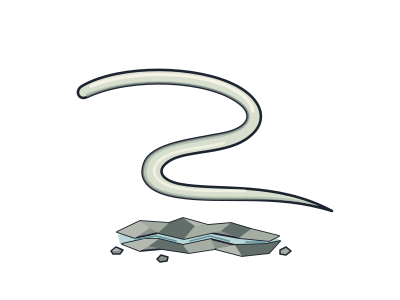
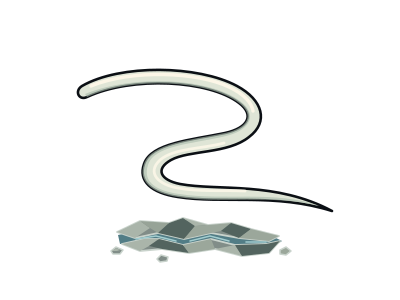
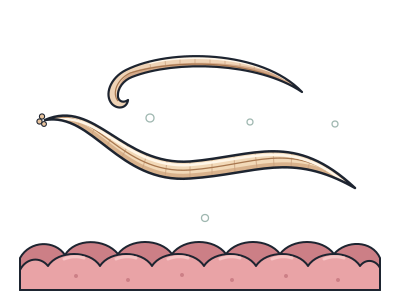
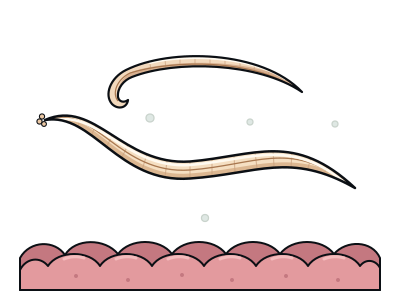
This millimetre-long roundworm has helped scientists win Nobel Prizes. Its transparent body let researchers follow how its body cells develop. Scientists have also mapped the connections between its nerve cells. The prizes went to the scientists, of course—not the worm.
It shares the roundworm branch with the devil worm and giant roundworm. But being a roundworm does not make it a parasite. This species lives freely, eating bacteria associated with rotting plant material, including fruit.
Most individuals are hermaphrodites: they make both eggs and sperm. A standard adult of this kind has 959 body cells, excluding the cells that produce eggs and sperm. Of these body cells, 302 are nerve cells. People and these worms share many molecules that carry signals through the nervous system. That shared biology helps explain why discoveries in such a tiny animal can teach us about ourselves.
A scientific first
In 1998, it became the first animal with a nearly complete reading of its DNA instructions.
Four changes of covering
Young worms shed their outer covering four times before becoming adults.
Small but able to learn
These worms can learn from experience, changing their responses to signals linked with food or danger.