A species
Giant roundworm
Ascaris lumbricoides
A pencil-length worm living in the guts of hundreds of millions of people
You and the giant roundworm meet in the Two-sided animals branch, shown at about 580 million years ago (on 11 November, in a calendar from life's shared ancestor to today).
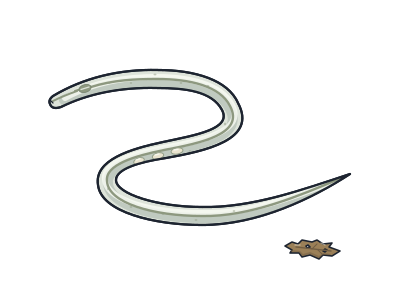
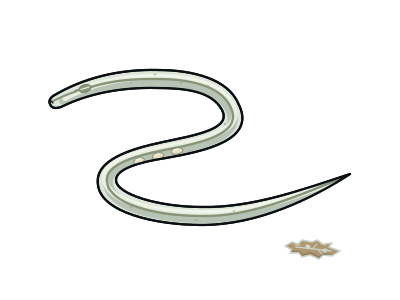
Picture a smooth, creamy-pink worm as long as a pencil or longer, living inside a person's gut. That is the giant roundworm, the most common worm found in people. It infects hundreds of millions of people around the world, mostly in warm places where toilets and clean water are hard to come by.
Its name means "earthworm-like", but it is not an earthworm. Its body has no segments. It is a roundworm, and on the tree it sits beside the tiny lab worm C. elegans and the devil worm. Those relatives are about a millimetre long or less, so this worm really is a giant in its family.
Its life is a strange journey. One female can lay about 200,000 eggs a day, and they leave the body in poo. The eggs must ripen in warm, damp soil for weeks before they can infect anyone. When a person swallows one, perhaps on an unwashed vegetable, the young worm hatches and travels through the blood to the lungs. Then it climbs up to the throat, gets swallowed again and grows up in the gut.
Many infected people feel fine, but heavy infections can slow children's growth. Washing hands, using toilets and cheap medicines all help.
Super-tough eggs
Its eggs have thick shells that stand up to many chemicals, and they can stay alive in soil for 10 years or more.
Tell them apart by the tail
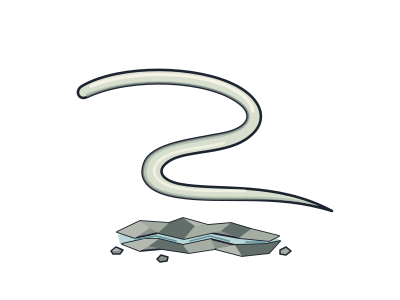
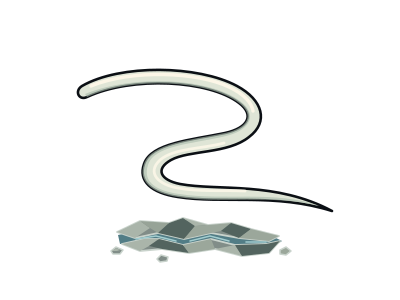
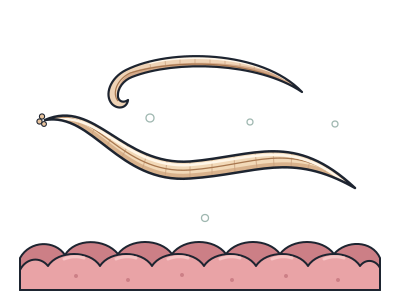
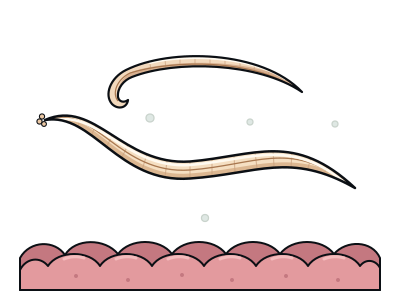
Males are smaller than females, and the tip of a male's tail curls into a hook. A female's tail is straight.
A long stay
It takes about 2 to 3 months from swallowing an egg until a female starts laying, and adult worms live for about 1 to 2 years.