An extinct species
Ottoia †
Ottoia prolifica
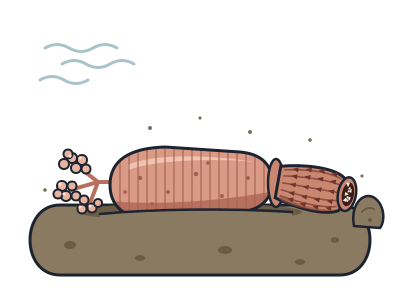
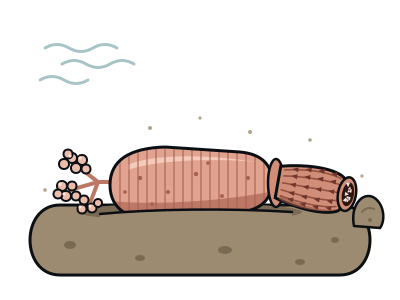
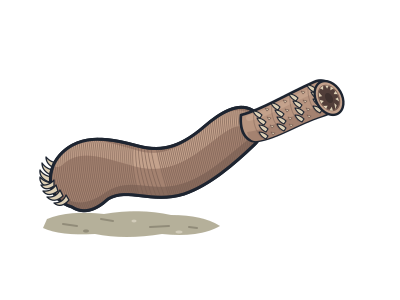
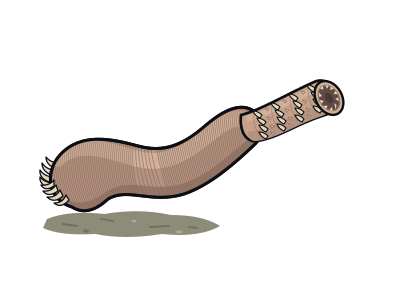
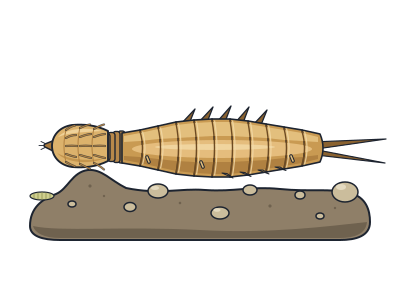
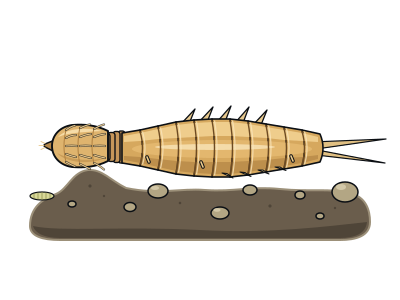
A burrowing worm with an inside-out, spiny front end
Lived about 510–505 million years ago.
You and the ottoia meet in the Two-sided animals branch, shown at about 580 million years ago (on 11 November, in a calendar from life's shared ancestor to today).
This burrowing worm could turn its mouth-bearing front end inside out, exposing tiny teeth and spines to grasp food. Its worm shape did not make it a close earthworm relative. It belonged to the moulting animals, the wider group that included roundworms and insects. It shed its outer covering as it grew.
Fossils recorded this worm about 510 to 505 million years ago, during the Cambrian period. Its home was muddy sea-floor sediment, probably just beneath the surface. Whole-body fossils came from the Burgess Shale in British Columbia, Canada. Some preserved its body outline, mouth structures and even the food inside its gut.
Those preserved meals gave unusually direct clues to its diet. They included small animals with cone-shaped shells, along with other shelled animals and remains of joint-legged animals. Researchers inferred that it hunted and also scavenged food. Finding animal remains inside a worm did not, by itself, show whether that particular meal had been caught alive.
Eight rear hooks
Two sets of four hooks surrounded its rear end.
A common fossil
Thousands of specimens were known, making it one of the Burgess Shale’s commonest animals.
Named in 1911
Charles Walcott described it in 1911. Its species name referred to the abundance of specimens.
Next to it on the tree
- Arthropods and kinArthropods plus their stubby-legged cousins, water bears and velvet worms.
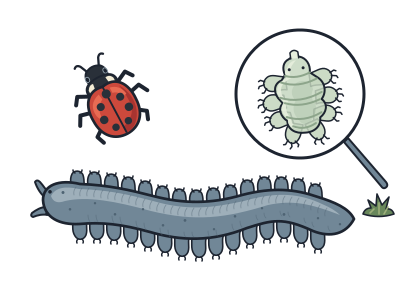
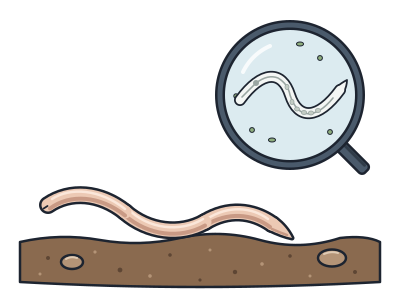
- RoundwormsSmooth, unsegmented worms found almost everywhere, from soil to deep rock to your gut.
- Mud dragonA spiny animal smaller than a grain of sand that pulls itself through seafloor mud with its head.
- Priapulid wormA fat burrowing worm whose body plan has barely changed since the Cambrian.