A species
Priapulid worm
Priapulus caudatus
A plump seabed worm that still digs the way its relatives did over half a billion years ago.
You and the priapulid worm meet in the Two-sided animals branch, shown at about 580 million years ago (on 11 November, in a calendar from life's shared ancestor to today).
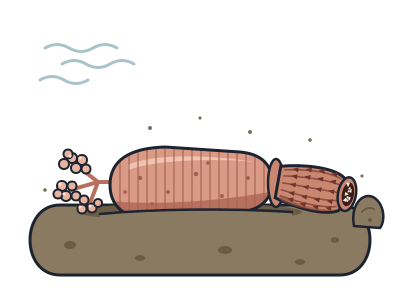
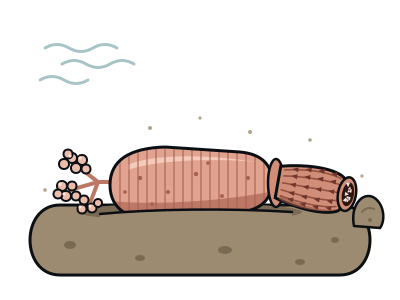
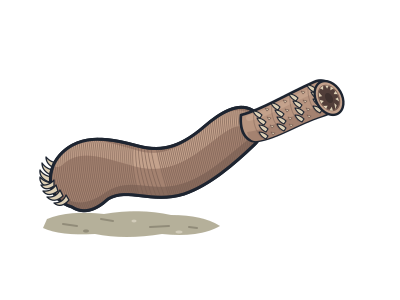
This plump, pinkish-brown worm lives buried in seabed mud. Its basic body plan has barely changed in more than half a billion years. Worms shaped very much like it were already burrowing in Cambrian seas, long before the first dinosaurs. People often call it a living fossil, but that only means its shape and lifestyle have changed little. It has kept evolving like everything else.
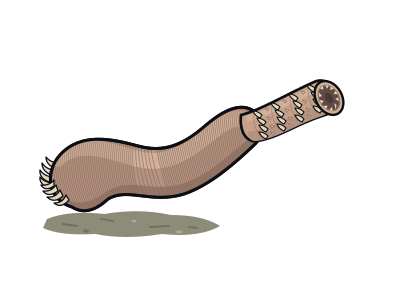
Its body has three parts: a spiny front end that it can pull inside itself, a long ringed trunk, and a branched tail at the back that looks like a bunch of tiny grapes. Large ones grow to about 15 centimetres, roughly as long as an adult's hand.
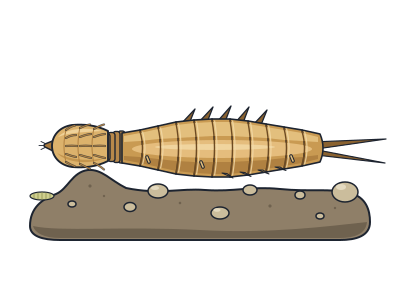
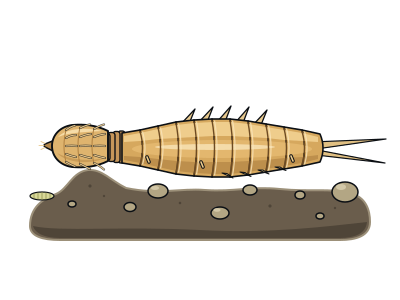
To dig, it pulls its spiny front end in, then shoots it out into soft, soupy mud. The spines grip like little anchors, so the worm does not slip backwards. In a lab, living worms collected in Sweden dug burrows that closely match fossil burrows more than 500 million years old, also found in Sweden.
It looks a bit like an earthworm, but it is not a close relative. Instead, it sheds its tough outer skin as it grows. That puts it among the moulting animals, alongside insects, crabs and roundworms. It lives in cold northern seas, from the Arctic to Scandinavia and Alaska.
Back to front
It belongs to a big group nicknamed the 'mouth-first' animals. But in its own embryo, the first opening to form becomes the bottom, not the mouth.
A small family
Only about 20 kinds of priapulid worm are alive today. About half of them are so tiny that they live in the gaps between grains of sand.
Deep-sea cousin
One close relative from the same genus lives on the deep ocean floor, between about 3,000 and 8,000 metres down.
Next to it on the tree
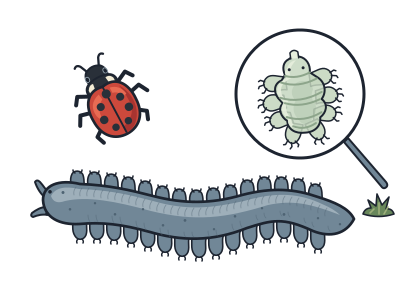
- Arthropods and kinArthropods plus their stubby-legged cousins, water bears and velvet worms.
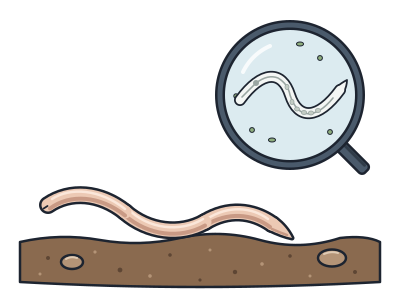
- RoundwormsSmooth, unsegmented worms found almost everywhere, from soil to deep rock to your gut.
- OttoiaA Cambrian burrowing worm with a spiny mouth that turned inside out to grab prey.
- Mud dragonA spiny animal smaller than a grain of sand that pulls itself through seafloor mud with its head.