An extinct species
Aysheaia †
Aysheaia pedunculata
A spiky, caterpillar-shaped cousin of velvet worms and water bears that may have clung to sponges
Lived about 510–505 million years ago.
You and the aysheaia meet in the Two-sided animals branch, shown at about 580 million years ago (on 11 November, in a calendar from life's shared ancestor to today).
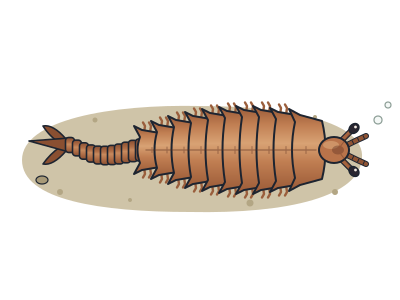
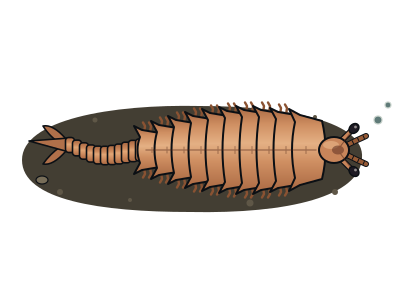
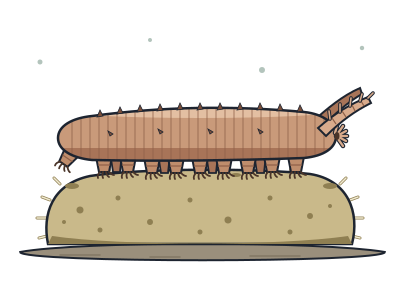
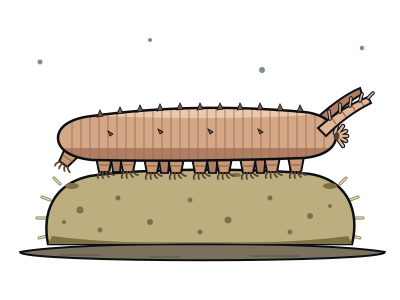
About 510 to 505 million years ago, a small, spiky creature shaped like a caterpillar crept across the seafloor in what is now western Canada. Its fossils come from the Burgess Shale, where they are often found alongside sponges. Because of that, scientists think it may have clambered over sponges and fed on them, gripping on with its curved claws.
It was not a caterpillar, or even an insect. It belonged to a group of ancient 'worms with legs' that were early members of the branch leading to arthropods, the group that includes insects, crabs and spiders. Its living relatives include velvet worms and the tiny water bears. Soon after it was first described, scientists noticed how much it looked like a modern velvet worm.
The fossils are flattened impressions of a soft body. They were about 1 to 6 centimetres long, so the biggest were about as long as a finger. They show ten pairs of stubby, clawed legs, ringed skin with small spines, and no separate head. The mouth sat at the very front tip, with a pair of grasping limbs beside it. Its colour, how it behaved and exactly what it ate were not preserved in the rock. Scientists can only make careful guesses about them from other clues.
Named after a novel
Its name comes from Ayesha Peak in British Columbia. The peak was named after the heroine of 'She', an adventure novel from 1887.
First mistaken for a worm
When Charles Walcott described it in 1911, he thought it was a segmented worm, a relative of the earthworm.
A rare find
Only about 39 fossils of it have been reported. It had no eyes, no feelers and no visible jaws.
Next to it on the tree
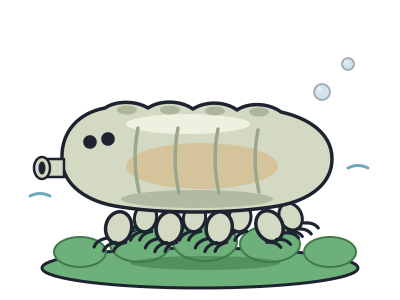
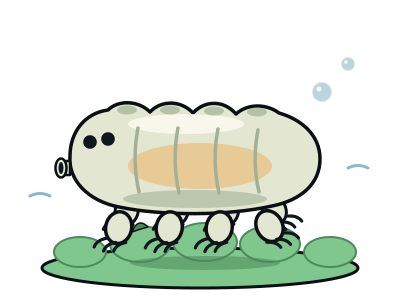
- Water bearsEight-legged micro-animals that survive freezing, boiling, drying out and even open space.
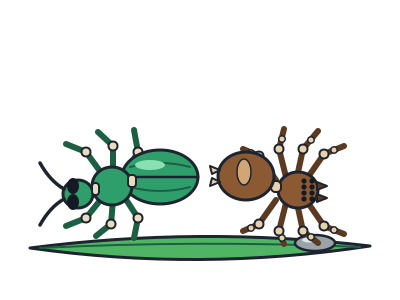
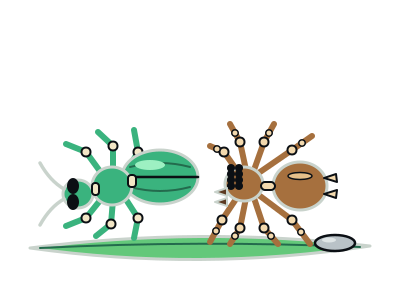
- ArthropodsJointed legs and armour on the outside: the most successful animal design on Earth.
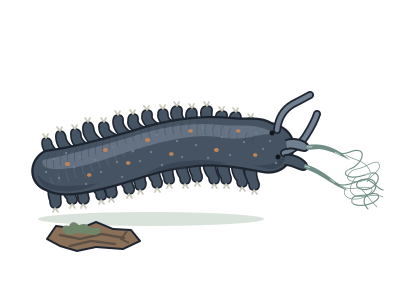
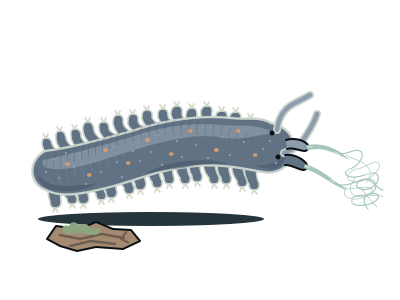
- Velvet wormA soft, many-legged hunter that shoots sticky slime nets at insects.
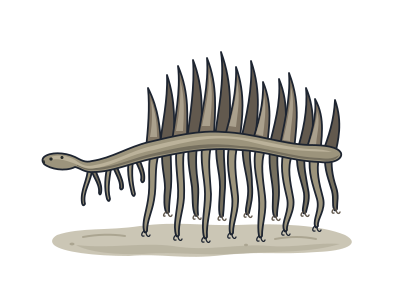
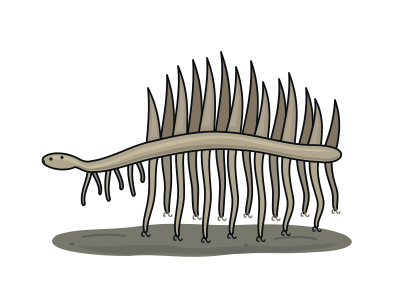
- HallucigeniaSo strange that scientists first drew it upside down and back to front.
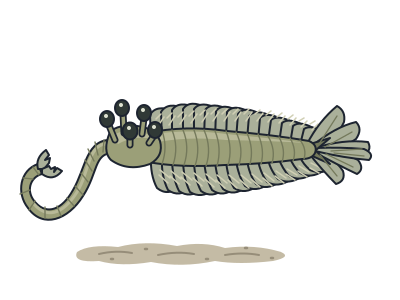
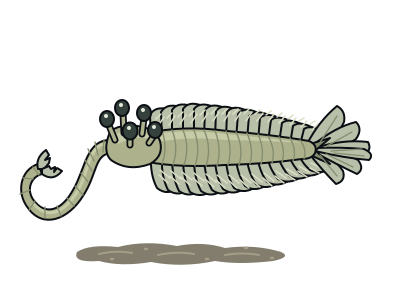
- OpabiniaFive eyes and a grabbing nozzle on its face; it made scientists laugh when first shown.
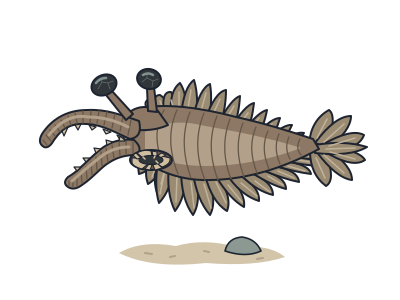
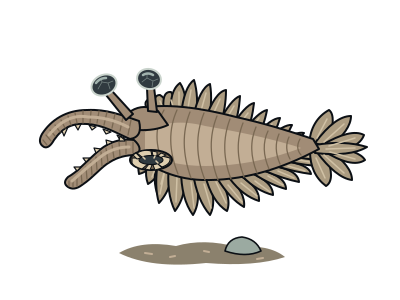
- RadiodontsThe first big hunters and filter-feeders, with spiky head arms and round, ringed mouths.
- FuxianhuiaA 518-million-year-old fossil so finely preserved that its brain and heart can still be traced.