An extinct group
Radiodonts †
Radiodonta
Spiky head arms, ringed mouths and very different diets
This branch is shown at about 520 million years ago; its age is a rough estimate.
Lived about 520–405 million years ago.
You and radiodonts meet in the Two-sided animals branch, shown at about 580 million years ago (on 11 November, in a calendar from life's shared ancestor to today).
Radiodonts included some of the first big animal hunters, alongside filter-feeders that gathered tiny food from water. These sea animals were extinct relatives of insects and spiders, but sat outside the group containing all living arthropods. Their known fossil record began about 520 million years ago and continued until at least about 480 million years ago.
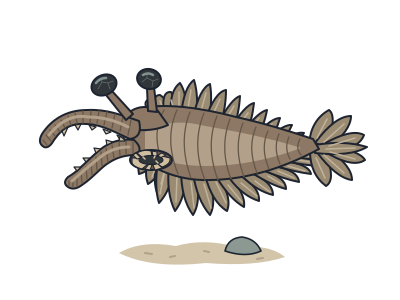
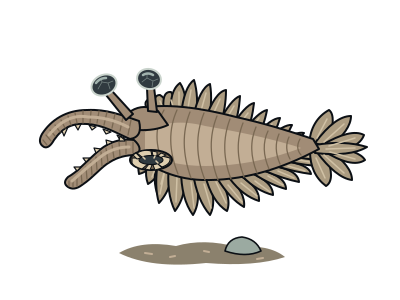
Fossils preserved two jointed head arms, large eyes, swimming flaps and mouths surrounded by rings of plates. The arms helped reveal different ways of feeding. Anomalocaris had spiny grasping arms. Aegirocassis had finely divided arms that researchers interpreted as filters for collecting tiny drifting organisms, rather than grabbing large prey.
Their familiar swimming poses were reconstructions, not snapshots of behaviour. Picture Anomalocaris moving through open water with its arms stretched forwards. Fossils supplied the body parts; computer models supported that pose and suggested it caught soft-bodied swimming animals rather than crushing hard shells. Other radiodonts had rake-like arms that suggested they sifted food from seabed sediment.
An extra eye
Stanleycaris had three eyes: two on stalks and a large third eye in the middle of its head.
Thousands of lenses
Researchers estimated about 25,000 tiny lenses on the exposed side of one Australian radiodont eye fossil.
Double swimming flaps
Aegirocassis fossils revealed two pairs of swimming flaps on each section of its main body, rather than just one pair.
Inside radiodonts
- AnomalocarisOne of the first big predators: a Cambrian hunter longer than a school ruler, with spiny grasping arms.
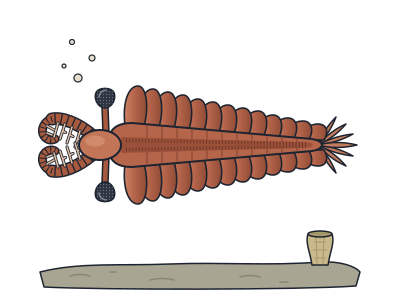
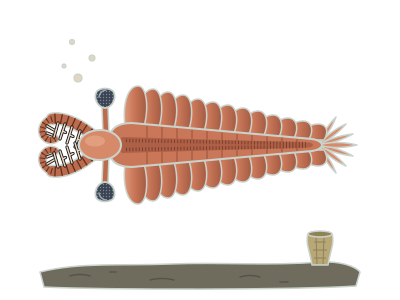
- AegirocassisA two-metre giant that swept the sea for plankton, like an early whale shark.
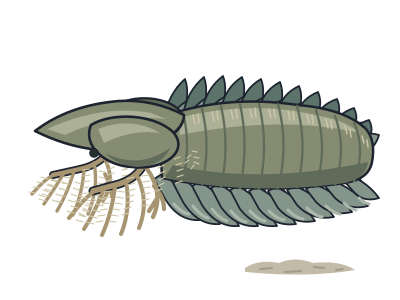
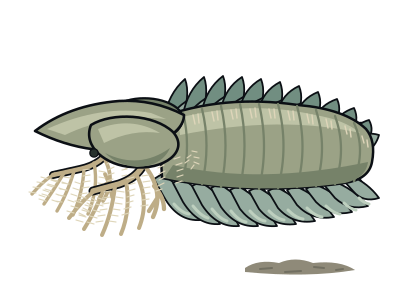
- HurdiaA radiodont with a huge armoured hood on its head, common in the Burgess Shale.
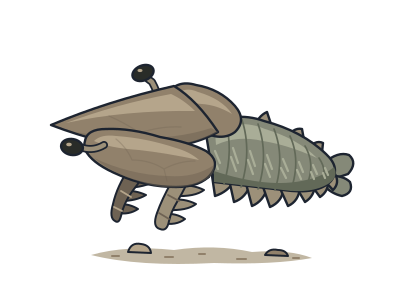
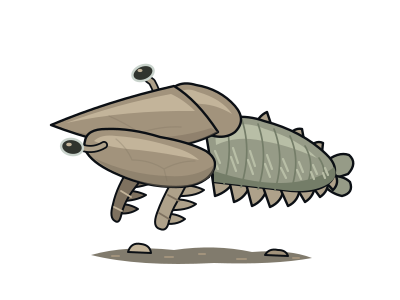
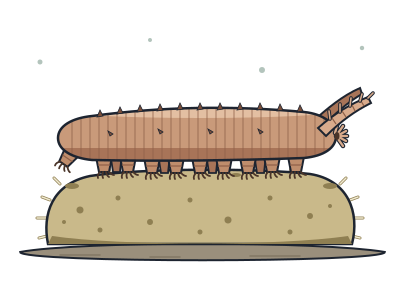
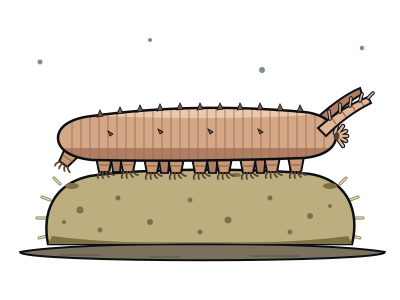
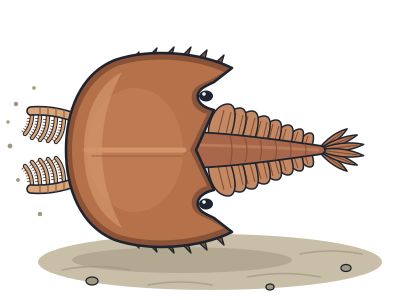
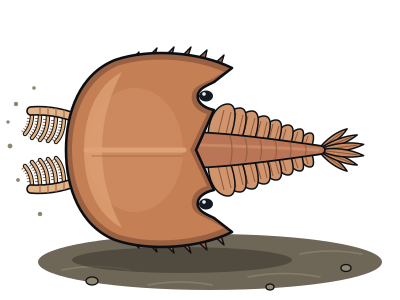
- CambrorasterA radiodont with a huge head shield shaped like a spaceship that raked the seafloor for food.
Next to it on the tree
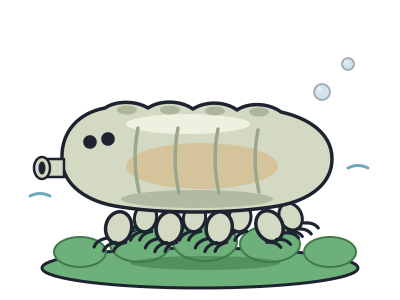
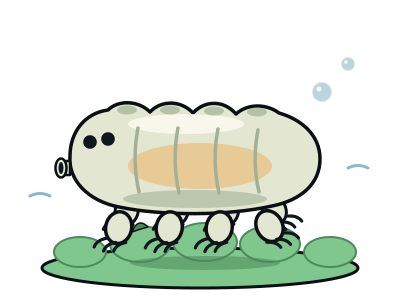
- Water bearsEight-legged micro-animals that survive freezing, boiling, drying out and even open space.
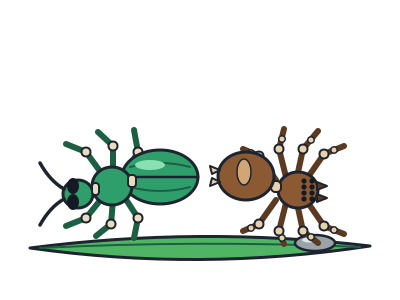
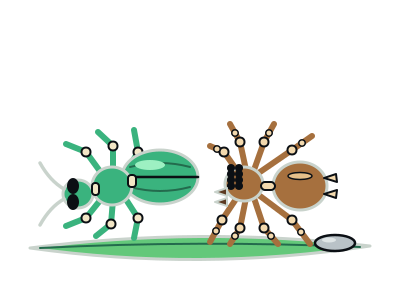
- ArthropodsJointed legs and armour on the outside: the most successful animal design on Earth.
- Velvet wormA soft, many-legged hunter that shoots sticky slime nets at insects.
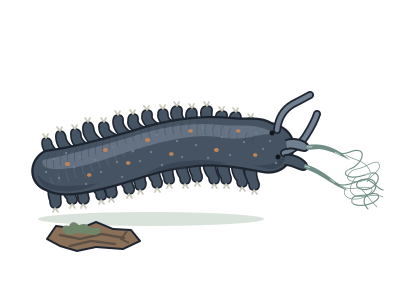
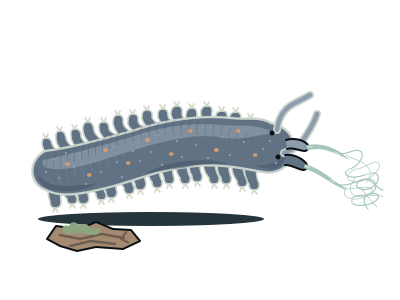
- HallucigeniaSo strange that scientists first drew it upside down and back to front.
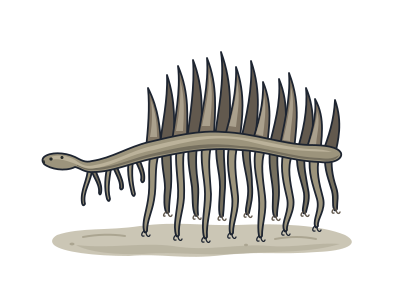
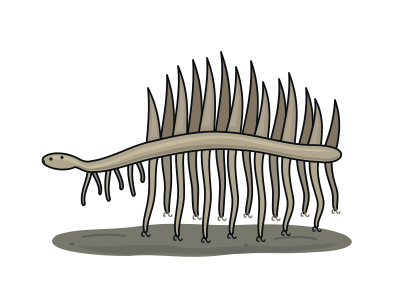
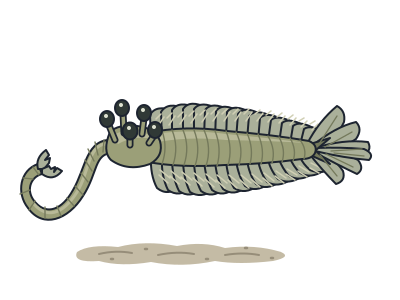
- OpabiniaFive eyes and a grabbing nozzle on its face; it made scientists laugh when first shown.
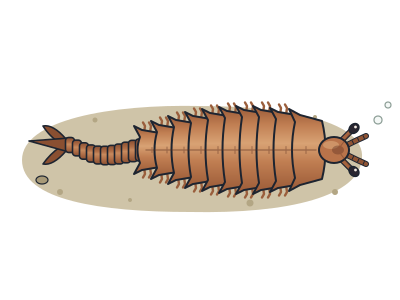
- FuxianhuiaA 518-million-year-old fossil so finely preserved that its brain and heart can still be traced.
- AysheaiaA caterpillar-like Burgess Shale creature that may have clambered over sponges and fed on them.