An extinct species
Fuxianhuia †
Fuxianhuia protensa
A tiny sea creature whose fossil seems to show its brain and heart
Lived about 518–516 million years ago.
You and the fuxianhuia meet in the Two-sided animals branch, shown at about 580 million years ago (on 11 November, in a calendar from life's shared ancestor to today).
About 518 to 516 million years ago, this small sea creature lived in what is now southern China. Some were suddenly buried by flows of fine mud. A few of their fossils are so finely preserved that scientists reported finding traces of the brain and even the heart. That is remarkable, because soft organs almost never become fossils.
The brain survived as a thin, flattened film of carbon in the head. It had three joined sections in front of the mouth, with nerves running into the eye stalks. Insects, crabs and lobsters have the same basic layout today. Another fossil showed a tube-shaped heart running down the body, with side vessels leading to the eyes, feelers, brain and legs.
Yet this animal was not a shrimp or a crab. It sat on an early side branch of the arthropod family, outside every group alive today. On the tree it sits near water bears, velvet worms and strange extinct animals from the same time, such as Opabinia and Hallucigenia.
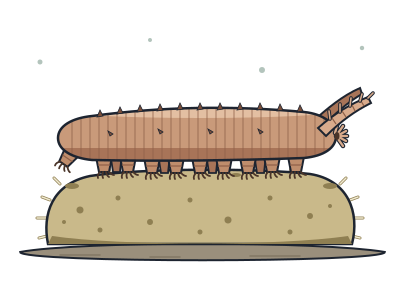
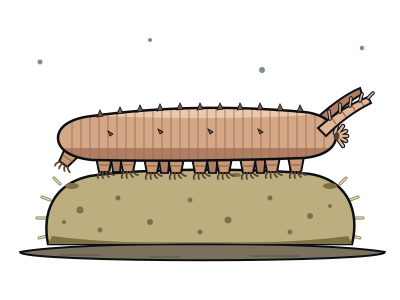
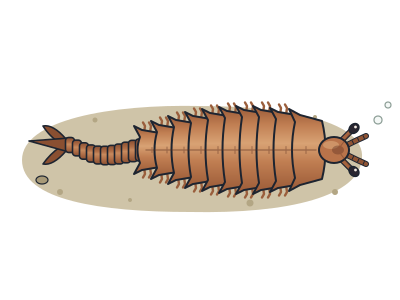
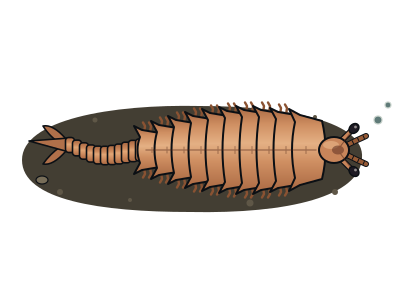
Adults were usually about 4 cm long. Fossils show a head with two stalked eyes and one pair of short feelers. Behind that came a front half with many two-branched legs, then a narrow, legless rear half ending in a pointed tail spine.
Named after a lake
It was named in 1987 after Fuxian Lake in Yunnan, China, close to where it was found. The second part of its name means 'stretched out', after its long body.
A trilobite meal
One fossil had the remains of a small trilobite in its gut. This suggests it may have eaten small animals with hard shells.
A family scene
One slab of rock preserves an adult lying with four young. Researchers think this may be the oldest known sign of arthropods or their relatives caring for their young after hatching.
Next to it on the tree
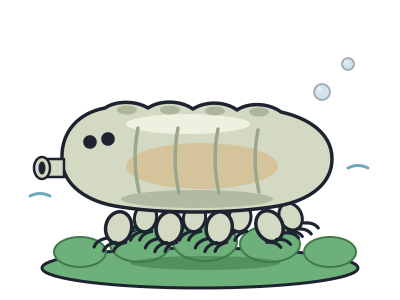
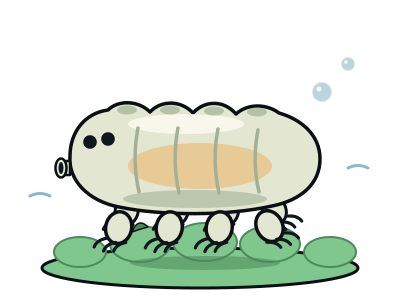
- Water bearsEight-legged micro-animals that survive freezing, boiling, drying out and even open space.
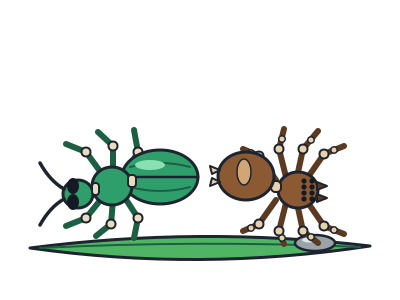
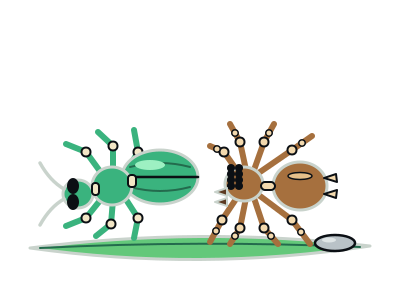
- ArthropodsJointed legs and armour on the outside: the most successful animal design on Earth.
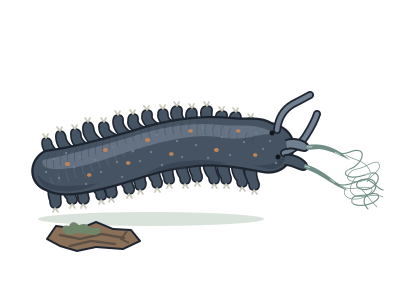
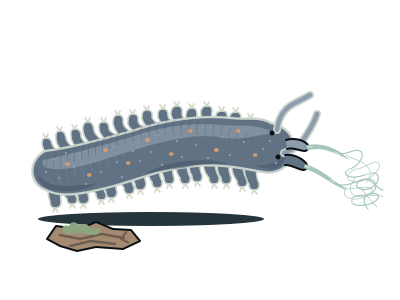
- Velvet wormA soft, many-legged hunter that shoots sticky slime nets at insects.
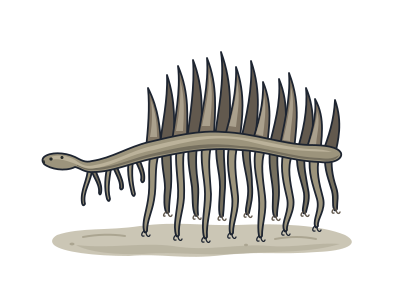
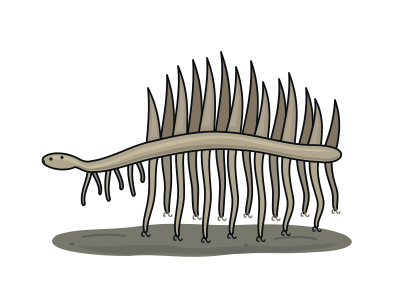
- HallucigeniaSo strange that scientists first drew it upside down and back to front.
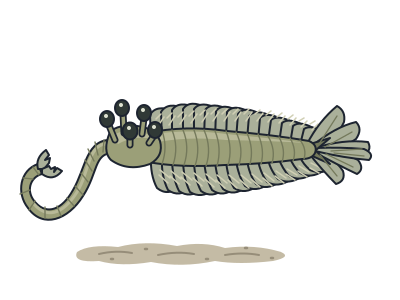
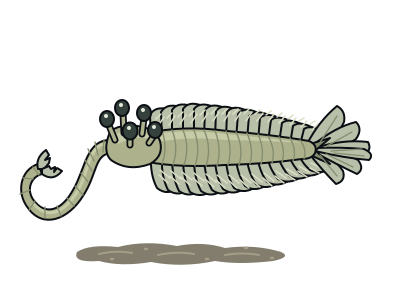
- OpabiniaFive eyes and a grabbing nozzle on its face; it made scientists laugh when first shown.
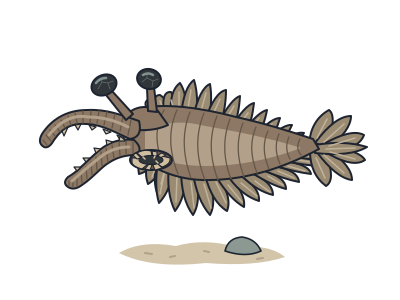
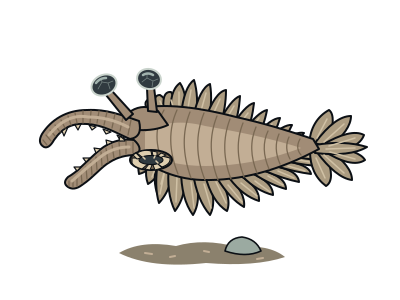
- RadiodontsThe first big hunters and filter-feeders, with spiky head arms and round, ringed mouths.
- AysheaiaA caterpillar-like Burgess Shale creature that may have clambered over sponges and fed on them.