An extinct species
Hallucigenia †
Hallucigenia sparsa
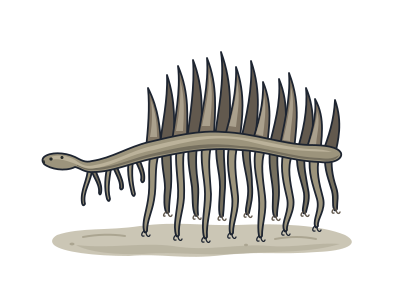
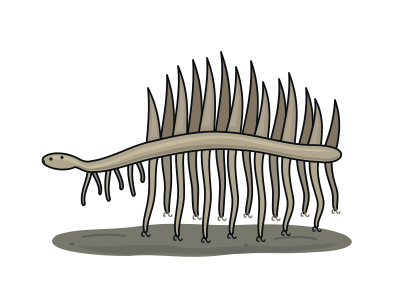
So strange, scientists drew it upside down and back to front.
Lived about 510–505 million years ago.
You and the hallucigenia meet in the Two-sided animals branch, shown at about 580 million years ago (on 11 November, in a calendar from life's shared ancestor to today).
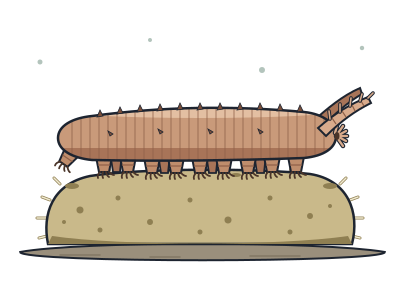
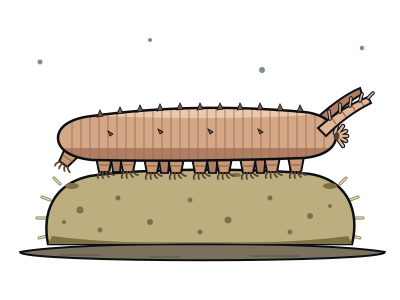
Scientists once drew this animal upside down and back to front. In a famous 1977 reconstruction, its back spines became walking stilts, while its soft legs became supposed feeding tentacles. A second row of legs, hidden beneath the surrounding rock, helped researchers turn it the right way up. In 2015, they identified its real head, with two simple eyes and a mouth.
It lived about 510 to 505 million years ago, on the sea floor in what became British Columbia, Canada. Fossils preserved its slender body outline, spines and legs. Some even showed tiny claws. These remains gave researchers clues to its shape, rather than a complete picture of how it looked and behaved.
Despite its strange appearance, it belonged among moulting animals: the wider family that also included velvet worms, water bears, insects and spiders. Its claws contained smaller pieces inside larger ones, like nested cups. Similar claws helped researchers link it with velvet worms, without showing that it was their direct ancestor.
An earlier mistaken identity
It was first described in 1911 as a kind of bristle worm.
A mouth full of clues
Its mouth had a ring of small hard plates, and needle-shaped teeth lined its throat.
A rare find
It made up about two in every thousand specimens counted in one Walcott Quarry community study.
Next to it on the tree
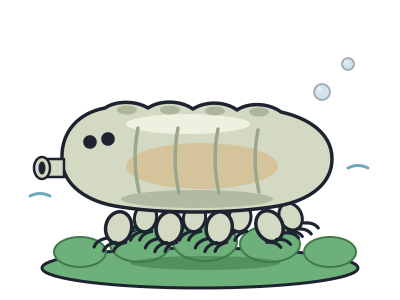
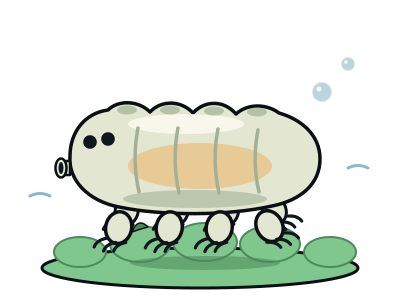
- Water bearsEight-legged micro-animals that survive freezing, boiling, drying out and even open space.
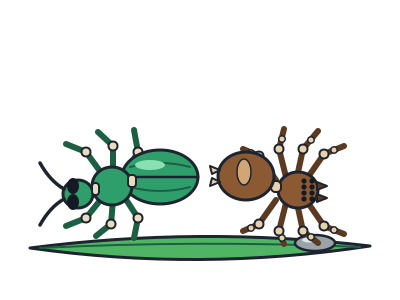
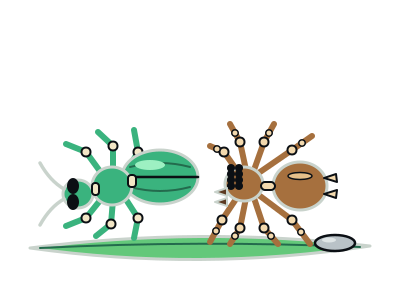
- ArthropodsJointed legs and armour on the outside: the most successful animal design on Earth.
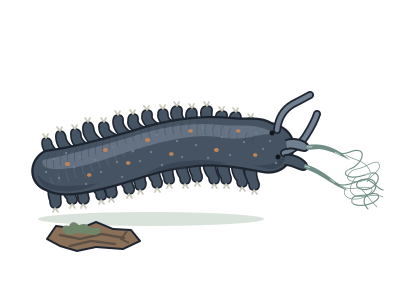
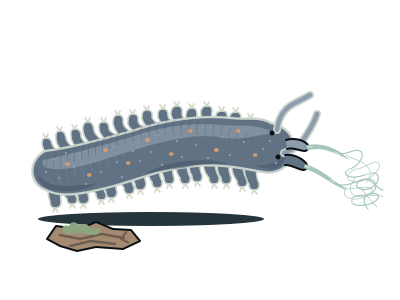
- Velvet wormA soft, many-legged hunter that shoots sticky slime nets at insects.
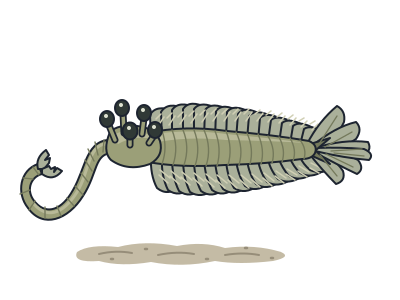
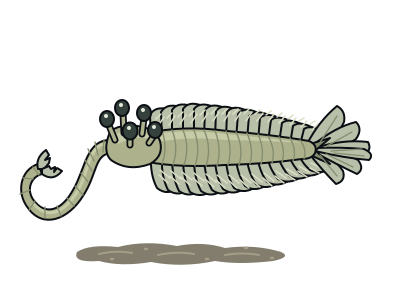
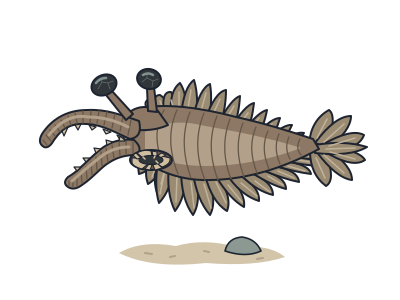
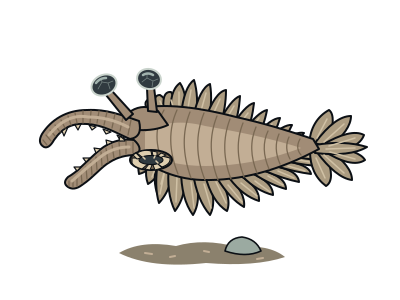
- OpabiniaFive eyes and a grabbing nozzle on its face; it made scientists laugh when first shown.
- RadiodontsThe first big hunters and filter-feeders, with spiky head arms and round, ringed mouths.
- FuxianhuiaA 518-million-year-old fossil so finely preserved that its brain and heart can still be traced.
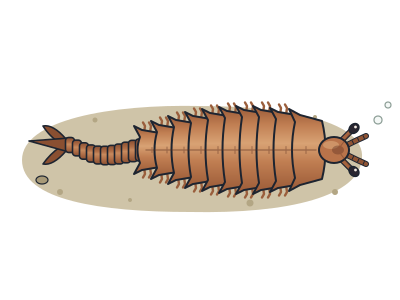
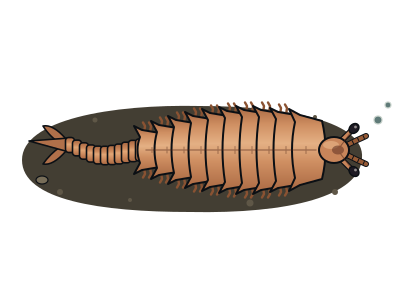
- AysheaiaA caterpillar-like Burgess Shale creature that may have clambered over sponges and fed on them.