An extinct species
Opabinia †
Opabinia regalis
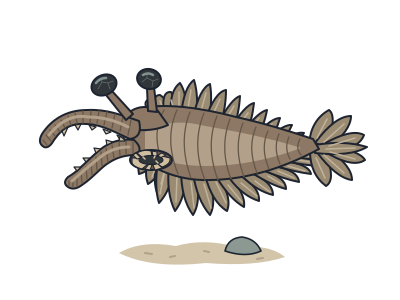
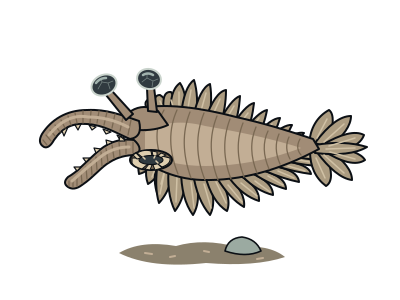
Five eyes, one grabbing nozzle, and a surprising family connection.
Lived about 510–505 million years ago.
You and the opabinia meet in the Two-sided animals branch, shown at about 580 million years ago (on 11 November, in a calendar from life's shared ancestor to today).
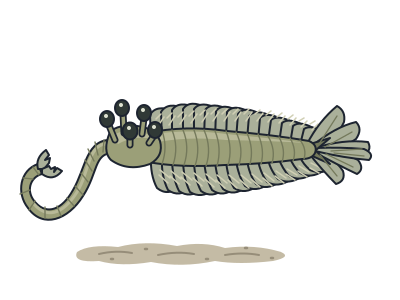
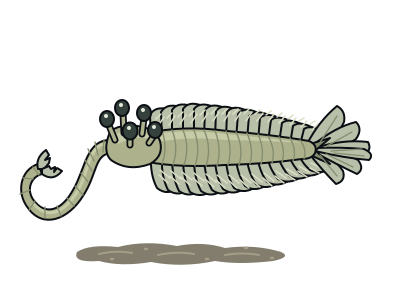
Five eyes and a long, flexible nozzle ending in a grabbing claw: this animal looked strange enough to make scientists laugh. In 1972, that was the reaction when Harry Whittington showed his reconstruction at a conference in Oxford. Yet it was no unrelated oddity. It belonged to an early branch of the arthropod family tree, outside the group containing living members such as insects and spiders.
It lived in the sea about 510 to 505 million years ago. Its body was about 4–7 centimetres long without the nozzle—roughly finger-length. Fossils from Canada's Burgess Shale preserved details of its soft body, including its eyes, nozzle and broad side flaps. Scientists had much more to work with than an empty shell.
Its family connections became clearer through comparisons with relatives called radiodonts, including Anomalocaris. It shared eyes, side flaps and a tail fan with Anomalocaris. Beneath the unfamiliar outline were shared features that helped researchers place this remarkable animal among its relatives.
A long reach
Its ringed nozzle was about four times as long as its head.
A hidden mouth
Its mouth faced backwards beneath its head, rather than opening at the nozzle's tip.
Thirty flaps
Its trunk had 15 sections, each with a pair of broad side flaps: 30 altogether.
Next to it on the tree
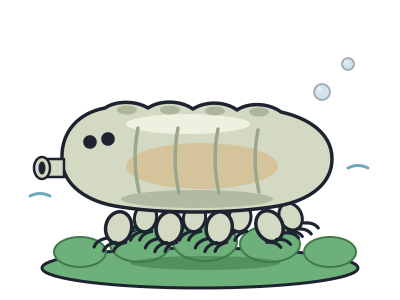
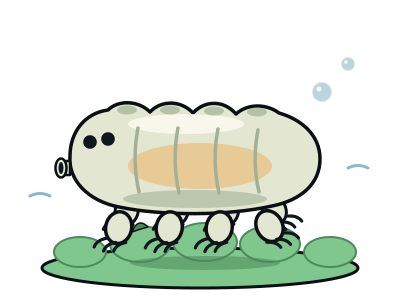
- Water bearsEight-legged micro-animals that survive freezing, boiling, drying out and even open space.
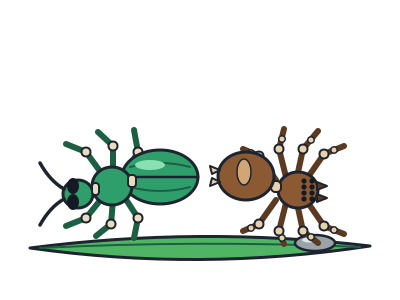
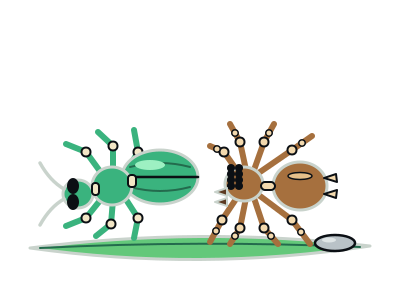
- ArthropodsJointed legs and armour on the outside: the most successful animal design on Earth.
- Velvet wormA soft, many-legged hunter that shoots sticky slime nets at insects.
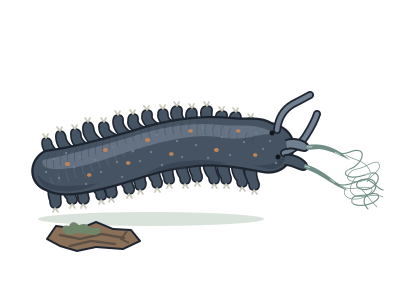
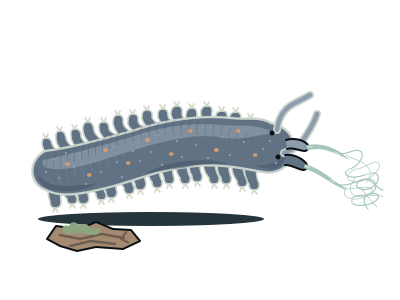
- HallucigeniaSo strange that scientists first drew it upside down and back to front.
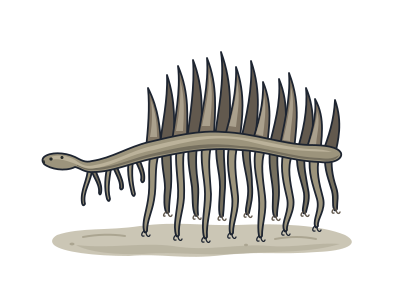
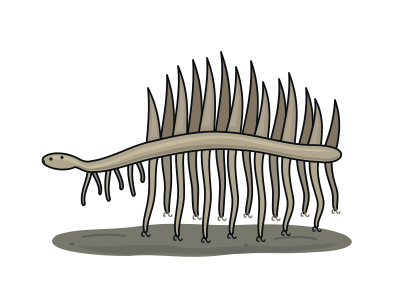
- RadiodontsThe first big hunters and filter-feeders, with spiky head arms and round, ringed mouths.
- FuxianhuiaA 518-million-year-old fossil so finely preserved that its brain and heart can still be traced.
- AysheaiaA caterpillar-like Burgess Shale creature that may have clambered over sponges and fed on them.