An extinct species
Cambroraster †
Cambroraster falcatus
A spaceship-shaped sea creature that combed the Cambrian seafloor
Lived about 507–505 million years ago.
You and the cambroraster meet in the Two-sided animals branch, shown at about 580 million years ago (on 11 November, in a calendar from life's shared ancestor to today).
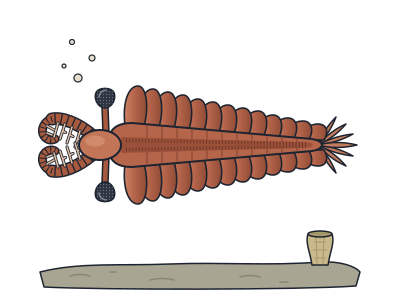
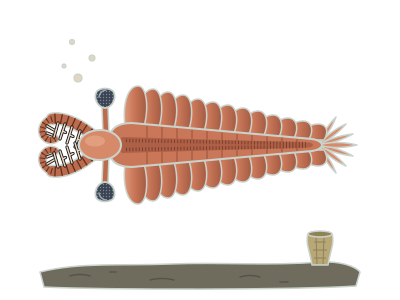
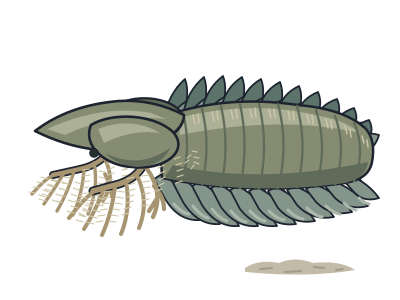
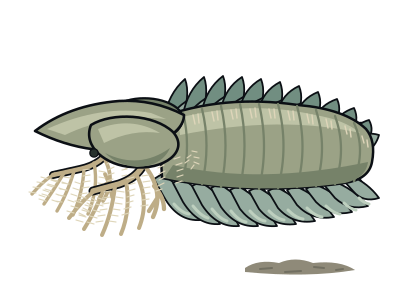
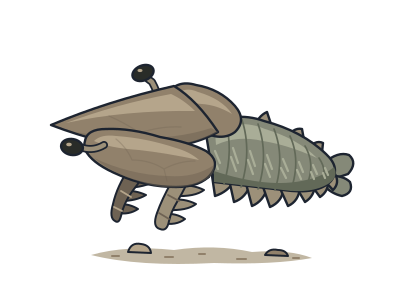
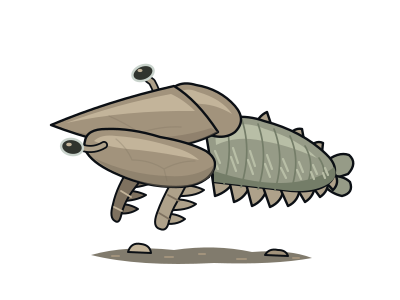
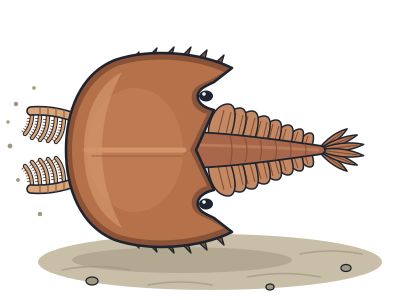
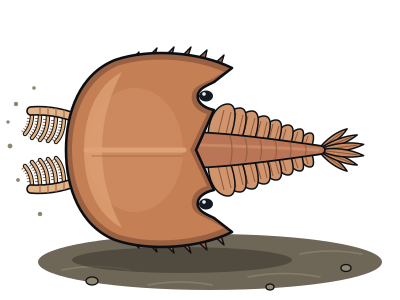
About 507 to 505 million years ago, long before the dinosaurs, an odd swimmer probably cruised just above a muddy seafloor. That sea covered what is now western Canada. Most of the animal's front was hidden under a huge, flat shield shaped like the Millennium Falcon spaceship from Star Wars. Its species name comes from that spaceship.
It was a radiodont. Radiodonts were one of the earliest branches of the line that led to insects, crabs and spiders. Hurdia and Aegirocassis, shown beside it on the tree, belonged to the same radiodont family. The famous hunter Anomalocaris was a more distant cousin. It looked a bit like a horseshoe crab, but the two are not closely related. They simply evolved similar shapes for life near the seafloor.
Under the shield were two claws. Each had five curved spines lined with tiny hooks, like a comb. The scientists who named it thought it dragged these rakes through the mud to trap buried prey. It grew to about 30 cm long, about the length of a school ruler. That was big at a time when most animals were smaller than your little finger.
Fossils show the shapes of its shield, claws and mouth parts. Its colour and its exact way of life are worked out from those clues.
A pineapple-ring mouth
Its round mouth sat on the underside of the head and was lined with teeth. It looked a bit like a slice of pineapple.
Eyes on top
Its two eyes faced upwards. They sat in deep notches at the back edge of the head shield.
Crowded rock slabs
Scientists have found at least 140 individuals, sometimes dozens on a single slab of rock. Many may be shed outer skins rather than dead animals.