A species
Goliath birdeater
Theraphosa blondi
The heaviest known spider can reach dinner-plate width and flick itchy hairs.
You and the goliath birdeater meet in the Two-sided animals branch, shown at about 580 million years ago (on 11 November, in a calendar from life's shared ancestor to today).
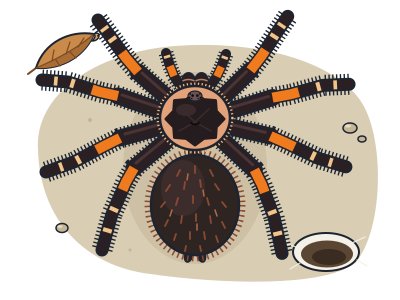
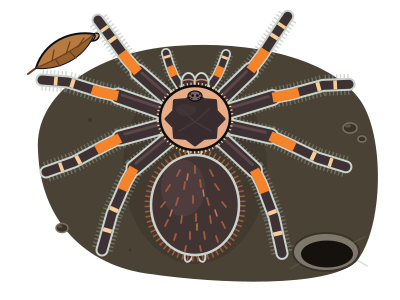
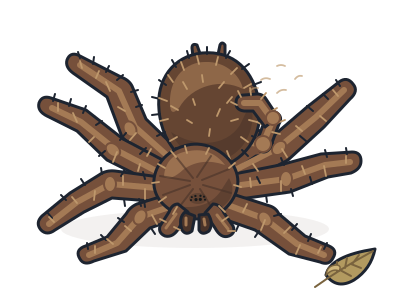
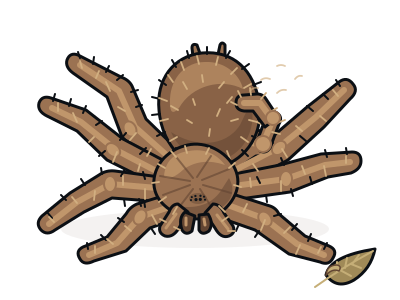
The Goliath birdeater is the world's heaviest known spider, and exceptionally large adults can spread their legs as wide as a dinner plate. Its defence is surprising too: it brushes its back legs against its rear body, flicking itchy hairs into the air. Tiny barbs help those hairs lodge in an attacker's skin.
This giant belongs to the tarantula family. Tarantulas sit on a different major branch of the spider tree from the jumping spiders, garden spiders and black widows shown nearby. Those neighbours are more closely related to one another than to this tarantula.
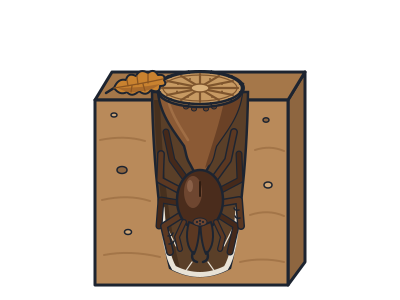
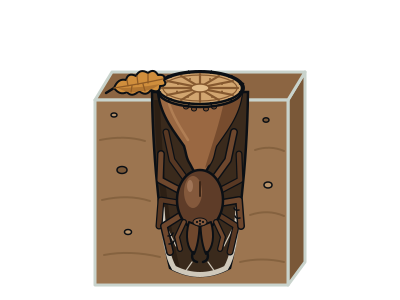
It lives on the rainforest floor in northern South America, sheltering in burrows or beneath rocks and roots. Mainly active at night, adults generally live alone and meet to mate. Despite its name, it rarely eats birds. The bird-eating name traces back to an eighteenth-century picture of another tarantula eating a hummingbird—not this particular species.
Eight eyes, poor sight
It has eight eyes, but its eyesight is poor.
A warning you can hear
It rubs bristles together to make a warning hiss that can be heard up to about 4.5 metres away.
Protected eggs
Females cover their silk egg sacs with defensive hairs, helping protect the eggs from predators.